
Best Air Purifiers for Allergies (2026): 3 Picks for a Faster, Deeper Clean
Disclosure: We may earn a commission when you buy through links on this page, at no extra cost to you. As an Amazon Associate I earn from qualifying purchases. Learn more

Three picks for the best air purifier for allergies, plus how to size a purifier, compare CADR and keep filters effective.
Sneezing through spring pollen season, waking up congested from dust and dander, or reaching for tissues every time the heat kicks on: indoor allergens build up in the air you breathe for hours each day. Dusting and vacuuming help, but the smallest particles stay airborne. The best air purifier for allergies uses a True HEPA filter, delivers enough clean air for your room and runs quietly enough to leave on day and night.
This guide explains how to pick an air purifier for allergies, shares our three top picks and covers the routine and running costs that keep a purifier effective.




Quick Clean Summary
The Coway Airmega AP-1512HH is the best all around air purifier for allergies, the Levoit Core Mini-P is the best budget pick under $50 for a bedroom, and the Levoit Vital 200S-P is the best choice for deep cleaning the air in large rooms where allergy sufferers spend the most time.
| Award | Product | Key Spec | Best For |
|---|---|---|---|
| Best All Around for Allergies | Coway Airmega AP-1512HH | 4 stage filtration, up to 1,748 sq ft per hour, auto mode | Living rooms and bedrooms year round |
| Best Budget (Under $50) | Levoit Core Mini-P | AHAM Verifide, sleep mode, compact | Small bedrooms, dorms and offices |
| Best for Deep Cleaning | Levoit Vital 200S-P | CADR smoke 250 / dust 254, up to 1,875 sq ft, HEPA sleep mode | Large rooms and severe seasonal allergies |
Air Purifier for Allergies Buying Guide: Surfaces, Messes and Upkeep
The right air purifier for allergies has a True HEPA filter, a clean air delivery rate that fits your room and a noise level you can sleep with. Here is what to compare.
Size, Capacity and Storage
Size the purifier to the room where you spend the most time, which for most allergy sufferers is the bedroom. Small and desktop units handle rooms up to roughly 200 square feet. Large room and tower units cover 400 to 2,000 square feet. For a whole house, pair a high MERV furnace filter with a portable purifier in the bedroom. Portable models with handles can move from living room to bedroom as your day changes. Place the unit where air can circulate, a foot or more from walls and furniture.
Types Compared by Cleaning Job
True HEPA filters are the standard for allergies because they capture at least 99.97% of particles at 0.3 microns, the hardest size to trap, and even higher percentages of larger pollen and dust particles. Avoid "HEPA type" filters, which do not meet that standard. Activated carbon layers add odor and VOC control. Smart and quiet models add sensors, apps and sleep modes. Choose ozone free purifiers: ozone generators, some ionic units and certain UV designs can produce ozone, which irritates airways and can worsen asthma. UV lights add little for allergy relief because allergens like pollen and dander are not alive. Budget units can work well in small rooms if they use genuine HEPA.
Features That Save Time
An air quality sensor with auto mode increases fan speed when dust or pollen spikes, such as when windows open or the bed is made. A washable pre-filter catches lint and hair to extend HEPA life. WiFi apps let you run the purifier on a schedule and check air quality. Filter life indicators prevent running clogged filters. Combination humidifier units can help dry winter air, but separate devices are easier to clean and less likely to grow mold.
Room Size and Coverage Ratings
CADR (Clean Air Delivery Rate) measures how much filtered air a purifier delivers for smoke, dust and pollen in cubic feet per minute. A common guideline is a smoke CADR of at least two thirds of your room's area in square feet. For allergies, many experts recommend four to five air changes per hour. Because large coverage claims are often based on one air change per hour, choose a purifier rated for well above your actual room size. AHAM Verifide models have had their ratings independently confirmed.
Running Cost and Energy Use
Running a purifier 24 hours a day on low to medium usually costs a few dollars a month in electricity, since most models draw 20 to 60 watts at those settings. ENERGY STAR certified units are more efficient. Filters are the bigger cost, typically $20 to $80 per year for one room.
Noise Levels for Bedrooms
For overnight use, look for a sleep mode around 20 to 25 decibels and a display that dims or turns off. Running a larger purifier on a low setting is often quieter than running a small one on high, while still moving the same amount of air.
Filters, Tanks and Maintenance
Clean the pre-filter every two to four weeks and replace HEPA filters on the maker's schedule, usually every 6 to 12 months. During peak pollen season or in dusty homes, you may need to replace sooner. Use genuine or certified compatible filters so they seal properly; air that leaks around a poorly fitting filter is not cleaned.
Price Tiers and Running Costs
- Under $50: compact True HEPA purifiers for small bedrooms and desks.
- Under $100: medium room units with stronger fans and better sleep modes.
- Under $200: large room purifiers with sensors, auto modes and verified CADR.
- Under $300: high capacity models with app control and multi stage filtration.
- Under $500: premium purifiers for very large or open spaces with long warranties.
3 Best Air Purifiers for Allergies for Real Messes
Each pick below names who it suits, its strengths and one honest limitation.
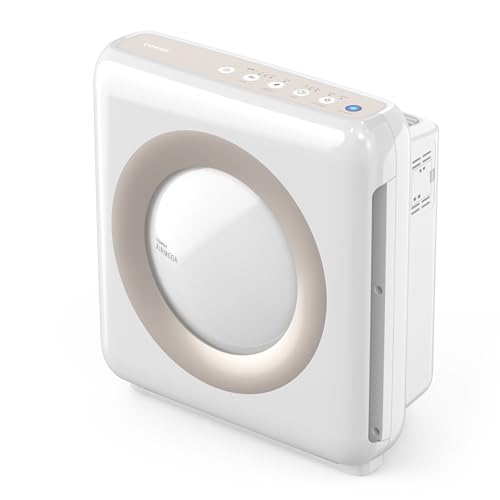
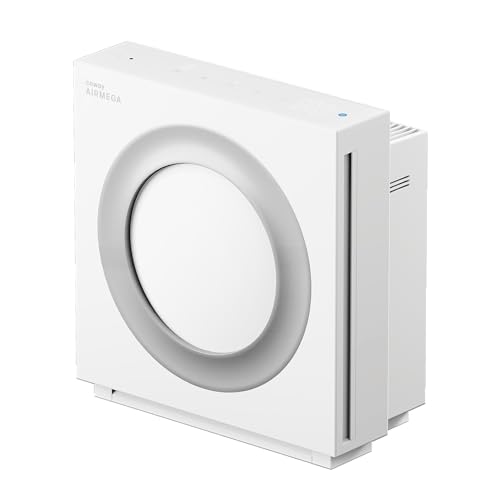
1. Best All Around Cleaner for Allergies: Coway Airmega AP-1512HH
The Coway Airmega AP-1512HH is the best air purifier for allergies for most homes, at around $230. It has been one of the most popular home purifiers for years thanks to strong performance and simple operation.
Why it made the list: its four stage system combines a washable pre-filter, a deodorization filter and a HEPA filter that reduces 99.97% of particles at 0.3 microns, including pollen. Coway rates it for spaces up to 1,748 square feet in 60 minutes, which means several air changes per hour in a typical bedroom or living room.
- Highlights: auto mode that adjusts fan speed to real time air quality; a color air quality indicator you can turn off for sleep; filter alerts based on how much air has been processed, plus a 3 year warranty.
- Trade off: it includes an ionizer (Coway calls it a Bipolar Device), which you can switch off if you prefer to avoid any ionization.
Best for: year round dust, pollen and dander allergies in bedrooms and living rooms.

2. Best Budget Clean (Under $50): Levoit Core Mini-P
The Levoit Core Mini-P is the best budget air purifier for allergies, at around $44. It is a compact unit made for the room where you sleep or work.
Why it made the list: it carries AHAM Verifide certification, so its performance claims have been independently confirmed, which is uncommon under $50. Its pre-filter and main filter capture dust, pollen, pet dander and smoke particles.
- Highlights: a quiet sleep mode with an auto off display; a small footprint for nightstands and desks; an optional aromatherapy pad.
- Trade off: it is sized for small rooms only, and allergy sufferers should skip the aroma pad if scents are a trigger.
Best for: small bedrooms, dorms, nurseries and home offices.

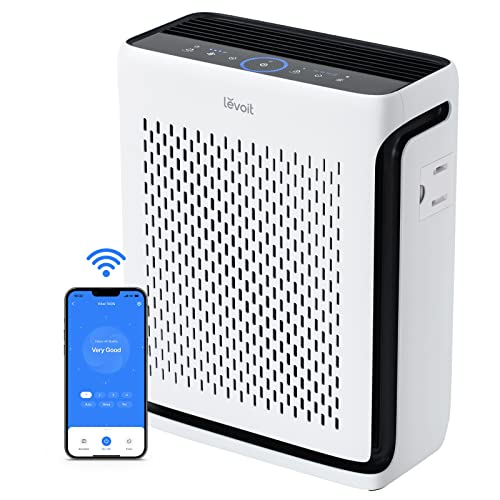
3. Best for Deep Cleaning: Levoit Vital 200S-P
The Levoit Vital 200S-P is the best air purifier for allergies in large rooms, at around $200. It is designed with allergy groups in mind and delivers high verified airflow.
Why it made the list: it is AHAM Verifide with CADR ratings of 250 for smoke and 254 for dust, and Levoit rates it for rooms up to 1,875 square feet. Its filter captures 99.97% of particles between 0.1 and 0.3 microns according to Levoit, including pollen, dust and dander.
- Highlights: a standard intake plus a U-shaped inlet that draws in hair and particles near the floor; a washable pre-filter; a HEPA sleep mode, air quality monitor and app control.
- Trade off: it is larger than compact purifiers and needs floor space with clearance around the intakes.
Best for: large bedrooms, living rooms and anyone with severe seasonal allergies.

How We Compared the Best Air Purifiers for Allergies
We compared air purifiers for allergies on True HEPA filtration, CADR and AHAM verification, real air changes per hour for common room sizes, noise levels, sensors, ozone free operation, filter cost and warranty. Our sources were manufacturer specifications, AHAM ratings, the details in each Amazon listing and patterns across large volumes of verified buyer feedback, with extra weight on reports from people with seasonal and indoor allergies. We did not run our own trials. This guide is not medical advice; talk with a doctor about managing allergies or asthma.
Where an Air Purifier for Allergies Makes Cleaning Easier
An air purifier for allergies makes the biggest difference in rooms where you spend long stretches and where allergens get stirred up.
- Bedrooms: you spend roughly a third of each day here, and bedding releases dust mite allergens every time you move. A quiet purifier near the bed is the single most useful placement.
- Living rooms: sofas, rugs and curtains collect dust and dander. A large room purifier keeps airborne levels down while you relax.
- Entryways and mudrooms: pollen comes in on shoes, coats and pets during spring and fall.
- Home offices: long hours at a desk make a compact purifier worthwhile, especially near printers and carpet.
- Nurseries: a quiet, ozone free purifier helps reduce dust in rooms where children sleep.
Purifiers capture airborne particles, but heavier allergens like dust mite debris settle quickly. That is why combining a purifier with regular vacuuming and bedding care works better than either alone.
Cleaning Routine: How to Get the Best Results
For the best allergy relief, run your purifier around the clock and pair it with a weekly cleaning routine.
- Keep windows closed on high pollen days and run the purifier on auto.
- Vacuum floors and upholstery with a sealed HEPA vacuum once or twice a week.
- Wash sheets and pillowcases weekly in hot water, and use allergen proof covers on pillows and mattresses.
- Dust with a damp microfiber cloth so particles are trapped rather than scattered.
- Shower and change clothes after spending time outdoors during pollen season.
- Keep pets out of the bedroom if dander is a trigger.
- Close doors to the purifier's room so it can keep up.
Supplies, Refills and Running Costs
Budget for one or two replacement filter sets per year, roughly $20 to $40 for compact units and $40 to $80 for large room models. Keep a spare filter on hand before allergy season starts. Other useful supplies include a HEPA vacuum, allergen proof bedding covers and a high MERV furnace filter if you have forced air heating and cooling. Together they reduce allergens throughout the home, not just in one room.
Cleaning Questions, Answered
Is an air purifier worth it?
Yes, for many people with dust, pollen or pet allergies. A True HEPA purifier sized for your room reduces airborne allergens that vacuuming cannot reach. It works best as part of a routine that includes regular vacuuming and washing bedding.
How do you clean an air purifier?
Unplug it, remove the pre-filter and vacuum or rinse it as the manual directs, letting it dry fully. Wipe the housing and grilles with a dry cloth. Do not wash HEPA or carbon filters unless the maker says they are washable; replace them instead.
What is the most reliable air purifier brand?
Coway, Levoit, Winix and Blueair are among the most established brands, with AHAM verified models, widely available filters and long track records. Following the filter schedule matters as much as brand choice.
What is the best air purifier for allergies?
The Coway Airmega AP-1512HH is the best air purifier for allergies for most homes thanks to its HEPA filtration, strong coverage and auto mode. The Levoit Core Mini-P is the best budget option, and the Levoit Vital 200S-P is best for large rooms.
What should I look for in an air purifier for allergies?
Look for a True HEPA filter, a CADR that fits your room with four to five air changes per hour, ozone free operation and a quiet sleep mode. Affordable replacement filters and AHAM verification are strong signs of a good choice.
How long does an air purifier last?
A quality air purifier often lasts five years or more with regular filter changes. Keeping the pre-filter clean reduces strain on the motor and helps maintain airflow.
Clean Verdict
The Coway Airmega AP-1512HH is the purifier we would pick for most allergy sufferers, with proven HEPA filtration, strong room coverage and simple auto operation. The Levoit Core Mini-P is the affordable choice for small bedrooms, and the Levoit Vital 200S-P is the upgrade for large rooms and tough allergy seasons. Size the purifier generously, run it all day and keep filters fresh, and the best air purifier for allergies will help you breathe easier at home. For more options see our best air purifier guide, our best air purifier for pets picks and the best air purifier for bedroom.

