
Best Mops for Tile Floors in 2026: 3 Top Picks + Buying Guide
Disclosure: We may earn a commission when you buy through links on this page, at no extra cost to you. As an Amazon Associate I earn from qualifying purchases. Learn more

Our three picks for the best mop for tile floors, plus how to choose a type, pad and method for streak free tile.
Tile floors are tough and water friendly, but grout lines, textured surfaces and kitchen grease make them harder to clean than they look. A flimsy flat mop glides over grime, while a dripping string mop pushes dirty water into grout. The best mop for tile floors scrubs well enough to lift sticky spots, rinses with clean water so you are not spreading dirt and wrings out enough to avoid puddles in grout lines.
Below are our three top picks, followed by a buying guide that covers mop types, useful features, pad materials, cleaning the mop and what to spend.




Our Top Picks at a Glance
The O-Cedar RinseClean Spin Mop is the best mop for tile floors overall, the Swiffer WetJet starter kit is the best budget pick under $20 for quick cleanups, and the BISSELL SpinWave is the best premium upgrade with powered scrubbing pads. Check the product table above for current prices.
| Award | Product | Key Spec | Best For |
|---|---|---|---|
| Best Overall for Tile Floors | O-Cedar RinseClean Spin Mop | Separate clean and dirty water, foot pedal spin wringer | Weekly deep mopping of tile and grout |
| Best Budget (Under $20) | Swiffer WetJet Starter Kit | Battery powered spray, disposable pads | Quick daily touch ups |
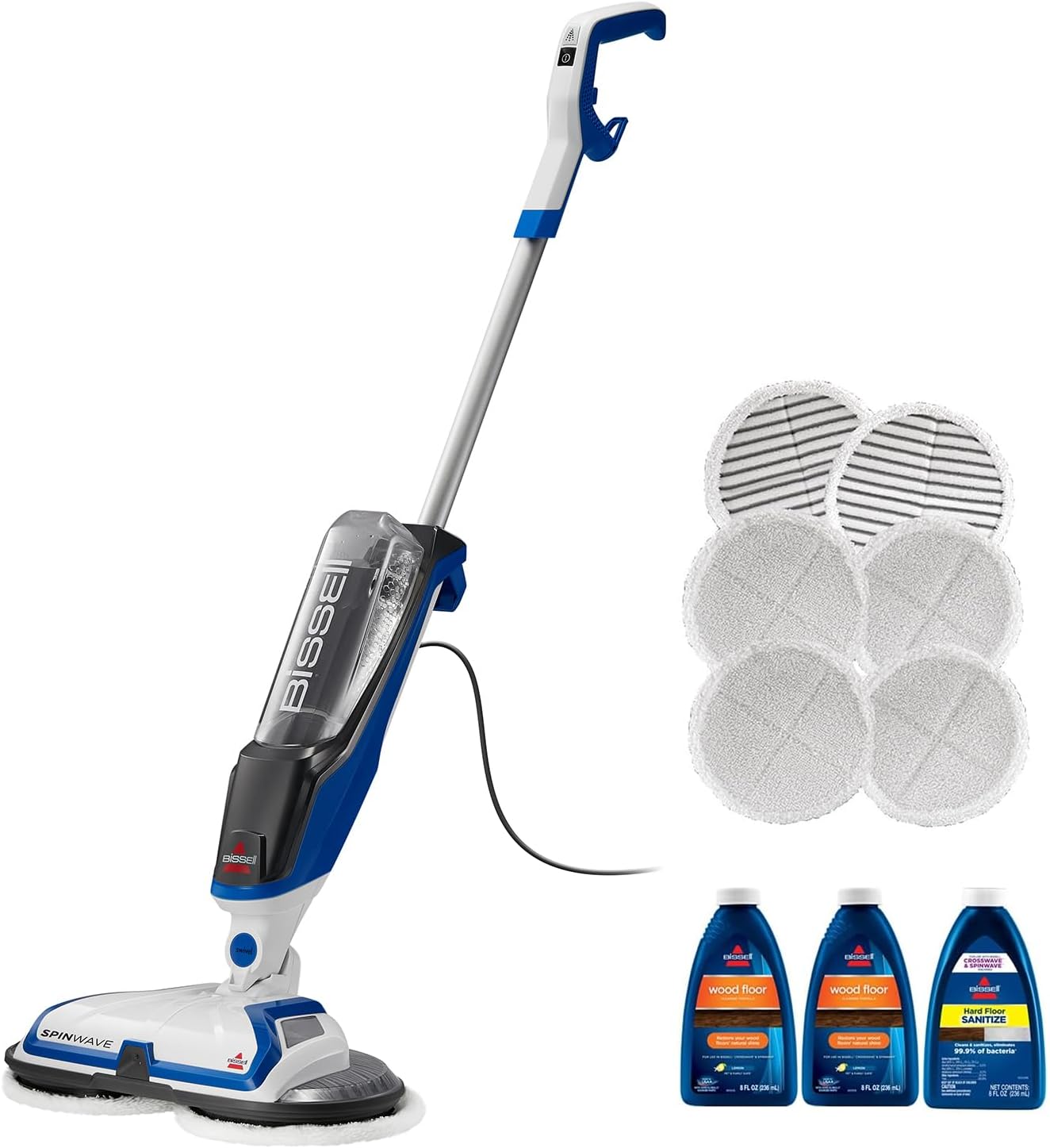
| Best Premium / Upgrade Pick | BISSELL SpinWave Hard Floor Expert | Powered spinning pads, on demand spray | Large tile areas and sticky messes |
Our 3 Top Picks for the Best Mops for Tile Floors
Each pick below explains who it suits, its key strengths and one honest limitation.
1. Best Overall for Tile Floors: O-Cedar RinseClean Spin Mop
The O-Cedar RinseClean Spin Mop is the best mop for tile floors in most homes, at around $50. Its two chamber bucket keeps clean and dirty water separate so you mop with clean water from start to finish.
- Why it stands out: a built in foot pedal spins water out of the microfiber head into the dirty water side, letting you control how damp the mop is, and O-Cedar says it removes over 99% of bacteria with just water.
- Practical: machine washable microfiber mop heads, safe on all hard floors including tile, vinyl, laminate and finished wood, and lower ongoing costs than disposable pad mops.
- Trade off: the bucket takes storage space and needs filling and emptying for each session.
Best for: kitchens, bathrooms and entryways with lots of tile. Skip it if you only mop small areas occasionally.

2. Best Budget (Under $20): Swiffer WetJet Starter Kit
The Swiffer WetJet starter kit is the best budget mop for tile floors, at around $20. It is light, ready to go and perfect for spills.
- Why it stands out: a battery powered sprayer applies a measured amount of solution, and thick absorbent pads trap dirt instead of pushing it around. The kit includes the mop, 10 pads, cleaning solution and batteries.
- Convenient: no bucket, quick to grab and safe on hard sealed surfaces including sealed tile.
- Trade off: disposable pads and solution add ongoing cost, and pads do not scrub deep into grout lines.
Best for: small kitchens, apartments and daily touch ups. Skip it if you want to deep clean grout.

3. Best Premium / Upgrade Pick: BISSELL SpinWave Hard Floor Expert
The BISSELL SpinWave Hard Floor Expert is the best premium mop for tile floors, at around $120. Its powered pads do the scrubbing for you.
- Why it stands out: two spinning pads provide machine powered scrubbing that lifts sticky spills and dried stains without pushing, and an on demand spray applies solution where you need it.
- Features: a swivel head that glides under furniture and around baseboards, and six washable pads plus three travel size formulas, according to BISSELL. It is safe on sealed wood, tile and linoleum.
- Trade off: it is corded, which limits range, and its round pads cannot reach fully into corners.
Best for: large tile areas, families and anyone who dislikes scrubbing by hand. Skip it if you need a cordless mop.

How We Chose the Best Mops for Tile Floors
We compared mops for tile floors on scrubbing ability, water control, rinsing and wringing systems, pad material, ease of cleaning, storage and ongoing costs. Our sources were manufacturer specifications, the details in each Amazon listing and patterns across large volumes of verified buyer feedback, with extra weight on reports about grout cleaning, streaks and durability. We did not run our own trials.
How to Choose the Right Mop for Tile Floors
The right mop for tile floors scrubs textured surfaces and grout, controls water and is easy to keep clean. These factors matter most.
Type
Spin mops with buckets and wringers are excellent for tile because you can scrub with plenty of water and then spin out excess. Spray mops are quick and convenient for daily cleaning. Flat microfiber mops work well with a bucket for large areas. Steam mops sanitize sealed tile and loosen grime with heat. Powered spin mops scrub automatically. Sponge mops handle textured tile but can harbor bacteria if not dried.
Features Worth Paying For
- Clean and dirty water separation so you never mop with gray water.
- Foot pedal or mechanical wringers that control dampness without touching dirty mop heads.
- Scrubbing strips or textured pads for stuck on grime.
- Swivel heads that reach under cabinets and around toilets.
- Washable, replaceable heads to lower ongoing costs.
Materials and Floor Safety
Microfiber is the best all around pad material, trapping dirt and bacteria with less water. Avoid harsh abrasive pads on glazed or polished tile, which can dull the finish. Natural stone tile, such as marble or travertine, needs pH neutral cleaners and gentle pads.
Machine Washable or Disposable Pads
Machine washable heads cost more upfront but last for many washes, saving money and waste. Disposable pads are convenient and hygienic for quick cleanups. Wash microfiber without fabric softener, which reduces absorbency.
How Much Should You Spend?
- Under $20: spray mops and basic flat mops for small spaces.
- Under $40: microfiber spin mops and better flat mop systems.
- Under $80: clean and dirty water spin mops and premium microfiber kits.
- Over $100: powered spin mops, steam mops and wet dry floor cleaners.
What Matters Most in a Mop for Tile Floors
Scrubbing power and clean water matter most. Tile hides dirt in grout lines and textured surfaces, so a mop needs enough friction to lift grime and a way to rinse dirt away instead of redepositing it. Spin mops with separate water chambers and powered scrubbers do both well.
Water control is next. Too much water leaves puddles in grout that dry into dingy lines; too little leaves streaks. A good wringer lets you adjust dampness for each room.
Finally, choose a mop that is easy to clean and dry, since a smelly mop head spreads bacteria. Machine washable heads and quick drying microfiber keep mopping hygienic.
How to Mop Tile Floors Without Streaks
- Sweep or vacuum first to remove grit and hair.
- Use the right cleaner, a pH neutral tile cleaner or a small amount of dish soap in warm water.
- Mop in sections, scrubbing grout lines and sticky spots.
- Rinse the mop often in clean water and wring well.
- Change dirty water as soon as it looks cloudy.
- Dry high gloss tile with a microfiber cloth to prevent water spots.
- Deep clean grout monthly with a grout cleaner and brush.
Common Tile Mopping Mistakes
- Using too much cleaner: soap residue leaves a sticky film and attracts dirt.
- Mopping with dirty water: spreads grime into grout lines.
- Skipping sweeping: turns crumbs and grit into muddy streaks.
- Using vinegar on natural stone: acid etches marble and travertine.
- Leaving the mop head wet: breeds bacteria and odors.
FAQs
What is the best mop for tile floors?
For most homes, the O-Cedar RinseClean Spin Mop is the best mop for tile floors thanks to its clean and dirty water separation, foot pedal wringer and washable microfiber heads. The Swiffer WetJet is the best budget pick, and the BISSELL SpinWave is best for powered scrubbing.
What should I look for in a mop for tile floors?
Look for strong scrubbing ability, good water control, washable microfiber heads and a design that rinses dirt away instead of spreading it. A swivel head helps around toilets and cabinets.
How long does a mop last?
A spin mop handle and bucket can last several years, while microfiber heads typically last a few months of weekly use. Replace heads when they flatten, smell or stop absorbing well.
Is a mop worth it for tile?
Yes. A good mop cleans tile faster and more hygienically than rags or paper towels, reaches into grout and leaves floors streak free with less effort.
How do you clean a mop?
Rinse the mop head after use, wring it out and let it air dry completely. Machine wash microfiber heads on warm without fabric softener or bleach, and empty and rinse buckets after each session.
What is the most reliable mop brand?
O-Cedar, Swiffer, BISSELL and Libman are well established mop brands with replacement heads widely available. The best choice depends on whether you prefer bucket, spray or powered mopping.
Can I use a steam mop on tile?
Yes, steam mops work well on sealed ceramic and porcelain tile and can help loosen grime in grout. Avoid steam on unsealed grout or natural stone unless the maker says it is safe, and let floors dry before walking on them.
Final Verdict
The O-Cedar RinseClean Spin Mop is the mop we would recommend for most tile floors, combining clean water mopping with easy wringing. The Swiffer WetJet is the budget friendly choice for quick cleanups, and the BISSELL SpinWave is the upgrade for powered scrubbing on large areas. Sweep first, control water and keep the mop clean, and the best mop for tile floors will keep your tile and grout looking fresh. For more options see our best mop guide and the best mop for hardwood floors.


