
Best Air Purifiers for Dust (2026): 3 Picks for a Faster, Deeper Clean
Disclosure: We may earn a commission when you buy through links on this page, at no extra cost to you. As an Amazon Associate I earn from qualifying purchases. Learn more

Three picks for the best air purifier for dust and a guide to HEPA, CADR, noise and filter costs.
Dust settles back on shelves a day after you wipe them, collects on the TV screen and drifts through sunbeams in every room. Household dust is a mix of skin flakes, fabric fibers, pollen, pet dander and outdoor soil, and the finest particles stay airborne for hours. Cleaning removes what has settled, but an air purifier captures dust before it lands. The best air purifier for dust uses a true HEPA filter, moves enough air for your room size and runs quietly enough to keep on all day.
Below are our three top picks, followed by a buying guide on HEPA filters, CADR and room size, pre filters, noise and filter costs, plus placement tips that make any purifier work better.





Our Top Picks at a Glance
The WINIX AT40 is the best air purifier for dust overall, the Clorox Small Room True HEPA Air Purifier is the best budget pick for bedrooms and offices, and the LEVOIT LV-H133 is the best upgrade for large, open plan rooms.
| Award | Product | Key Spec | Best For |
|---|---|---|---|
| Best Overall | WINIX AT40 | True HEPA, AHAM Verified at 410 sq ft, 2 filter sets included | Living rooms and large bedrooms |
| Best Budget | Clorox Small Room True HEPA | 360° True HEPA with pre filter, 3 speeds, timer | Small bedrooms, dorms and offices |
| Best Premium / Upgrade Pick | LEVOIT LV-H133 | 274 CFM CADR, H13 True HEPA, auto mode | Open plan living areas |
Our 3 Top Picks for the Best Air Purifiers for Dust
Each pick below explains who it suits, what stands out and one honest limitation.
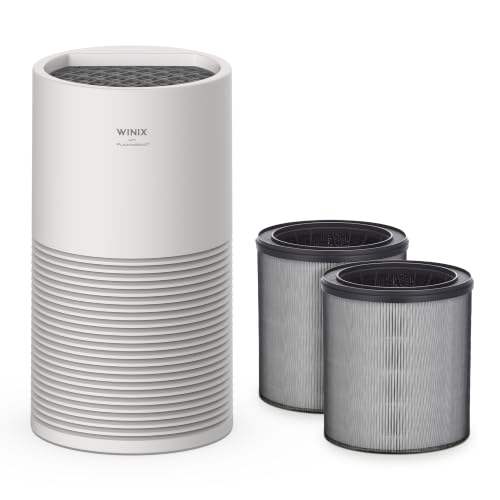
1. Best Overall: WINIX AT40 Air Purifier
The WINIX AT40 is the best air purifier for dust for most homes, at around $150. It includes two sets of filters, which covers up to about two years of filtration.
Why it made the list: its True HEPA filter captures 99.99% of airborne particles including dust, pollen and pet dander down to 0.01 microns, according to Winix, and it is AHAM Verified for 410 square feet.
- Highlights: cleans rooms up to 1,968 square feet once per hour (or 492 square feet in 15 minutes); an air quality display with color coded LEDs; auto mode; carbon filter for odors; WiFi control through the Winix Smart App.
- Trade off: the 1,968 square foot figure is for one air change per hour, so for heavy dust, plan around the smaller verified room size.
Best for: living rooms, large bedrooms and homes with pets. Skip it if you only need a desk sized unit.

2. Best Budget: Clorox Small Room True HEPA Air Purifier
The Clorox Small Room Air Purifier is the best budget air purifier for dust, at around $60. It is a compact tabletop unit for small spaces.
Why it made the list: a 2 stage 360 degree filter combines an outer pre filter for large dust particles and pet hair with a True HEPA layer that captures 99.97% of particles as small as 0.1 microns.
- Highlights: cleans the air up to 5 times per hour in an 80 square foot room; 3 fan speeds; 8, 4 or 2 hour timer; quiet low speed with an adjustable night light; replace filters every 6 to 12 months.
- Trade off: it is sized for small rooms, so it cannot keep up in a living room or open plan space.
Best for: bedrooms, nurseries, dorm rooms and home offices. Skip it for rooms larger than about 200 square feet.

3. Best Premium / Upgrade Pick: LEVOIT LV-H133 Air Purifier
The LEVOIT LV-H133 is the best upgrade air purifier for dust, at around $250. It is built for large rooms with open floor plans.
Why it made the list: a CADR of 274 CFM moves a lot of air, and its 3 stage filtration with an H13 True HEPA filter captures at least 99.97% of 0.3 micron particles such as dust, dander, pollen and smoke.
- Highlights: auto mode with an infrared air quality sensor adjusts fan speed; sleep mode as low as 25dB with display lights off; 1 to 12 hour timer; 49W rated power; CARB, ETL and Energy Star certified.
- Trade off: it is larger than most home purifiers and needs floor space with clearance on all sides.
Best for: open kitchens, living rooms, lofts and basements. Skip it if your space is a single small bedroom.

How We Chose the Best Air Purifiers for Dust
We compared air purifiers on filter type, clean air delivery rate (CADR) and certified room size, pre filtration, noise, filter replacement cost, smart features and price. Our sources were manufacturer specifications, AHAM and certification data, the details in each Amazon listing and patterns across large volumes of verified buyer feedback, with extra weight on reports about visible dust reduction, noise and filter costs. We did not run our own trials.
How to Choose an Air Purifier for Dust
The best results come from matching filtration and airflow to your room.
True HEPA Filtration
True HEPA filters capture at least 99.97% of particles at 0.3 microns, the size that is hardest to trap, and they catch larger dust even more efficiently. Avoid filters labeled "HEPA type" or "HEPA like," which do not meet the same standard. H13 filters are a step above standard true HEPA.
CADR and Room Size
Clean air delivery rate (CADR) measures how much filtered air a purifier delivers, and the dust CADR is the most relevant number here. A good rule is a CADR of at least two thirds of the room's square footage. For heavy dust, choose a purifier rated for a room larger than yours, and look for 4 to 5 air changes per hour.
Pre Filter
A washable or vacuumable pre filter catches lint, hair and large dust before it reaches the HEPA layer, which extends HEPA filter life and keeps airflow strong. Clean it every two to four weeks in dusty homes.
Noise
Purifiers work best running continuously. Look for sleep modes around 25 to 30dB for bedrooms. Larger units can run at lower speeds and still move enough air, so they are often quieter than small units at high speed.
Filter Costs
Replacement filters cost about $20 to $90 and typically last 6 to 12 months. Check prices and availability before buying, since filter costs often exceed the purifier's price over several years.
Smart Features
Air quality sensors and auto mode increase fan speed when dust rises, such as during vacuuming. App control and filter life indicators add convenience. Avoid ionizers or ozone generators if you are sensitive to ozone.
How Much Should You Spend?
- Under $75: small room true HEPA units for bedrooms and offices.
- Under $175: mid size purifiers for living rooms with auto modes.
- Under $300: high CADR units for large and open plan rooms.
Where to Place an Air Purifier for Dust
- Put it in the room where you spend the most time, such as the bedroom or living room.
- Leave at least 12 to 18 inches of clearance around intake and outlet.
- Place it away from walls and corners where airflow is restricted.
- Keep it near dust sources like entryways, but not behind furniture.
- Close doors and windows while it runs for faster results.
Other Ways to Reduce Household Dust
An air purifier works best alongside good cleaning habits. Vacuum weekly with a HEPA vacuum, dust with damp microfiber cloths rather than feather dusters, wash bedding weekly in hot water and use doormats to trap outdoor dirt. Replace your HVAC filter every 1 to 3 months with a MERV 11 to 13 filter if your system supports it, and keep indoor humidity around 40 to 50 percent. For pet related dust and dander, see our best air purifier for pets guide.
Air Purifier Maintenance
- Vacuum or rinse the pre filter every few weeks.
- Replace HEPA and carbon filters as the indicator or manual recommends.
- Wipe the exterior and vents to prevent dust buildup.
- Reset the filter indicator after each replacement.
FAQs
What is the best air purifier for dust?
For most homes, the WINIX AT40 is the best air purifier for dust thanks to its true HEPA filter, AHAM verified room size and included spare filters. The Clorox Small Room unit is the best budget option, and the LEVOIT LV-H133 is best for large rooms.
Do air purifiers really reduce dust?
Yes. A true HEPA air purifier captures airborne dust before it settles, which reduces how often surfaces need dusting. It cannot remove dust already on floors and furniture, so regular cleaning still matters.
What size air purifier do I need for dust?
Choose a purifier with a CADR of at least two thirds of your room's square footage, or a rated room size larger than your room. Larger rooms and dusty homes benefit from higher CADR.
Should I run an air purifier all day?
Yes. Running continuously on a low or auto setting keeps dust levels down, since new dust is constantly created. Most purifiers use little electricity on low speeds.
How often should I change the filter?
Most HEPA filters last 6 to 12 months; dusty homes and pets shorten that. Clean pre filters every few weeks and replace HEPA filters when airflow drops or the indicator lights up.
What is the most reliable air purifier brand?
Winix, Levoit, Coway, Blueair and Honeywell are well known air purifier brands. Compare CADR, filter costs and certifications rather than brand alone.
Final Verdict
The WINIX AT40 is the air purifier we would choose first for dusty living rooms and bedrooms, the Clorox Small Room unit is the budget pick for small spaces and the LEVOIT LV-H133 is the upgrade for open plan areas. Match CADR to your room, run it continuously and keep up with filters, and the best air purifier for dust will leave your home cleaner between dustings.


