
Best Air Purifiers for Smoke (2026): 3 Picks for a Faster, Deeper Clean
Disclosure: We may earn a commission when you buy through links on this page, at no extra cost to you. As an Amazon Associate I earn from qualifying purchases. Learn more

Three picks for the best air purifier for smoke and how to choose HEPA, carbon and the right size.
Smoke is one of the hardest things for an air purifier to handle. Wildfire smoke, cooking smoke and tobacco smoke contain fine particles that slip deep into the lungs, along with gases and odors that cling to fabrics and walls. A purifier that only has a thin carbon sheet or an undersized fan will barely make a dent. The best air purifier for smoke pairs a true HEPA filter for fine particles with a substantial activated carbon filter for odors and gases, and moves enough air to clean your room several times an hour.
Below are our three top picks, followed by a buying guide on HEPA and carbon filtration, room size and CADR, sensors and filter costs, plus tips that make any purifier more effective during smoky days.


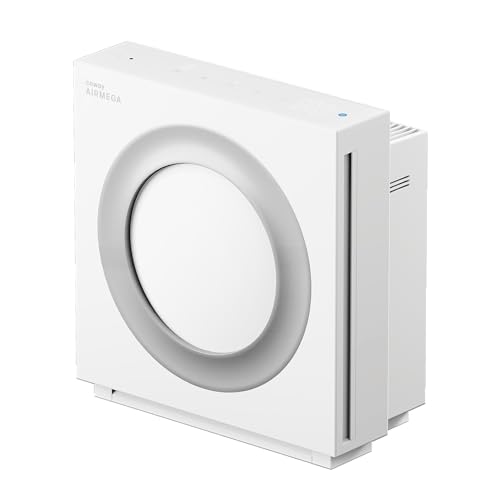
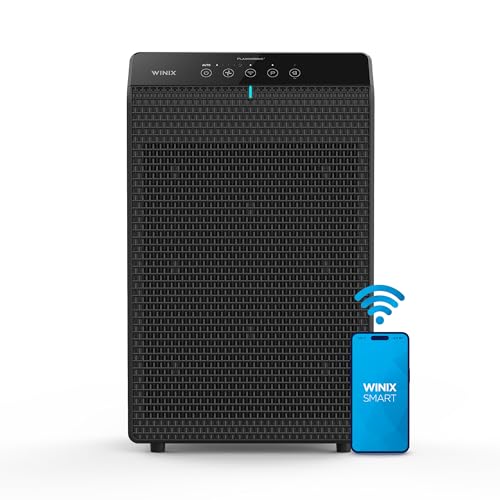


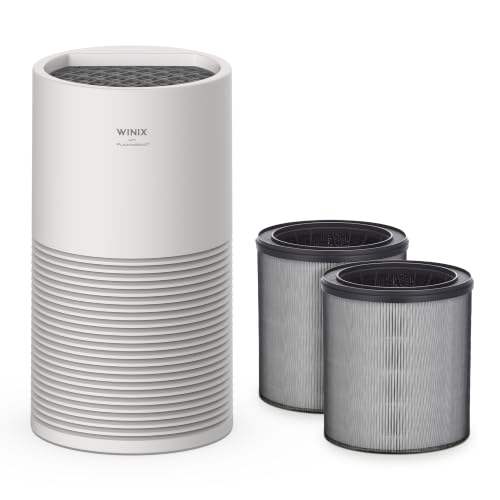
Our Top Picks at a Glance
The WINIX 5510 is the best air purifier for smoke overall for its true HEPA and high deodorization carbon filter at a reasonable price, the Coway Airmega 150 is the best pick for bedrooms and smaller rooms, and the Coway Airmega Mighty2 is the best upgrade for large living spaces with a laser particle sensor and a 3 year warranty.
| Award | Product | Key Spec | Best For |
|---|---|---|---|
| Best Overall | WINIX 5510 | True HEPA, carbon filter, AHAM Verified at 392 sq ft, app control | Living rooms and bedrooms |
| Best for Bedrooms | Coway Airmega 150 | HEPA plus carbon, up to 1,035 sq ft per hour, 3 year warranty | Bedrooms and offices |
| Best Premium / Upgrade Pick | Coway Airmega Mighty2 | HEPA and Active Carbon Max2 filter, laser sensor, up to 1,800 sq ft per hour | Large rooms and open plans |
Our 3 Top Picks for the Best Air Purifiers for Smoke
Each pick below explains who it suits, its strengths and one honest limitation.
1. Best Overall: WINIX 5510 Air Purifier
The WINIX 5510 is the best air purifier for smoke for most homes, at around $180. It combines strong particle filtration with a dedicated odor filter.
Why it made the list: Winix says its True HEPA filter captures 99.99% of airborne particles including smoke as small as 0.01 microns, while an advanced carbon filter reduces VOCs and household odors from cooking, pets and smoke.
- Highlights: AHAM Verified at 392 square feet and rated to clean up to 1,882 square feet once an hour; washable fine mesh pre filter; air quality indicator; auto mode with smart sensors; Winix Smart App control; 23.5dB on the lowest speed.
- Trade off: the carbon filter is a lighter pellet layer than dedicated heavy carbon purifiers, so it is better for particles and everyday odors than for heavy tobacco smoke.
Best for: wildfire smoke days, cooking smoke and general allergies. Skip it if someone smokes indoors daily.

2. Best for Bedrooms: Coway Airmega 150
The Coway Airmega 150 is the best air purifier for smoke in bedrooms and offices, at around $190. It is compact and quiet enough for overnight use.
Why it made the list: it combines a HEPA filter, a carbon filter and a washable pre filter, and Coway lists it for rooms up to 1,035 square feet per hour with an air quality monitor and auto mode.
- Highlights: designed for smoke, pollen and dander; compact footprint; 3 year warranty.
- Trade off: it moves less air than large room models, so it cannot keep up in open living areas during heavy wildfire smoke.
Best for: bedrooms, nurseries and home offices. Skip it for large open spaces.

3. Best Premium / Upgrade Pick: Coway Airmega Mighty2
The Coway Airmega Mighty2 is the best upgrade air purifier for smoke, at around $270. It is the next generation of Coway's popular Mighty purifier.
Why it made the list: an IEST certified 3 stage system pairs a washable pre filter with a 2 in 1 HEPA and Active Carbon Max2 filter, and Coway says it purifies up to 900 square feet in 30 minutes or 1,800 square feet in an hour.
- Highlights: MegaScan laser sensor detects PM1, PM2.5 and PM10 in real time with a numerical display; smart mode adjusts airflow automatically and switches to eco mode when air is clean; precise filter life indicator; 3 year limited warranty.
- Trade off: replacement Max2 filters cost more than basic HEPA filters.
Best for: large living rooms, open plan homes and wildfire regions. Skip it for a single small room.

How We Chose the Best Air Purifiers for Smoke
We compared air purifiers on HEPA filtration, activated carbon content, clean air delivery rate and room size ratings, sensors and auto modes, noise, filter costs and warranty. Our sources were manufacturer specifications, AHAM and certification data, the details in each Amazon listing and patterns across large volumes of verified buyer feedback, with extra weight on reports from wildfire seasons and smoke odor reduction. We did not run our own trials.
How to Choose an Air Purifier for Smoke
Smoke needs both particle and gas filtration. These factors matter most when choosing the best air purifier for smoke.
True HEPA for Smoke Particles
Smoke particles are mostly under 1 micron, so a true HEPA filter, which captures at least 99.97% of 0.3 micron particles and smaller ones even more efficiently, is essential. Avoid "HEPA type" filters that do not meet the standard.
Activated Carbon for Odors and Gases
HEPA filters do not remove smoke odors or gases like VOCs. Activated carbon adsorbs them. More carbon, measured in weight or as granular pellets rather than a thin coated sheet, lasts longer and removes odors more effectively. Heavy tobacco smoke requires substantial carbon.
CADR and Room Size
The smoke CADR shows how quickly a purifier removes smoke particles. Choose a smoke CADR of at least two thirds of your room's square footage, and size up for wildfire smoke or smokers. Aim for 4 to 5 air changes per hour.
Sensors and Auto Mode
PM2.5 sensors detect smoke and boost fan speed automatically. Laser sensors are more accurate than basic infrared sensors. Numerical displays let you see when air quality improves.
Noise and Energy Use
Purifiers work best running continuously. Look for quiet low speeds for bedrooms and Energy Star certification to keep power costs down.
Filter Costs
Smoke loads filters quickly. Carbon may need replacing every 3 to 6 months with heavy smoke, and HEPA every 6 to 12 months. Check replacement prices before buying.
How Much Should You Spend?
- Under $150: small room HEPA purifiers with light carbon layers.
- Under $200: mid size purifiers with HEPA, carbon and auto modes.
- Under $300: large room purifiers with laser sensors and longer warranties.
Wildfire Smoke vs Cigarette Smoke
Wildfire smoke is dominated by fine particles, so high CADR HEPA purifiers in every main room help most, along with keeping windows closed. Cigarette smoke adds heavy odors, tar and gases that saturate carbon quickly, so it needs much more activated carbon and frequent filter changes. No air purifier removes all secondhand smoke risks; the most effective step is not smoking indoors.
Tips to Reduce Smoke Indoors
- Keep windows and doors closed during wildfire smoke events.
- Set HVAC systems to recirculate and use MERV 13 filters if your system supports them.
- Run purifiers on high when smoke is heavy, then let auto mode take over.
- Place purifiers in the rooms you use most, especially bedrooms.
- Avoid adding indoor smoke from candles, frying or wood stoves on smoky days.
- Wash fabrics and clean surfaces to remove lingering odors after smoke exposure.
Where to Place a Smoke Air Purifier
Place the purifier where you spend the most time, at least 12 to 18 inches from walls and furniture so air can flow freely. In bedrooms, run it on a quiet setting all night. During wildfire events, a purifier in each bedroom and the main living area is more effective than one large unit moved between rooms. Keep doors closed to the room you are purifying for faster results.
Common Mistakes to Avoid
- Choosing an ionizer or ozone generator: ozone irritates lungs and does not remove smoke particles safely.
- Buying too small: undersized purifiers cannot keep up with heavy smoke.
- Ignoring carbon: HEPA alone will not remove smoke odors.
- Letting filters overload: clogged filters reduce airflow and effectiveness.
- Running it only occasionally: continuous operation keeps levels down.
FAQs
What is the best air purifier for smoke?
For most homes, the WINIX 5510 is the best air purifier for smoke thanks to its true HEPA and carbon filters, auto mode and app control. The Coway Airmega 150 suits bedrooms, and the Coway Airmega Mighty2 suits large rooms.
Do air purifiers really remove smoke?
Yes. True HEPA purifiers remove most fine smoke particles, and activated carbon reduces odors and some gases. They work best in closed rooms sized to their CADR.
Can an air purifier remove cigarette smoke smell?
It can reduce smell with substantial activated carbon, but heavy, ongoing indoor smoking saturates filters quickly. Cleaning fabrics and walls and smoking outdoors are more effective.
How often should I change filters during wildfire season?
Check filters monthly during heavy smoke. Carbon filters may need replacing every few months and HEPA filters sooner than the usual 6 to 12 months.
Should I run my air purifier all day during smoke events?
Yes. Run it continuously on high or auto mode with windows closed for the best indoor air.
What is the most reliable air purifier brand for smoke?
Winix, Coway, Levoit, Blueair and IQAir are well known brands. Compare smoke CADR, carbon content and filter costs.
Final Verdict
The WINIX 5510 is the air purifier we would choose first for smoke in most rooms, the Coway Airmega 150 is the pick for bedrooms and the Coway Airmega Mighty2 is the upgrade for large spaces. Pair true HEPA with real carbon, size it for your room and run it continuously, and the best air purifier for smoke will keep your indoor air cleaner when the air outside is not. See our best air purifier guide for more options.


