Best Broom and Dustpan for Hardwood Floors in 2026: A Buying Guide
Disclosure: We may earn a commission when you buy through links on this page, at no extra cost to you. As an Amazon Associate I earn from qualifying purchases. Learn more

Sweep hardwood without scratching the finish or scattering dust. Compare bristle softness, dustpan lip seals, handles and upright dustpan designs.
Hardwood floors show everything: dust lines along the baseboards, pet hair in the corners, and fine grit that crunches underfoot. They also punish the wrong tools, because a stiff bristle or a gritty dustpan edge can dull a finish that cost real money to apply. The challenge is picking a broom soft enough to protect the wood yet shaped to actually capture fine dust instead of pushing it into the air. The best broom and dustpan for hardwood floors pairs split tip bristles with a dustpan lip that seals flat, and this guide explains how to judge both. The comparison table below shows the main set styles side by side.
You will also find technique notes here, because on hardwood the way you sweep matters almost as much as the tool: slow strokes, the right direction, and a dustpan habit that stops the last line of dust from escaping.


Who Should Buy Which Broom and Dustpan for Hardwood Floors?
Whole Home Hardwood Owners Doing Daily Sweeps
If hardwood runs through most of your home, your broom is a daily tool and comfort becomes a real feature. A full length handle that lets you stand upright, a head wide enough for open rooms but angled for corners, and a dustpan that stands on its own between passes all reduce the friction of a quick daily sweep. This group should also weigh the best broom and dustpan sets sold for mixed flooring, since many homes pair hardwood with tile in kitchens and baths.
Pet Owners Chasing Hair and Fine Dander Dust
Pet hair on hardwood behaves differently from dust: it clings with static, gathers along walls, and floats away from a fast broom. Pet owners do best with soft split tip bristles that hold hair instead of flicking it, plus a dustpan with a fine rubber lip for the last pass along baseboards. A lobby style upright dustpan helps here too, because you can sweep hair straight in without crouching or chasing a hand pan that keeps sliding away from the pile.
Apartment Dwellers and Anyone Short on Storage
Small homes need a set that stores in a few inches of closet or hangs behind a door, which is why the best indoor broom and dustpan designs aimed at apartments are worth a look. Compact sets with a snap together handle and pan, or a slim upright dustpan, keep hardwood tidy without a utility closet. Renters should also prize soft bristles, since avoiding finish damage protects a security deposit as much as it protects the floor.
Key Features to Compare
Bristle Softness and Split Tips
This is the defining feature for hardwood. Flagged bristles, meaning each fiber end is split into finer tips, sweep up fine dust and hair without scratching, because the contact points are soft and numerous. Unflagged stiff bristles move bigger debris but can scuff softer finishes and they skate over fine dust, leaving it behind. Run your hand across the bristle ends in the store or check listing photos closely: you want a feathery edge, not a row of cut straws. A two texture head, soft on the outside with slightly firmer fibers in the middle, is a sensible compromise for homes that sweep up both dust and crumbs.
Dustpan Lip Seal and Edge Design
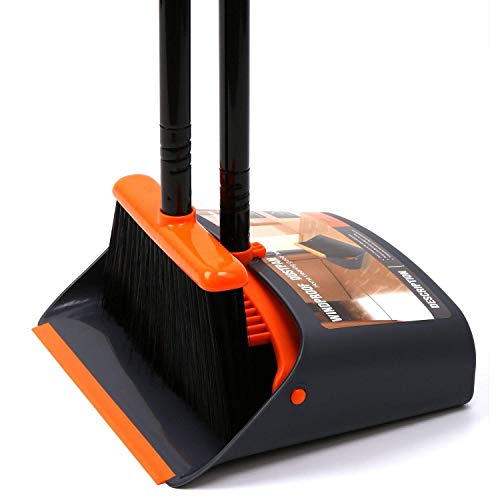
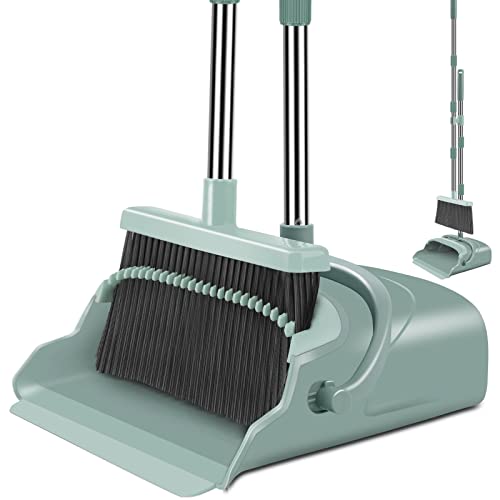
On a smooth floor, the dustpan decides whether the job takes one pass or five. A thin rubber or silicone lip that flexes flat against the boards leaves almost nothing behind, while a thick molded edge rides over dust lines. The pan itself should have no metal rim and no screws on the floor side, because dragged metal and trapped grit are what actually scratch finishes. Capacity can stay modest for indoor dust, but the pan should be wide enough that a full broom stroke lands inside it without aiming.
Handle Length and Sweeping Posture
A handle that is too short forces a stoop, and a stooped sweeper rushes and scatters dust. Look for a handle long enough to hold with both hands at waist height while the head lies flat, usually around 48 inches or more for taller users, with adjustable or telescoping options for mixed height households. A slight head angle helps the bristles meet the floor along their full edge. Grip comfort matters less for a five minute sweep, but for whole home sessions a padded or contoured grip prevents the hand fatigue that leads to sloppy technique.
Upright and Self Standing Dustpan Options
Lobby style dustpans with a long handle have moved indoors for good reason: you sweep standing up, the pan stays put thanks to its weight and shape, and many models fold flat or stand in a corner. Some include a built in comb that strips hair and dust from bristles, which keeps your hands out of the dirt. The trade off is size, since an upright pan needs floor space a hand pan does not. If you sweep daily, the upright design usually wins on convenience; if you sweep one small room, a compact hand set is simpler.
Static Behavior and Dust Control
Hardwood dust is light, dry and prone to static cling, especially in heated winter air. Some bristle materials hold a slight static charge that helps capture dust, while very slick fibers let it slide away. Technique can compensate: slow, short strokes near the dustpan and a barely damp paper towel finish pass along baseboards pick up what the broom leaves. If your home is very dry, a set whose bristles resist static buildup will scatter less dust into the air as you sweep toward the pan.
How to Sweep Hardwood Without Scratching or Scattering
Start at the far side of the room and sweep toward one collection point, pulling the broom toward you in short strokes rather than pushing debris ahead of it. Pulling keeps dust under the bristle edge and stops the flicking motion that launches fine particles into the air. Work along the grain where you can, and pay attention to the last two inches before baseboards, where dust lines form. Keep a separate stiff broom outside for the porch and garage: the best outdoor broom and dustpan for concrete will scratch a finish indoors, and a hardwood broom used on concrete will fray in weeks. Shake the broom head out over a bin outdoors rather than banging it on the floor, which bends bristle roots and can chip the floor edge.
Common Mistakes to Avoid
- Sweeping with fast, long strokes that throw fine dust into the air, so it resettles on the floor you just cleaned.
- Using a stiff outdoor broom indoors, which can dull softer finishes and leaves fine dust untouched anyway.
- Dragging a full dustpan across the boards, because grit trapped under the pan grinds into the finish like sandpaper.
- Banging the broom head against baseboards to clean it, which bends bristles and chips paint at the same time.
- Storing the broom standing on its bristles, which splays the flagged tips and ruins the soft edge hardwood needs.
How to Make Your Broom and Dustpan Last Longer
Wash the bristle head in warm water with a drop of dish soap every month or two, since a coating of household dust and cooking film makes soft bristles stiff and slippery. Comb out hair and fibers after pet heavy sessions and let the head air dry fully before storing. Hang the broom by its handle or store it head up so the flagged tips keep their shape. Wipe the dustpan lip clean before each use, because a single grain of sand stuck to the lip is enough to leave a scratch line and a dust trail. Replace the set when the bristle edge no longer feels feathery, since worn tips stop capturing fine dust no matter how good your technique is.
FAQ
Will a broom scratch a hardwood floor finish?
A soft flagged broom will not scratch a sound floor finish; scratches come from grit, not bristles. The danger is sweeping with debris already packed in the bristle block or dragging a pan with sand stuck underneath. Polyurethane finishes are tougher than waxed or oiled finishes, which deserve the softest bristles you can find. When in doubt, test a new broom in a closet corner and inspect the spot in angled light.
What is the difference between flagged and unflagged bristles?
Flagged bristles have split, feathered ends that multiply the contact points, which is why they capture fine dust and hair on smooth floors. Unflagged bristles end in a single cut point and are built to push heavier debris on rough surfaces. On hardwood, flagged bristles do the detail work, while unflagged bristles mostly skate over dust. Many good hardwood brooms use flagged fibers on the outer rows where the floor contact happens.
Why does dust scatter into the air when you sweep hardwood?
Dust scatters when the broom moves faster than the bristles can hold the particles, especially in dry air where static lifts fine dust. Slowing down and pulling the broom toward you keeps the pile under the bristle edge. A slightly open window or running an air filter afterward settles what little escapes. If scattering is constant, your bristles may be too stiff or worn smooth for the job.
Can a hardwood broom and dustpan set be used on tile and laminate?
Yes, soft flagged sets work well on tile, laminate and vinyl, since all of them reward a fine lip seal and punish scratching. On tile, pay attention to grout lines, where the broom needs a pass along the line rather than across it to lift settled dust. Laminate is the most scratch cautious of the group, so the same soft set is a safe match. One set can realistically cover every smooth indoor floor in the home.
How often should you replace a broom used on hardwood floors?
Replace it when the flagged tips wear down to blunt ends, which for daily sweeping usually happens after about a year to eighteen months. The signal is performance, not the calendar: if dust lines survive two careful passes and hair slips through the bristles, the edge is gone. Dustpans last longer, but a lip that no longer lies flat is its own replacement signal, since it defeats every pass you make.
Final Thoughts
Protecting hardwood while actually removing dust comes down to soft split tip bristles, a pan lip that seals flat, and unhurried technique. Choose the handle and pan style that fits how often you sweep and how much storage you have, and keep the stiff outdoor tools outside where they belong. With those pieces in place, the best broom and dustpan for hardwood floors makes a daily sweep quick, quiet and safe for the finish. Use the product table above to compare the main set styles before you buy.