Best Gel Mold Remover for 2026: Targeted Help for Grout and Seams
Disclosure: We may earn a commission when you buy through links on this page, at no extra cost to you. As an Amazon Associate I earn from qualifying purchases. Learn more

Choose the best gel mold remover for grout, caulk and washer seals by cling strength, active ingredient, dwell time and surface safety.
Mold in a bathroom rarely spreads across open tile. It settles into grout lines, silicone caulk, and the rubber seal of a washing machine door, exactly the places a thin spray runs off within seconds. The best gel mold remover solves that problem with viscosity: the gel clings where you place it, stays wet for hours, and works on the stain while you do something else. This guide covers how gels differ, which ingredients do the work, and how to choose a tube that matches your surfaces.
This guide walks through the spots where gel earns its keep, the features that separate a strong gel from a weak one, and the situations where surface mold is a sign of a bigger problem.


Who Should Buy Which Gel Mold Remover?
Showers With Blackening Grout and Caulk
If the mold in your home lives in grout lines and along the caulk where the tub meets the tile, gel is the format designed for you. A narrow nozzle lays a bead directly on the seam, and the cling keeps the active ingredient in contact for the hours these stains need. Shoppers working on a whole shower should also read our guide to the best mold remover for shower jobs, which compares gels with sprays and foams by area size.
Front Load Washer Owners With a Musty Door Seal
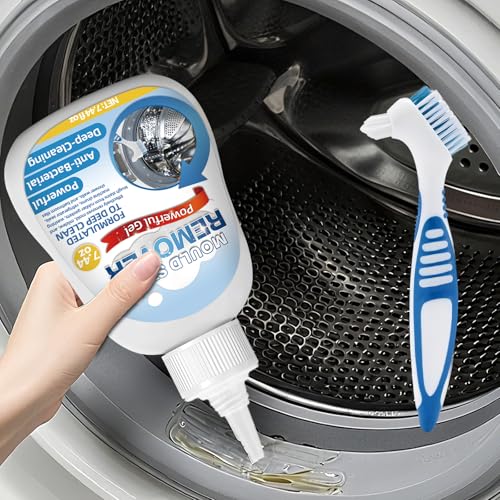
The folded rubber gasket on a front load washer traps water and grows mold that perfumes every load. Gel suits this spot because it stays in the gasket folds where a spray would drip away. Choose a formula the label allows on rubber, apply it to a dry gasket, and give it the full dwell time before wiping and running a rinse cycle. Leave the door ajar between loads afterward so the seal can dry.
Homes Treating Small, Stubborn Spots
Window frame corners, sink seams, refrigerator door gaskets, and the base of a toilet are small targets where a spray wastes product and wets everything nearby. A precision gel treats just the seam. For a wider survey of formats before you commit, our overview of the best mold remover types explains where gels fit among sprays, foams, and concentrates.
Key Features to Compare
Cling and Staying Power on Vertical Surfaces
Cling is the entire point of a gel, so judge it first. A good gel holds a bead on a vertical grout line for hours without sagging or sliding into the tub. Thin gels that behave like syrup give up the format advantage and perform like a spray at a higher price. Product descriptions that promise long contact on vertical surfaces, and tubes that dispense a controlled ribbon rather than a watery stream, are the signs to look for. The longer a stain has been growing, the more cling time matters, because the active ingredient can only work while it stays in place and wet.
Active Ingredient and Strength
Most strong gels rely on sodium hypochlorite, the active ingredient in bleach, suspended in a thick base that slows evaporation and extends working time. These formulas both kill mold and bleach away the dark stain it leaves. Peroxide based gels are milder, with less odor and lower risk to fabrics and some surfaces, but they may need repeat applications on old stains. A third group uses no bleach at all and focuses on lifting and cleaning rather than killing, which can leave roots behind in porous grout. Match strength to the stain: fresh pink or light gray growth responds to mild gels, while black stains that have sat for months usually need the bleach based category.
Nozzle Design and Application Control
The tube decides your precision. Narrow angled nozzles reach into the corner where caulk meets tile and lay a thin bead that wastes nothing. Wide flat applicators cover a full grout line in one pass on floors and larger seams. Some tubes include a sponge or brush tip that works the gel into textured grout as you apply it. Consider how much linear footage you need to treat: a bathroom with one bad caulk line needs a small precise tube, while a full shower regrout rescue calls for a larger tube with a wider tip so you are not squeezing a nearly empty tube by the last wall.
Dwell Time and Rinsing Requirements
Gel dwell times run far longer than sprays, commonly from several hours to overnight for deep stains. That long contact is why gels outperform on old discoloration, but it also means planning: a shower treated at night is out of service until morning. Check whether the formula rinses away with water alone or needs scrubbing and wiping, and whether the label allows use on a surface that stays damp. A practical tip is to apply gel to a dry surface whenever possible, because standing water in the seam dilutes the first layer of gel and weakens the result.
Surface and Color Safety
Bleach based gels can fade colored grout, lighten some plastics, and damage natural stone and metal finishes, so the label's surface list matters more than the marketing. Silicone caulk tolerates most gels, while stone tile, marble saddles, and chrome trim often do not. Try a hidden inch of seam first and check it after the full dwell time, not after ten minutes, since fading can develop slowly. Also protect nearby towels and bath mats during treatment, because a dripped bead of bleach gel will spot fabric exactly like liquid bleach.
Tube Size, Coverage, and Storage Life
Gel tubes are small, often a few ounces, because the format targets seams rather than walls. Estimate your footage before buying: one badly molded shower can consume a full tube between grout lines and caulk. Check the cap design too, since a tube that seals poorly dries at the tip and clogs before the next use. Store the tube upright in a cool cabinet, and note that bleach based gels lose strength over months once opened, so an old half tube may clean weakly even if it looks fine.
Where Gel Works and Where It Does Not
Gel is a precision tool, and its limits are as important as its strengths. It excels on seams, grout, gaskets, and corners. It is the wrong tool for broad flat areas such as a moldy bathroom ceiling or a large section of painted drywall, where our guide to the best mold remover for walls covers sprays and paints suited to big surfaces. Porous materials are another limit: mold on unsealed wood or deep inside old caulk often survives surface treatment, and moldy caulk usually needs cutting out and replacing rather than cleaning. Our notes on the best mold remover for wood explain the grain and moisture issues involved. Most importantly, surface products treat visible growth only. General EPA guidance suggests that mold covering a large area, or mold returning quickly after cleaning, points to a moisture problem or hidden growth that deserves a professional assessment rather than another tube of gel.
Common Mistakes to Avoid
- Applying gel to a soaking wet seam, which dilutes the active ingredient and shortens its effective contact.
- Wiping the gel off early because the stain looks lighter, before the full dwell time has killed growth in the grout pores.
- Using a bleach gel on colored grout or natural stone without a spot check, and discovering the fade after a full treatment.
- Treating moldy caulk again and again instead of replacing it, when growth inside the caulk bead cannot be reached by any surface gel.
- Mixing a gel treatment with another cleaner on the same area, which can release harmful gas when bleach meets acids or ammonia.
- Ignoring the moisture source, so the same seam grows mold again within weeks of a perfect cleaning.
Using and Storing Gel Mold Remover Safely
Work with the bathroom fan running or a window open, and wear household gloves, since bleach based gels irritate skin during long applications. Never layer a gel over a surface still wet with another cleaner; rinse and dry the area first so bleach never meets ammonia or acid residue. Keep tubes capped tightly, stored upright in a locked cabinet or on a high shelf away from children and pets, and away from heat that accelerates breakdown. After treatment, rinse the seam well and dry it with a towel, because a dry grout line is the simplest mold prevention there is. If anyone in the home has asthma or breathing difficulties, have them stay out of the room during treatment and until the area is rinsed and aired out.
FAQ
How long should you leave gel mold remover on grout?
Follow the tube label, which typically calls for several hours on grout and up to overnight on old caulk stains. The gel must stay in place and not dry out fully; in a warm, dry bathroom, a strip of plastic wrap pressed gently over the bead keeps it moist and active longer. Rinse thoroughly at the end of the dwell and inspect under bright light, since remaining shadow stains often need one repeat treatment rather than a longer first one.
Can gel mold remover fix moldy silicone caulk?
It can remove surface discoloration and kill growth on the face of the caulk, and for light staining that is enough. When black spots show through from behind the bead or return within a few weeks, the mold is growing inside or behind the caulk where no surface product reaches. At that point the durable fix is to cut out the old caulk, treat the joint, let it dry completely, and apply fresh caulk. Gel is a cleaner here, not a substitute for replacement.
Is gel mold remover safe on colored grout?
Bleach based gels carry a real fading risk on colored grout, especially dark and warm tones. Peroxide based and bleach free gels are the safer categories for colored installations. Whichever type you try, try one hidden inch at full dwell time first and compare it in daylight. Also note that grout sealer changes the picture: a well sealed colored grout resists both staining and fading better than an unsealed one.
Why does mold come back in the same seam after gel treatment?
Regrowth almost always traces to moisture rather than a weak product. A slow drip, a failed caulk joint letting water behind tile, or a bathroom that never fully dries will reseed the seam. Check for leaks, improve drying by running the fan for a good while after showers, and reseal grout once it is clean and dry. If the same spot returns quickly despite dry conditions, suspect growth behind the surface and consider professional inspection.
Can you use gel mold remover in a washing machine gasket?
Yes, if the label allows use on rubber. Apply the gel into the gasket folds on a dry seal, close the door partway to keep the gel in contact without sealing it airtight, and wait the labeled dwell time. Wipe out the loosened residue, then run an empty rinse or cleaning cycle. Going forward, wiping the gasket dry after the last load of the day prevents the moisture that feeds the mold in the first place.
Final Thoughts
Choose your gel by the seam you need to treat: strong cling, an ingredient matched to the stain age, and a nozzle sized to the joint. Check the surface warnings before the first bead, give the product its full dwell time, and fix the moisture that fed the mold. The product table above collects the key specs for a fast comparison. Used with that patience, the best gel mold remover turns the worst looking grout line in the bathroom back into a clean seam, and a dry, ventilated room keeps it that way far longer than any single treatment can.