Gumout
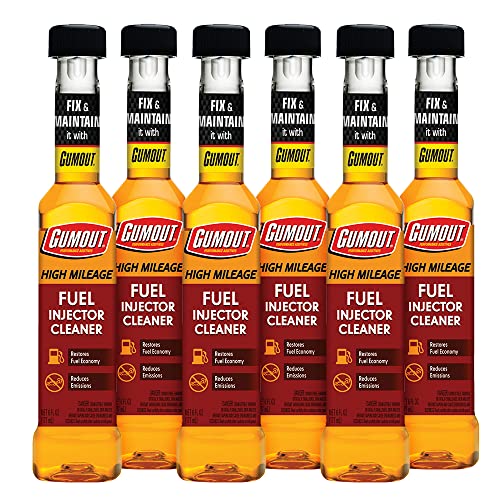
Gumout 510013W-6PK Fuel System Cleaner, 6 Pack
Disclosure: We may earn a commission when you buy through links on this page, at no extra cost to you. As an Amazon Associate I earn from qualifying purchases. Learn more
Highlights
- Specially formulated to remove carbon deposits from engines with over 75,000 miles
- Cleans fuel injectors, intake valves, and ports to restore performance and fuel economy
- Prevents future carbon build-up and reduces emissions
- Oxygen sensor safe and safe for use in turbocharged and supercharged vehicles
- Will not void OEM/manufacturer's warranty
Why You'll Love It
- Targets carbon deposits in higher-mileage engines, particularly those with over 75,000 miles
- Cleans fuel injectors, intake valves, and ports to help restore engine performance
- Helps recover fuel economy by addressing carbon buildup throughout key fuel system areas
- Helps prevent additional carbon accumulation and supports reduced emissions
- Suitable for oxygen sensors and turbocharged or supercharged vehicles
- Designed to maintain OEM warranty coverage when used as intended
Pros
- +Targets carbon deposits in higher-mileage engines
- +Covers injectors, intake valves, and ports
- +Compatible with turbocharged and supercharged vehicles
- +Oxygen sensor safe formulation
Cons
- -Formulated specifically for engines over 75,000 miles
Detailed Review
Gumout 510013W is a fuel system cleaner aimed at drivers who want to address carbon deposits in higher-mileage engines. Its particular focus is vehicles with over 75,000 miles, where carbon buildup is an important consideration. Rather than concentrating on just one part of the fuel system, this formula is designed to clean fuel injectors, intake valves, and ports. That broader coverage makes it worth considering if your priority is addressing deposits across several areas involved in engine operation.
The cleaning coverage is one of its most relevant features. Fuel injectors, intake valves, and ports all receive attention from the same formulation, with the stated goal of helping restore engine performance and fuel economy. For an owner concerned about the effects of carbon accumulation, that combination offers a clear reason to consider this product. It is intended to address existing deposits rather than simply serve as a general maintenance purchase with no particular cleaning focus.
Another important part of the formula's purpose is helping prevent future carbon buildup while reducing emissions. This gives the product two distinct roles: addressing existing accumulation and helping limit additional deposits. It is also described as oxygen sensor safe and suitable for turbocharged and supercharged vehicles. Those compatibility features make it relevant to shoppers who need to consider these particular vehicle configurations rather than choosing a cleaner without regard to those requirements.
The main consideration is its intended audience. The formulation is specifically positioned for engines with over 75,000 miles, so shoppers should think about whether that matches their vehicle and maintenance priorities. It should not automatically be treated as the right choice for every engine or every cleaning need. Verdict: This fuel system cleaner is a sensible option for owners of higher-mileage vehicles who want to address carbon deposits across injectors, intake valves, and ports. Consider it if its stated compatibility matches your vehicle and you value both deposit removal and prevention. Shoppers with different mileage-related needs should compare formulations intended for their particular circumstances.
Who Should Buy It
A great fit if you:
- Own a vehicle with over 75,000 miles and want a cleaner specifically formulated for higher-mileage engines.
- Want to address carbon deposits in multiple areas rather than focusing on fuel injectors alone.
- Drive a turbocharged or supercharged vehicle and need a cleaner with stated compatibility for that configuration.
- Want a fuel system maintenance product that addresses existing deposits while helping prevent future accumulation.
- Prefer a formulation identified as oxygen sensor safe when choosing a fuel system cleaning product.
Consider something else if you:
- Own a lower-mileage vehicle and would rather choose a general-purpose cleaner intended for a different mileage category.
- Need a specialized cleaning product for a particular component rather than a formula covering several fuel system areas.
Before You Buy
Confirm on the listing:
- Check whether your vehicle's mileage matches the stated focus on engines with over 75,000 miles.
- Confirm that your vehicle configuration is compatible, particularly if it has a turbocharger or supercharger.
- Review the complete product details to confirm what is included in the package and how the six-pack is presented.
- Check the product directions for the appropriate application method and any vehicle-specific considerations before purchasing.
How to compare your options: Start with the cleaning coverage. This formula addresses fuel injectors, intake valves, and ports, making those three areas important comparison points. Next, consider whether you need a product focused on higher-mileage engines and whether oxygen sensor safety and compatibility with turbocharged or supercharged vehicles matter to your situation. Finally, compare the stated approach to carbon prevention and emissions reduction. The right choice is the formulation whose intended application and compatibility align with your vehicle, rather than simply the one with the broadest claims.
Getting the Most From It
Start by confirming that your vehicle fits the intended application. The formulation is designed for engines with over 75,000 miles, so consider your vehicle's mileage and the reason you are looking for a fuel system cleaner before proceeding.
Read the product directions carefully before using it. Follow the manufacturer's instructions for the intended application, and check that the directions align with your vehicle's requirements. Avoid assuming that a cleaning product should be applied in a particular way without checking its instructions.
Keep the product's main purpose in mind when evaluating whether it suits your maintenance priorities. Its coverage includes fuel injectors, intake valves, and ports, while its stated benefits also include helping prevent future carbon buildup and reducing emissions.
If you own a turbocharged or supercharged vehicle, keep the stated compatibility information in mind when reviewing the directions. The formula is also identified as oxygen sensor safe. Following the product instructions and considering your vehicle's configuration are practical ways to make an informed purchase and application decision.
FAQ
What does Gumout 510013W Fuel System Cleaner do?
It is designed to remove carbon deposits from higher-mileage engines. It cleans fuel injectors, intake valves, and ports, with the goal of helping restore performance and fuel economy.
Is it suitable for engines with over 75,000 miles?
Yes. The formula is specifically designed for engines with over 75,000 miles, making higher-mileage vehicles its intended audience.
Can I use it in a turbocharged or supercharged vehicle?
Yes. The product is described as safe for use in both turbocharged and supercharged vehicles. It is also identified as oxygen sensor safe.
Does this cleaner help prevent future carbon buildup?
Yes. In addition to addressing existing carbon deposits, the formulation is designed to help prevent future accumulation and reduce emissions.
Does it cover more than fuel injectors?
Yes. Its stated cleaning coverage includes fuel injectors, intake valves, and ports, giving it a broader focus across several fuel system areas.
Product Details
| Brand | Gumout |
| ASIN | B07RDMLW6L |