6 Best Canister Vacuum For Carpet And Hardwood Floors 2026 - Expert Guide for Multi-Surface Homes
Disclosure: We may earn a commission when you buy through links on this page, at no extra cost to you. As an Amazon Associate I earn from qualifying purchases. Learn more

Maintaining a home with mixed flooring presents a unique cleaning challenge. Hardwood floors require gentle care with soft natural bristles and non-marring rubber wheels to prevent scratching, while carpets demand powerful suction and active agitation to pull embedded grit, pet hair, and allergens from deep within the pile. Finding the Best Canister Vacuum For Carpet And Hardwood Floors means selecting a machine that effortlessly bridges this gap without compromising performance on either surface. In our 2026 comprehensive evaluation, we examined 6 standout models across BISSELL, aspiron, and Kenmore to determine which machines deliver true multi-surface versatility, reliable durability, and superior indoor air filtration.
Whether your home features delicate solid oak, engineered planking, thick area rugs, or low-pile commercial carpeting, the right canister design provides significant ergonomic and performance advantages over heavy uprights. Canister vacuums place the motor and dust bin close to the ground, giving you a lightweight wand that glides easily under low furniture, across staircases, and into tight corners. To explore our broader collection of floor care guides and equipment analyses, visit our dedicated Vacuums & Floor Care hub.


Best Canister Vacuum For Carpet And Hardwood Floors Buying Guide
Navigating the specifications of modern canister vacuums requires understanding how suction dynamics, floorhead mechanics, and airflow filtration interact across different household materials. A vacuum that excels at lifting fine flour from a bare kitchen tile may push crumbs across high-pile carpet if it lacks proper agitation. Conversely, an aggressive spinning roller can scuff high-gloss hardwood or fray delicate woven rugs. Below, we break down the critical technical and practical criteria you should evaluate before choosing your next canister vacuum.
1. Floorhead Mechanics and Surface Versatility
The interface between your vacuum and your floor determines cleaning effectiveness more than raw motor wattage alone. When transitioning between hard floors and carpets, canister vacuums utilize three primary categories of floor attachments:
- Combination Floorheads: Tools like the Miele SBD 365-3 feature a rocker switch that extends stiff bristles for hard floors and retracts them for smooth gliding over low-pile carpets. These rely entirely on straight suction and are ideal for homes dominated by bare floors and flat rugs.
- Air-Driven Turbobrushes: Floorheads such as the STB 305-3 TurboTeQ use the vacuum's incoming airflow to spin an internal turbine, driving a rotating brush roll. This provides mechanical agitation to dislodge pet hair and dander from low-to-medium pile carpets without requiring an electric motor inside the wand.
- Dedicated Parquet Brushes: Specialized hard floor tools like the SBB Parquet-3 utilize natural horsehair or soft synthetic bristles with wide suction channels to sweep and vacuum fine dust simultaneously without leaving micro-scratches on sensitive wood finishes.
- Two-Motor Motorized Floorheads: Systems with independent brush roll motors, such as the Kenmore 200 Series, deliver consistent high-torque agitation across medium-to-deep carpets, featuring manual height adjustments to match specific carpet pile depths.
For homes with a 50/50 split of hardwood and medium-pile carpet, having both a dedicated hard floor tool and a rotating brush head provides the best balance of gentle wood care and deep fiber cleaning.
2. Suction Power, Motor Engineering, and Variable Speed Control
Suction strength is typically measured in kilopascals (kPa) or motor wattage. High-efficiency brushless motors, like those found in the Aspiron series producing up to 40kPa of suction, generate immense lift to pull dense debris out of deep crevices and floorboard gaps. However, maximum suction is not always desirable on all surfaces. If a vacuum pulls too hard on a lightweight scatter rug or delicate drapes, the nozzle will seal against the fabric, stopping airflow and making the wand impossible to push.
Variable suction control is an essential feature for whole-home cleaning. Multi-stage rotary dials, such as the 6-stage electronic suction controls on Miele Classic C1 models, allow you to dial down motor power for delicate upholstery, curtains, and lightweight rugs, then dial up full power for deep carpet extraction and bare floor sweeping. Rotary controls protect both the motor from overheating and your household textiles from damage.
| Floorhead Mechanism | Best Carpet Types | Hardwood Safety | Pet Hair Performance | Agitation Source |
|---|---|---|---|---|
| Combination Straight Suction | Low-pile, flatweave, commercial | High (with brush extended) | Moderate (relies on lint strips) | None (pure suction) |
| Air-Driven Turbobrush | Low-to-medium pile rugs | High (with alternate parquet tool) | Very High (agitated pickup) | Airflow-driven turbine |
| Dedicated Parquet Floorhead | Not suitable for carpets | Maximum (soft natural bristles) | High on hard surfaces | None (sweeping action) |
| Dual-Motor Powerhead | Medium-to-high pile, plush carpet | Moderate (must switch off roller) | Exceptional (deep fiber lift) | Electric dedicated motor |
3. Filtration Systems: HEPA vs. Multi-Stage Sealed Systems
Vacuuming inherently stirs up microscopic dust particles. If your canister does not have adequate filtration and a tightly sealed housing, fine allergens, dust mite feces, and pet dander will blow right through the exhaust into your living space. For family members with allergies or asthma, filtration quality should be a primary consideration.
True HEPA filtration systems, found in models like the Kenmore 81214 and the HEPA-H10 sealed configurations in Aspiron units, capture 99.97% of airborne particles down to 0.3 microns. Meanwhile, tiered systems like Miele's AirClean utilize self-sealing multi-ply synthetic filter bags combined with motor protection filters and electrostatically charged exhaust pads to ensure the expelled room air is cleaner than the surrounding ambient air. Always verify whether a vacuum features a sealed system, which guarantees that all air passing into the nozzle must exit through the filters without leaking around gaskets.
4. Bagged vs. Bagless Dust Containment
The choice between bagged and bagless canisters involves balancing ongoing operating costs against hygienic disposal convenience. Understanding the trade-offs will help you match the machine to your family's routine:
Bagged Canisters: Bagged models like the Miele Classic C1 and Kenmore 200 Series collect debris in high-capacity multi-layer synthetic bags (ranging from 4.5 to 4.8 quarts). When full, self-locking collars seal the bag shut, preventing dust plumes during disposal. Bagged systems require purchasing replacement bags periodically, but they protect the internal motor from fine particulate buildup and keep hands completely clean.
Bagless Canisters: Modern bagless units like the Aspiron 4QT series and Eureka NEN180 eliminate recurring bag expenses. Cyclonic separation spins heavy grit and hair to the bottom of the transparent cup, maintaining steady airflow. Extra-large 4-quart dust cups significantly reduce the frequency of emptying. However, emptying a bagless cup requires releasing the trap door over a trash bin, which can release a slight cloud of dust, making it preferable to empty them outdoors if you are sensitive to allergens.
5. Operating Radius, Maneuverability, and Weight Distribution
Cleaning large rooms, long hallways, and multilevel homes requires a vacuum with adequate operating range. The total cleaning radius consists of power cord length plus hose and telescopic wand reach. A vacuum with a 20-foot to 24-foot power cord paired with an extended wand provides a 30 to 33-foot working perimeter, allowing you to clean multiple adjacent rooms without constantly searching for new electrical outlets.
Maneuverability is also governed by wheel architecture. Quality canisters feature 360-degree swiveling caster wheels on the base, allowing the canister to track seamlessly behind you without tipping over when navigating around table legs or sofa corners. Keeping the total canister body weight under 15 to 20 pounds makes carrying the unit up and down stairs manageable for any household member. Automatic cord rewind pedals are an indispensable convenience, pulling the entire power cable neatly into the chassis with a single tap of your foot.
6. Surface Protection for Hardwood and Custom Flooring
Hardwood, bamboo, and polished stone flooring are susceptible to scratching from abrasive grit trapped under vacuum floorheads or hard plastic wheels dragging across the floor. When shopping for the Best Canister Vacuum For Carpet And Hardwood Floors, look for floorheads lined with soft felt strips, dense natural bristles, or rubberized bumper guards. Wheels coated in smooth thermoplastic polyurethane or rubber ensure smooth rolling without scuffing delicate polyurethane floor finishes. Exploring proper techniques in our Vacuums & Floor Care articles can further extend the lifespan of your home flooring.
Our Research Methodology & Why You Can Trust Us
Our floor care recommendations are built upon rigorous, objective analysis of mechanical specifications, engineering designs, filtration ratings, and extensive aggregated consumer feedback patterns. Rather than relying on superficial marketing claims, we evaluate the foundational engineering that dictates how well a canister vacuum performs over years of daily household use. We analyze sealed system airflow rates (CFM), motor thermal dissipation, brush roll drive mechanisms, cord reel tension durability, and material quality across all major price points from $90–$369.
To ensure our guides reflect actual long-term ownership experiences, we study thousands of verified user reports to identify common friction points such as filter clogging rates, hose flexibility in cold weather, wand latch durability, and floorhead maneuverability on thick carpets. We continuously audit and update our buying guides every October 2026 to incorporate new product revisions, motor updates, and emerging floor care technologies. Our goal is to provide honest, transparent, and actionable advice that helps American households maintain clean, healthy living environments.
Final Thoughts
Selecting the Best Canister Vacuum For Carpet And Hardwood Floors ultimately depends on the specific balance of flooring types in your home, your filtration requirements, and your preference between bagged convenience and bagless savings. Each of the 6 models we analyzed brings distinct strengths to household floor care:
For homes with a diverse combination of hardwood, tile, and low-to-medium pile carpets, our top overall recommendation is the Miele Classic C1 Turbo Team Vacuum for Hard Floors. Its combination of the dedicated Parquet-3 hard floor tool and the air-driven STB 305-3 TurboTeQ brush head delivers thorough cleaning without risking scratches on fine wood. If you have mostly hard floors with delicate area rugs and prioritize German engineering and sealed air cleanliness, the Miele Classic C1 Pure Suction Vacuum for Hard is a premier bagged option.
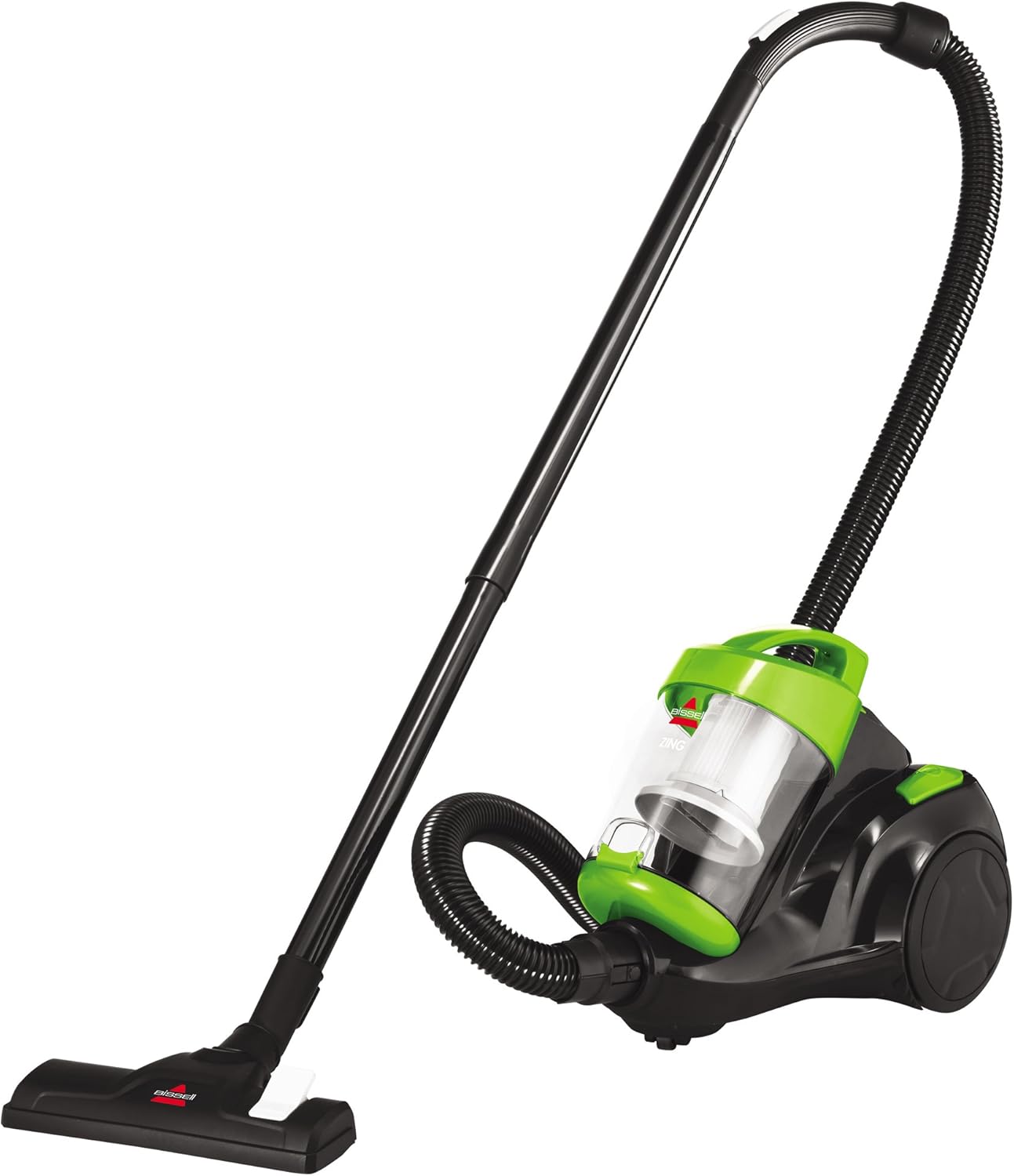
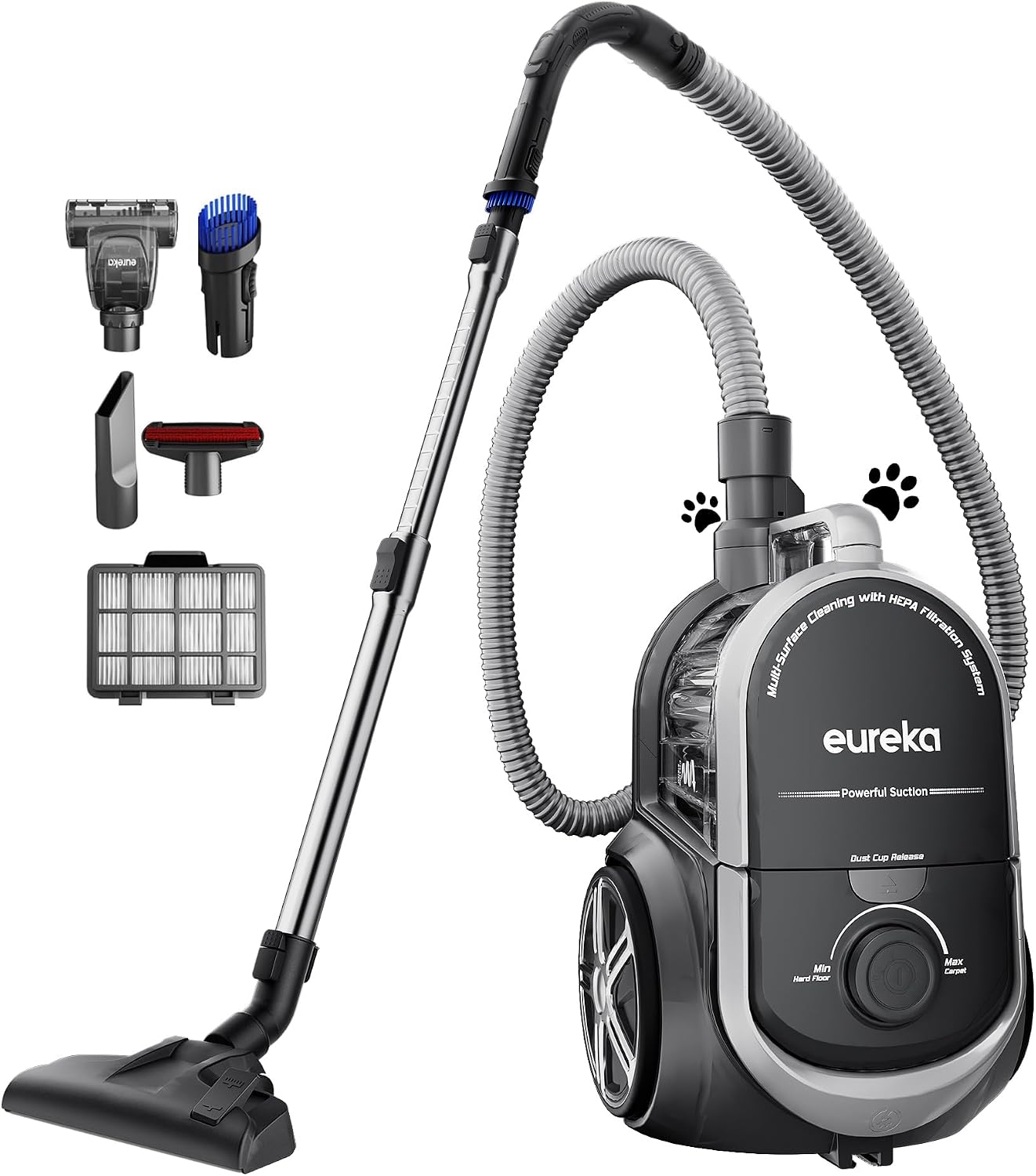
Pet owners and busy families dealing with thicker carpets will benefit significantly from the Kenmore 81214 200 Series Pet Friendly Lightweight, which features a powerful 2-motor system, 4-position carpet height adjustment, and certified HEPA filtration. For those who prefer a high-powered, bagless design with no recurring consumable costs, the Bissell Zing 2156A Canister Vacuum offers a 2-liter cyclonic dust cup and switches from carpets to hard floors with the flip of a switch, while the Aspiron Canister Vacuum, Upgraded 1600W Bagless provides exceptional 40kPa suction and a massive 4-quart dust cup. Budget-conscious shoppers will appreciate the compact, lightweight efficiency of the Eureka Bagless Canister Vacuum Cleaner for fast daily touch-ups. For more maintenance strategies and equipment comparisons, be sure to browse our comprehensive Vacuums & Floor Care resources.
Frequently Asked Questions
Can a canister vacuum scratch my hardwood floors?
A canister vacuum will not scratch hardwood floors if it is equipped with the correct floorhead. Use tools with soft natural bristles, such as dedicated parquet brushes, or combination tools with the hard floor bristle collar fully deployed. Always ensure the vacuum's caster wheels are clean and free of trapped pebbles or grit that could drag across polished surfaces.
What is the difference between a pure suction head and a turbobrush on carpet?
A pure suction head relies exclusively on the vacuum's airflow to pull surface dust from carpet fibers, which works well on flatweave and commercial low-pile rugs. A turbobrush incorporates a rotating roller driven by the incoming airflow to actively agitate carpet fibers, lifting embedded pet dander, hair, and sand from medium-pile carpeting.
How often should I clean or replace the vacuum filters?
For bagless models with washable HEPA and foam filters, rinse the filters every 4 to 6 weeks under cold water and let them air dry completely for 24 hours before reinstalling. For bagged systems, exhaust and motor protection filters should typically be replaced after every box of replacement dust bags or approximately once a year to maintain peak airflow.
Is a bagged canister vacuum better for allergy sufferers than a bagless unit?
Bagged canister vacuums are generally superior for severe allergy sufferers because the synthetic multi-ply bags feature self-sealing closures that trap dust, pollen, and pet dander inside when disposed of. Bagless units require opening a dust canister over a trash can, which can release a small cloud of particulate matter back into the air.
Why does my canister vacuum suction feel too strong on small area rugs?
High-powered canister vacuums create a tight vacuum seal against lightweight rugs, sucking the fabric into the nozzle and stalling airflow. To vacuum small throw rugs smoothly, use a machine with variable speed suction control or open the manual suction relief valve on the wand handle to reduce hold-down force while maintaining air movement. For more practical advice on floor tools, visit our Vacuums & Floor Care guide.