
Best Handheld Vacuums (2026): 3 Picks That Actually Get It Clean
Disclosure: We may earn a commission when you buy through links on this page, at no extra cost to you. As an Amazon Associate I earn from qualifying purchases. Learn more

Three picks for the best handheld vacuum, plus how to match type, power, runtime and storage to the messes you deal with most.
Spilled cereal under the high chair, sand on the car floor mats, cat hair on the sofa arm: most messes are too small to drag out a full size vacuum and too annoying to ignore. The best handheld vacuum lives within arm's reach, grabs those messes in seconds and goes back on its charger before the moment passes.
This guide looks at handheld vacuums from a practical cleaning point of view: which types handle which messes, how much time they really save, how safe they are to keep around kids and pets and what filters and batteries cost over the years. Three picks follow for different homes and budgets.




Quick Clean Summary
Here are the three picks at a glance. Prices move often, so check the product table above for current pricing.
| Award | Product | Key Spec | Best For |
|---|---|---|---|
| Best All Around Cleaner | BLACK+DECKER dustbuster AdvancedClean CHV1410L | 16V MAX battery, rotating slim nozzle, charging base | Everyday crumbs, cars and furniture |
| Best Budget Clean (Under $30) | BLACK+DECKER dustbuster QuickClean HNVC215B10 | Wall mount charger, washable filter, built in crevice tool | Kitchens, dorms and quick spills |
| Best for Deep Cleaning | Dyson Car+Boat Handheld | 115AW, up to 50 minutes, mini motorized tool | Upholstery, pet hair and car interiors |
Handheld Vacuum Buying Guide: Surfaces, Messes and Upkeep
A handheld vacuum is a support tool, so the right one depends on the messes you deal with most and where you will keep it. The sections below cover the choices that matter.
Types Compared by Cleaning Job
Classic dustbusters are compact, cordless units with a built in crevice nozzle. They are perfect for crumbs on counters, kitchen floors and car seats, and they charge on a wall mount or base so they are always ready. Most are budget friendly and very simple to use.
Pet handhelds add a motorized brush that pulls hair out of upholstery, stairs and pet beds. A brush with self cleaning or anti tangle design saves you from cutting hair off the roller. Car vacuums come either cordless or with a 12 volt plug for the car's outlet; corded car models never run out of battery but tie you to the vehicle.
Premium handhelds borrow motors and filters from full size stick vacuums. They cost more but deliver much stronger suction, longer runtime and better filtration, which matters for allergies and deep upholstery cleaning. Corded handhelds are rarer but offer unlimited runtime for detailing jobs. Wet dry handhelds can pick up small liquid spills, a useful option for homes with toddlers.
Features That Save Time
A charging base or wall mount is the biggest time saver because it keeps the vacuum visible and charged, so you actually use it. One touch bin emptying keeps your hands away from dirt, and a clear bin shows when it needs emptying. A rotating or slim nozzle reaches between seat cushions and into car door pockets.
For pet owners, a motorized pet brush turns a five minute couch cleanup into a one minute job. A battery level indicator prevents surprises, and a removable battery on some models lets you keep a spare charged. Attachments that store on the vacuum or its base are far more likely to get used than loose tools in a drawer.
Wattage, Power and Energy Use
Brands describe power in several ways: battery voltage (such as 16V MAX), air watts (AW) or pascals (Pa) of suction. Higher numbers generally mean stronger pickup, but the measurements are not always comparable across brands. As a rough guide, budget dustbusters handle crumbs and dust, mid range pet handhelds manage hair in fabric and premium models with around 100 AW or more handle deep upholstery cleaning.
Runtime matters as much as power. Budget handhelds often run about 10 to 15 minutes, while premium models can reach 30 to 50 minutes on low power. Charging uses very little electricity, but lithium batteries last longest when you avoid leaving them completely empty for long periods.
Safety Features and Certifications (UL/ETL)
Handheld vacuums are low risk, but a few details matter around children and pets. Look for a charger that sits securely, a bin latch that small hands cannot open easily and a battery that stays inside the housing. If the listing names a safety certification such as UL or ETL for the charger, that is a plus.
Only use a dry vacuum on dry messes; vacuuming liquids with a dry only model can damage the motor and create an electrical risk. Charge batteries on a hard surface away from water and heat, and follow the maker's instructions for battery care and disposal.
Counter Space and Dimensions
Where you keep a handheld decides how often you use it. Wall mounted chargers take no counter space and work well in kitchens, mudrooms and garages. Charging bases sit on a counter or shelf and need a small footprint plus access to an outlet. Car vacuums often store in a trunk bag.
Weight matters for comfort. Most handhelds weigh between about 1.5 and 3 pounds; heavier premium models feel solid but can tire your wrist during long upholstery sessions. Check the length too, since long models reach better but are harder to store in a drawer.
Bin Capacity and Filtration
Handheld bins are small, usually around a few ounces up to about half a liter, so expect to empty them after every bigger job. A wider bin opening and a one touch release make emptying cleaner and faster. Clear bins help you see when suction is about to drop because the bin is full.
Filtration varies widely. Basic dustbusters use a washable cloth or mesh filter that catches crumbs and visible dust. Premium models use multi stage or whole machine filtration that traps fine dust and allergens, which keeps the air cleaner while you vacuum. If someone in your home has allergies, finer filtration is worth paying for.
Batteries and Charging Habits
Lithium ion batteries are now standard, and they hold a charge for weeks on the shelf. Keep the vacuum on its charger or mount so it is always ready, unless the manual recommends otherwise. Avoid storing it in a hot car for long periods in summer, since heat shortens battery life.
Some models use removable batteries shared with power tools or other appliances from the same brand, which is handy if you already own that system. A removable battery also means you can replace it later instead of buying a whole new vacuum.
Price Tiers and Running Costs
- Under $30: basic dustbusters for crumbs and light dust.
- Under $60: stronger name brand handhelds with better batteries and nozzles.
- Under $100: pet focused models with motorized brushes and longer runtime.
- Under $250: premium handhelds with strong suction, long runtime and fine filtration.
- Over $250: stick vacuums that convert to handhelds, for people who want one tool for everything.
Running costs are low, which is part of the appeal: a replacement filter every year or so and possibly a new battery after several years. Washable filters lower the cost further.
3 Best Handheld Vacuums for Real Messes
These three handhelds stood out for how well they handle everyday messes, how easy they are to live with and the value they offer in their price range. Each mini review covers who it suits, its strengths and one honest limitation.
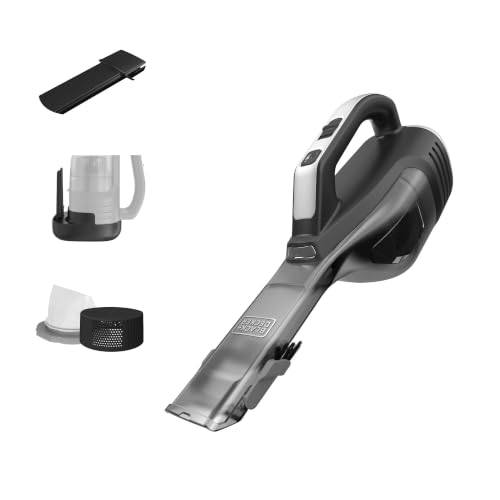
1. Best All Around Cleaner: BLACK+DECKER dustbuster AdvancedClean CHV1410L
Why it made the list: The dustbuster AdvancedClean is the definition of a dependable everyday handheld. It is light, simple and always ready on its charging base, and it is one of the most widely owned hand vacuums on Amazon, at around $60.
- Highlights: a 16V MAX lithium battery for strong suction in a compact body; a rotating slim nozzle plus a pull out crevice tool and flip up brush for cushions, shelves and car seats; cyclonic action that spins debris away from the filter to help keep suction steady.
- Trade off: It has no motorized pet brush, so embedded hair in upholstery takes more passes.
It also has a long track record, so replacement filters and accessories are easy to find years after purchase. That kind of support matters for a tool you will grab almost every day.
Best for: kitchens, family rooms and cars that need quick daily cleanups. Skip it if pet hair on fabric is your main problem.

2. Best Budget Clean (Under $30): BLACK+DECKER dustbuster QuickClean HNVC215B10
Why it made the list: At around $25, the QuickClean handles crumbs, spilled cereal and dusty shelves for less than the cost of a takeout dinner, and its wall mount keeps it out of the way.
- Highlights: a transparent bagless bowl and washable filter that keep upkeep cheap; a built in crevice tool for couch cushions and shelf tops.
- Trade off: Suction and runtime are modest, so it is best for light, dry messes rather than deep cleaning.
Its slim shape also fits in a kitchen drawer or cabinet if you prefer not to mount it on the wall.
Best for: dorm rooms, small apartments and as a second handheld for the kitchen. Skip it if you need to clean car interiors or pet beds regularly.

3. Best for Deep Cleaning: Dyson Car+Boat Handheld
Why it made the list: The Dyson Car+Boat brings full size stick vacuum performance to a handheld body. Dyson calls it its most powerful handheld, with 115 AW of suction and up to 50 minutes of runtime on low power.
- Highlights: a mini motorized tool that pulls pet hair and allergens out of fabric; whole machine filtration that traps 99.99 percent of particles as small as 0.3 microns, plus a crevice tool that reaches seven inches into gaps as narrow as half an inch.
- Trade off: It costs around $230, several times more than a basic dustbuster, and it is heavier in the hand.
Its two power modes let you stretch runtime for light dusting or switch to full power for embedded hair, and the combination tool swaps between a wide nozzle and a soft brush without changing attachments.
Best for: pet owners, allergy households and anyone who details their car regularly. Skip it if you only need to pick up crumbs.

How We Compared the Best Handheld Vacuums
We compared handheld vacuums on suction and runtime, bin capacity, attachments, ease of emptying and charging, weight, filtration, safety features and warranty terms. Our sources were manufacturer specifications, the details in each Amazon listing and patterns across very large volumes of verified buyer feedback, with special attention to comments about battery life after a year or more. We did not run our own trials. We gave extra weight to models with long sales histories, since they show how batteries and motors hold up over time, and we excluded models with unclear specs or frequent complaints about batteries failing early.
Picks by Mess and Surface
Different messes call for different handheld strengths. Use this list to match a type to your home.
- Kitchen crumbs and spilled dry food: a basic dustbuster on a wall mount near the counter.
- Stairs: a light handheld with a motorized brush; see our guide to the best handheld vacuum for stairs for focused picks.
- Pet hair on furniture: a pet model with a self cleaning motorized brush.
- Car interiors: a cordless model with a crevice tool, or a 12 volt option like those in our best 12 volt handheld vacuum roundup.
- Long detailing sessions: a model with no battery limit; our best corded handheld vacuum guide covers them.
- Allergies: a premium handheld with sealed, fine filtration.
- Small liquid spills: a wet dry handheld rated for liquids.
Many homes end up with two: a cheap dustbuster in the kitchen and a stronger pet or premium model for furniture and the car. That pairing covers nearly every small mess without dragging out the main vacuum.
Think about where messes happen in your home before you buy. A handheld stored in the kitchen will mostly see crumbs and spilled cereal, while one kept by the back door will deal with dirt, sand and pet hair. Matching the model to that spot makes it far more useful day to day.
Cleaning Routine: How to Get the Best Results
- Keep the handheld charged on its mount where messes happen most.
- Empty the bin after every use so suction stays strong.
- Use the crevice tool along seams and the brush on fabric for better pickup.
- Work slowly over upholstery to give suction time to lift hair and dust.
- Store it out of reach of toddlers and keep pets from chewing the charger cord.
Supplies, Refills and Running Costs
Most handhelds use a washable filter that should be rinsed every few weeks and replaced about once a year. Batteries typically last several years; some models let you buy a replacement, while others require a new vacuum. Buy parts made for your exact model, and recycle old lithium batteries at a battery drop off rather than putting them in the trash.
Over a five year span, most owners spend more on electricity for a full size vacuum than on parts for a handheld. The real cost driver is battery replacement, so choosing a model with an easy to find or removable battery can save you from buying a whole new unit later.
Cleaning Questions, Answered
How do you clean a handheld vacuum?
Empty the dust bin over a trash can after each use, then rinse the bin and filter in cool water every few weeks if the manual allows it. Let them dry completely, at least 24 hours, before reassembling. Remove hair from any brush roll and wipe the nozzle with a dry cloth.
What is the most reliable handheld vacuum brand?
BLACK+DECKER, Shark and Dyson are the most established handheld brands, with long product histories and easy to find parts. BLACK+DECKER leads on simple, affordable dustbusters, Shark on pet handhelds and Dyson on premium suction and filtration.
What is the best handheld vacuum?
For most homes, the BLACK+DECKER dustbuster AdvancedClean is the best handheld vacuum thanks to its reliable suction, slim rotating nozzle and convenient charging base. Budget shoppers can start with the QuickClean, and pet or allergy households should consider the Dyson Car+Boat.
How long does a handheld vacuum last?
A handheld vacuum usually lasts three to five years, and well cared for models often go longer. The battery is typically the first part to weaken. Emptying the bin often, cleaning the filter and avoiding storage at zero charge all help extend its life.
Is a handheld vacuum worth it?
Yes, for almost every home. A handheld vacuum handles small daily messes in seconds, which keeps floors and furniture cleaner between full vacuuming sessions. It is especially useful for families with kids, pets or cars, where crumbs and hair appear daily.
Clean Verdict
The BLACK+DECKER dustbuster AdvancedClean is the handheld most homes should start with, thanks to its dependable suction, handy nozzle and always ready charging base. The QuickClean is the low cost pick for light messes, and the Dyson Car+Boat is the upgrade for deep upholstery and car cleaning. Pick the one that matches your most common mess, and you will have the best handheld vacuum ready whenever crumbs strike.


