
Best Shop Vacs (2026): 3 Picks That Actually Get It Clean
Disclosure: We may earn a commission when you buy through links on this page, at no extra cost to you. As an Amazon Associate I earn from qualifying purchases. Learn more

Three picks for the best shop vac, plus how to match tank size, suction and power source to your messes.
A flooded basement, sawdust under the workbench, leaves packed into the car floor mats or broken glass on the garage floor: these are messes that would ruin a household vacuum. A shop vac handles them with a big canister, a tough motor and the ability to pick up both dry debris and liquid. The best shop vac for your home matches tank size to your jobs, has enough suction for heavy debris and is easy to empty, store and move.
This guide looks at shop vacs from a practical cleaning perspective: which type suits which mess, which features save time, how safe they are around kids and pets and what filters and bags cost over the years. Three picks follow for different homes and budgets.


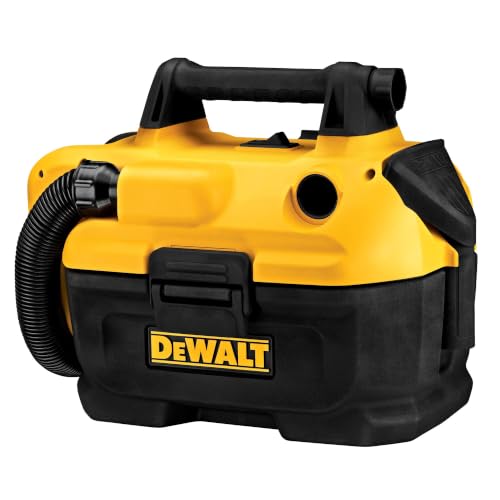
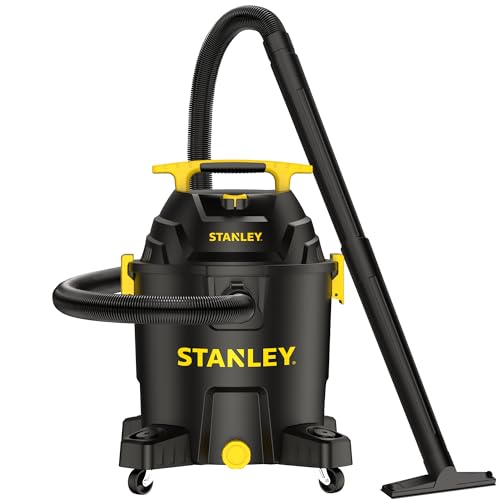
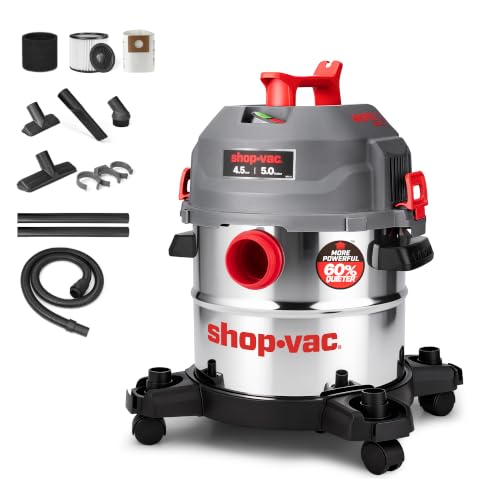


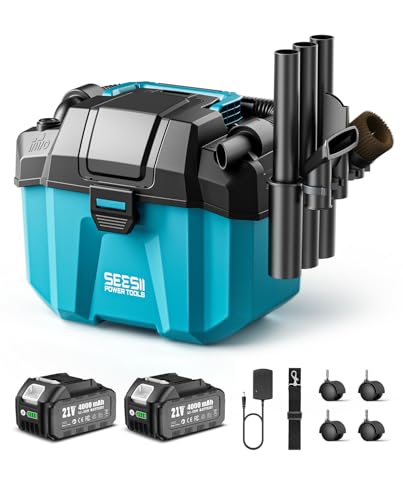
Quick Clean Summary
The DEWALT 9 gallon wet dry vac is the best all around shop vac, the CRAFTSMAN 2.5 gallon is the best budget pick and the EGO Power+ 9 gallon cordless vac is the best for deep cleaning anywhere without a cord. Check the product table above for current prices.
| Award | Product | Key Spec | Best For |
|---|---|---|---|
| Best All Around Cleaner | DEWALT DXV09P 9 Gallon | 5 peak HP, built in drain, blower port | Garages, basements and workshops |
| Best Budget (Under $50) | CRAFTSMAN CMXEVBE17250 2.5 Gallon | 2.5 peak HP, blower function, compact | Cars, small spills and apartments |
| Best for Deep Cleaning | EGO Power+ WDV0904 9 Gallon Cordless | 110 CFM brushless, up to 60 min on ECO | Cordless cleanup in yards, cars and job sites |
Shop Vac Buying Guide: Surfaces, Messes and Upkeep
Shop vacs look simple, but tank size, power source and filtration make a big difference in how pleasant they are to use. The sections below walk through each decision.
Size, Capacity and Storage
Shop vacs range from compact 2 to 3 gallon models to large 12 to 16 gallon units. Small vacs are light, easy to carry up stairs and store on a shelf, which makes them ideal for cars, small spills and apartments. Medium 5 to 9 gallon vacs balance capacity and portability for most garages. Large 12 gallon and up vacs handle flooded basements, renovation debris and big workshops but need floor space.
Keep in mind that the usable capacity is less than the tank size, especially for dry debris, which fills filters before the tank is full. For liquids, a built in drain port makes emptying large tanks far easier than tipping them over.
Types Compared by Cleaning Job
Classic poly and stainless canister vacs on casters are the workhorses for garages and basements. Compact portable vacs with top handles suit cars and quick cleanups. Wall mounted garage vacs keep floors clear and use long hoses to reach vehicles. Cordless shop vacs run on tool batteries, ideal for yards, job sites and cars parked away from outlets.
Quiet models with sound reducing designs make indoor use more pleasant, and some vacs include detachable blowers for clearing leaves and sawdust. Dust extractors with HEPA filters are specialized vacs for fine construction dust.
Features That Save Time
A drain port lets you empty water without lifting a heavy tank. On board accessory storage keeps nozzles and wands from getting lost. A blower port clears sawdust, leaves and debris from corners and driveways. Rubberized casters roll smoothly and protect floors, and long cords and hoses mean fewer stops to move the vac.
Washable cartridge filters save money over disposable filters, and filter cleaning functions on some models shake dust off to maintain suction. Locking hose connections prevent the hose from popping off mid job, which is a common annoyance with friction fit hoses.
Cordless vs Corded
Corded shop vacs offer unlimited runtime and strong suction for big jobs at lower prices, but you need an outlet nearby. Cordless vacs run on 18V, 20V or larger tool batteries and go anywhere, which is perfect for cars, yards and job sites. Runtime is limited, often 15 to 60 minutes depending on battery size and power mode.
Gas powered vacs are rare and mostly for commercial use. For most homes, a corded vac for big jobs or a cordless vac for convenience covers everything.
Battery Platform
If you already own tools from DEWALT, Milwaukee, EGO or another brand, a cordless shop vac on the same battery platform saves money because you can use your existing batteries. Larger batteries provide longer runtime and more power. Check the battery and charger are included or sold separately before comparing prices.
Brushless Motors
Brushless motors in cordless shop vacs run more efficiently, last longer and deliver more power per battery charge than brushed motors. They are common on premium cordless models. For corded vacs, motor quality and airflow matter more than brushless labels.
Suction Power: Peak HP, CFM and Water Lift
Peak horsepower is a marketing number based on the motor's startup surge and does not reflect continuous power. Airflow (CFM) tells you how well a vac moves light debris like sawdust, while water lift (or sealed suction, in inches) shows how well it picks up heavy debris and liquids. When available, compare CFM and water lift rather than peak HP alone.
Accessories and Warranty
Useful accessories include crevice tools, utility nozzles, floor nozzles with squeegees, extension wands and dust bags. Wider hoses around 2 to 2 1/2 inches resist clogging with leaves and wood chips, while 1 1/4 inch hoses suit cars and tight spaces. Warranties range from one to five years; longer coverage signals better build quality.
Noise Levels
Traditional shop vacs are loud, often louder than a household vacuum, which can be tiring in enclosed garages. Newer quiet models use insulated motors and redesigned airflow to cut noise significantly; DEWALT's Stealthsonic line, for example, is marketed as about 50 percent quieter. If you vacuum indoors, in apartments or early in the morning, a quiet model is worth the extra cost.
Filtration and Dust Control
Standard cartridge filters capture general debris, while fine dust filters and HEPA rated filters trap drywall dust, ash and allergens. Disposable collection bags keep fine dust off the filter and make emptying cleaner. For wet jobs, foam sleeves protect the filter. Matching the filter to the job keeps suction strong and the air cleaner.
Shop Vac vs Household Vacuum
A household vacuum is designed for carpets and fine dust on floors, with brush rolls and bags or bins that cannot handle water, gravel or sharp debris. A shop vac has a large canister, a straight suction path and a motor protected from liquid, so it picks up wet messes, nails, wood chips and leaves without damage. Many homes own both: a household vacuum for living spaces and a shop vac for garages, basements and cars.
Price Tiers and Running Costs
- Under $50: compact 2 to 3 gallon vacs for cars and small messes.
- $50 to $150: 5 to 10 gallon corded vacs for garages and basements.
- $150 to $300: quiet, stainless or larger vacs with better accessories.
- Over $300: cordless kits with batteries, HEPA dust extractors and wall mounted systems.
Running costs include replacement filters, dust bags and occasional hoses or accessories. Washable filters and using bags for fine dust keep costs low.
3 Best Shop Vacs for Real Messes
These three shop vacs cover the main needs: a capable all rounder, an affordable compact and a powerful cordless option.
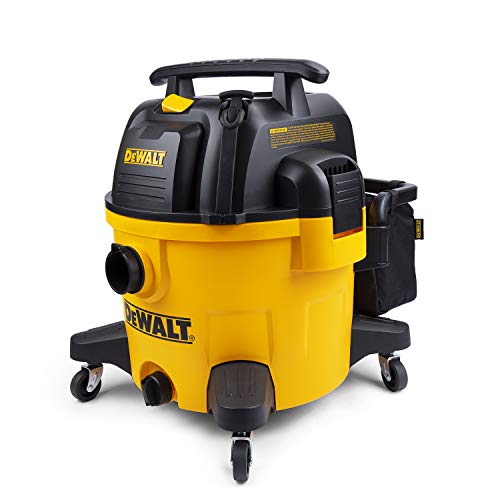
1. Best All Around Cleaner: DEWALT DXV09P 9 Gallon Wet Dry Vac
The DEWALT DXV09P is the best shop vac for most garages, basements and workshops, at around $135. Its 9 gallon poly tank and 5 peak HP motor handle wet spills and dry debris alike.
- Highlights: a large built in tank drain for emptying liquids; a built in blower port for sawdust and debris; rubberized swivel casters, a 10 foot cord with cord wrap and an attached accessory storage bag.
- Trade off: it is loud, as most traditional shop vacs are, so hearing protection helps during long sessions.
Best for: homeowners who clean garages, basements and workshops and occasionally deal with water. Skip it if you need a quiet vac for indoor use.
2. Best Budget (Under $50): CRAFTSMAN CMXEVBE17250 2.5 Gallon
The CRAFTSMAN 2.5 gallon wet dry vac is the best budget shop vac, at around $50. It is light and compact, with a carry handle and cord wrap for easy storage.
- Highlights: 2.5 peak HP in a portable body suited to cars, trucks and small home messes; a blower function for extra versatility; 1 1/4 inch accessories for tight spaces, including a crevice tool and utility nozzle.
- Trade off: the small tank fills quickly and it is not meant for big flooded areas.
Best for: car cleaning, apartment spills and small workshops. Skip it if you need to clear large amounts of water or debris.

3. Best for Deep Cleaning: EGO Power+ WDV0904 9 Gallon Cordless
The EGO Power+ 9 gallon cordless shop vac is the best for deep cleaning without an outlet, at around $550 with a 56V 5.0Ah battery and charger. It brings full size capacity to cordless cleanup.
- Highlights: a brushless motor with 110 CFM of suction and 100 inch lift according to EGO; up to 60 minutes on ECO, 30 on high and 20 on turbo with the included battery; a filter cleaning function, wireless remote and a 5 year tool warranty.
- Trade off: it costs several times more than corded vacs, unless you already own EGO batteries.
Best for: detailing cars in the driveway, yard and patio cleanup and job sites without power. Skip it if you always clean near an outlet.

How We Compared the Best Shop Vacs
We compared shop vacs on tank capacity, suction and airflow, filtration, hose diameter, accessories, mobility, noise, runtime for cordless models and warranty terms. Our sources were manufacturer specifications, the details in each Amazon listing and patterns across large volumes of verified buyer feedback, with extra weight on reports about durability and filter performance over time. We did not run our own trials.
Picks by Mess and Surface
- Flooded basements: a 9 gallon or larger vac with a drain port and a squeegee nozzle.
- Car interiors: a compact or cordless vac with a crevice tool; see our best shop vac for car detailing guide.
- Workshops and sawdust: a vac with a fine filter or dust bag, and ideally a quiet motor.
- Drywall and fine dust: a HEPA rated dust extractor or bags to protect the filter.
- Leaves and yard debris: a wide hose and a blower function.
- Cordless jobs: a battery vac on your tool platform; see the best cordless shop vac roundup.
- Small spaces: a compact vac; our best portable shop vac guide covers options.
Remove the filter cartridge and install a foam sleeve before picking up water, unless the manual says otherwise, to keep the paper filter dry.
Cleaning Routine: How to Get the Best Results
- Match the filter to the job: foam for water, cartridge or bag for dust.
- Empty the tank before it is full; suction drops as debris builds up.
- Never vacuum flammable liquids, hot ashes or hazardous materials.
- Unplug the vac and keep children and pets away while emptying wet tanks.
- Wear hearing and eye protection for long or dusty jobs.
- Store the vac with the lid off for a few hours after wet jobs so the tank dries and does not develop mildew.
Supplies, Refills and Running Costs
Cartridge filters typically need replacement every few months to a year depending on use, and dust bags extend their life when vacuuming fine dust. Foam sleeves protect filters during wet pickup. Buy filters made for your exact model, and replace cracked hoses promptly to maintain suction.
Cleaning Questions, Answered
How do you clean a shop vac?
Unplug the vac, empty the tank and rinse it with soapy water, then let it dry fully. Tap or brush dust off cartridge filters outdoors, or wash them if they are washable, and let them dry before reinstalling. Rinse hoses and accessories, and wipe the motor housing with a damp cloth.
What is the most reliable shop vac brand?
DEWALT, Shop-Vac, CRAFTSMAN, Ridgid and Stanley are long established shop vac brands, and EGO and Milwaukee lead in cordless models. Reliability depends on matching the vac to your jobs and keeping filters clean.
What is the best shop vac?
For most homes, the DEWALT DXV09P 9 gallon is the best shop vac thanks to its capacity, drain port and blower. The CRAFTSMAN 2.5 gallon is best for tight budgets and cars, and the EGO 9 gallon cordless is best for cordless deep cleaning.
How long does a shop vac last?
A well maintained shop vac often lasts five to ten years or more. Keeping filters clean, drying the tank after wet pickup and avoiding overheating the motor extend its life. Cordless models also depend on battery health.
Is a shop vac worth it?
Yes, for homeowners with garages, basements, workshops or cars. A shop vac handles water, debris and messes that would damage a household vacuum, and it is invaluable during leaks, floods and renovation projects.
Clean Verdict
The DEWALT DXV09P is the shop vac most homes should start with, combining a 9 gallon tank, drain port and blower at a fair price. The CRAFTSMAN 2.5 gallon is the budget pick for cars and small spills, and the EGO Power+ 9 gallon cordless is the upgrade for cleaning anywhere without a cord. Match the size and power to your messes, and you will have the best shop vac ready for whatever the garage or basement throws at you.


