Best Handheld Steam Cleaners for Bathroom in 2026: A Buying Guide
Disclosure: We may earn a commission when you buy through links on this page, at no extra cost to you. As an Amazon Associate I earn from qualifying purchases. Learn more

Choose the best handheld steam cleaner for bathroom use by attachments, tank size, cord reach and safety features, from glass to grout.
A bathroom collects a special blend of grime: soap scum bonded to glass, hard water scale crusting the faucet base, mildew film in the shower corners, and a ring of buildup around every drain. Sprays handle some of it, but they ask you to scrub chemistry into corners while breathing it in a small closed room. A handheld steamer melts scum and loosens scale with nothing but water, and its small attachments reach the places a cloth cannot. This guide explains how to choose the best handheld steam cleaner for bathroom work by weighing attachment kits, tank size, and reach around fixtures.
The right unit turns a full bathroom detail into a single session: glass, chrome, tile, and porcelain in one pass with one tank strategy. The sections that follow focus on the bathroom specific details. Owners whose biggest battle is the tile lines themselves should also read our grout focused guide to the best handheld steam cleaner for grout, since that job rewards a slightly different kit.
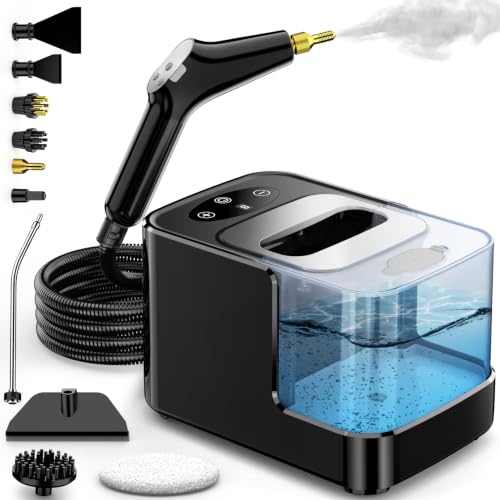
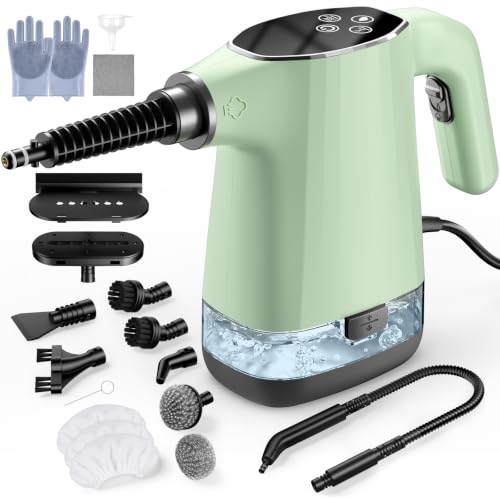
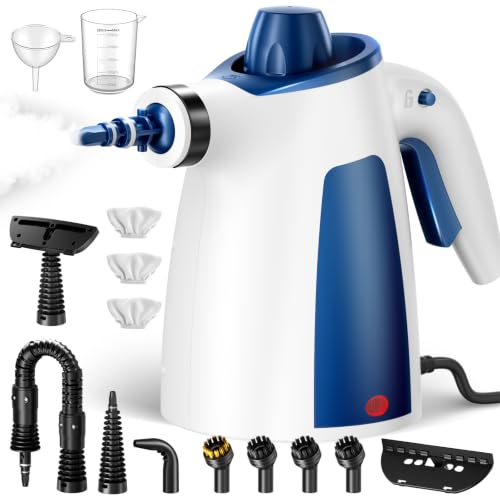
Who Should Buy Which Handheld Steam Cleaner for Bathroom?
Apartment Dwellers With One Small Bathroom
A single compact bathroom needs agility more than capacity. Choose a light handheld with a quick heat up, a window squeegee, and a detail nozzle, and you can do the whole room in a single session with one fill. Storage is tight in apartments, so a unit that hangs in a cleaning caddy or fits a narrow cabinet wins over a bulky kit you will avoid fetching. Skip the longest cords; reach is rarely the problem in a small room, and a smaller tank is no hardship at this scale.
Hard Water Households Fighting Scale and Spots
If your faucets crust white and your shower glass clouds within a week, steam is your scale softener. Prioritize a pressurized boiler design with a strong steady jet for the faucet bases and track channels, plus an extension hose so the tank can sit on the counter while the nozzle works inside the shower. You will also descale the machine itself more often than soft water households, so pick a model whose manual gives a simple descaling routine and whose tank opening is wide enough to fill and rinse without funnels and spills.
Families Who Want Chemical Light Cleaning Around Kids
Steam's appeal in a family bathroom is what it leaves behind: nothing but water on the tub where a toddler sits and the step stool little hands grab. Choose a unit with a safety lock on the trigger, a safety cap that cannot open under pressure, and a cool down design that keeps the body safe to set on the counter. Bath toys, toothbrush holders, and faucet handles all benefit from a steam pass. Our broader look at the best handheld steam cleaner category shows how these same machines handle kitchen and upholstery duty between bathroom days.
Key Features to Compare
Attachment Kit for Glass, Chrome, and Corners
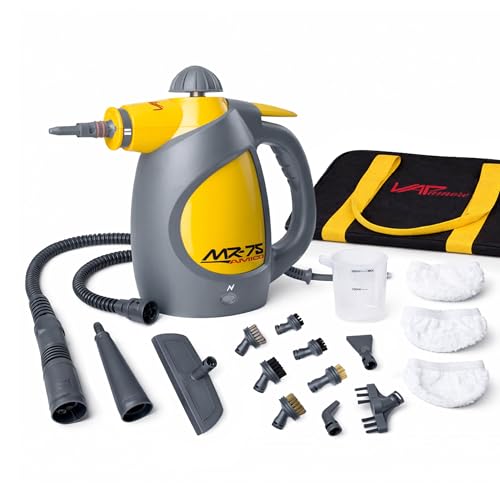
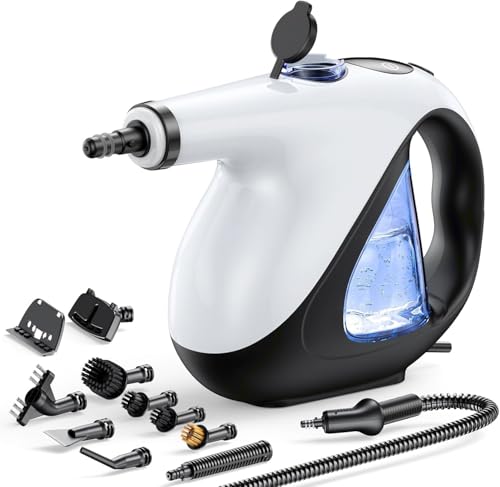
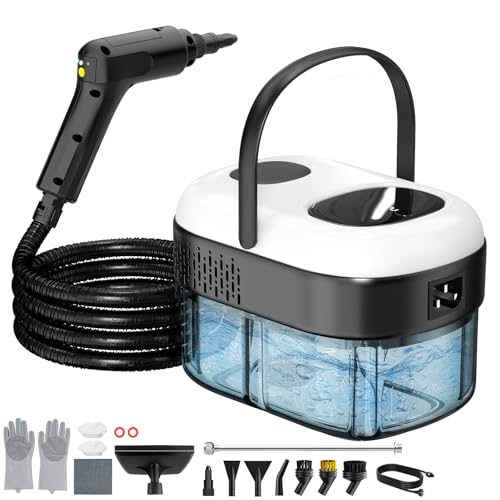
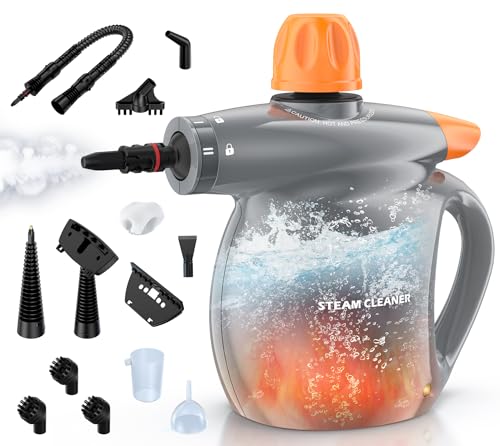
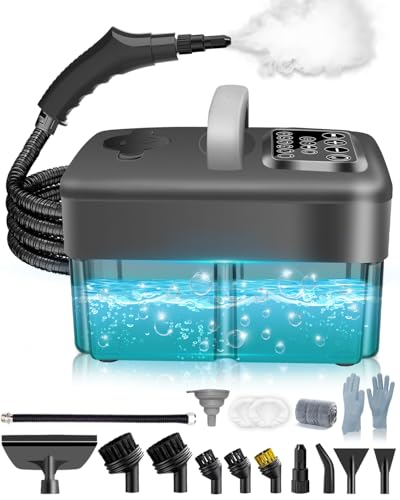
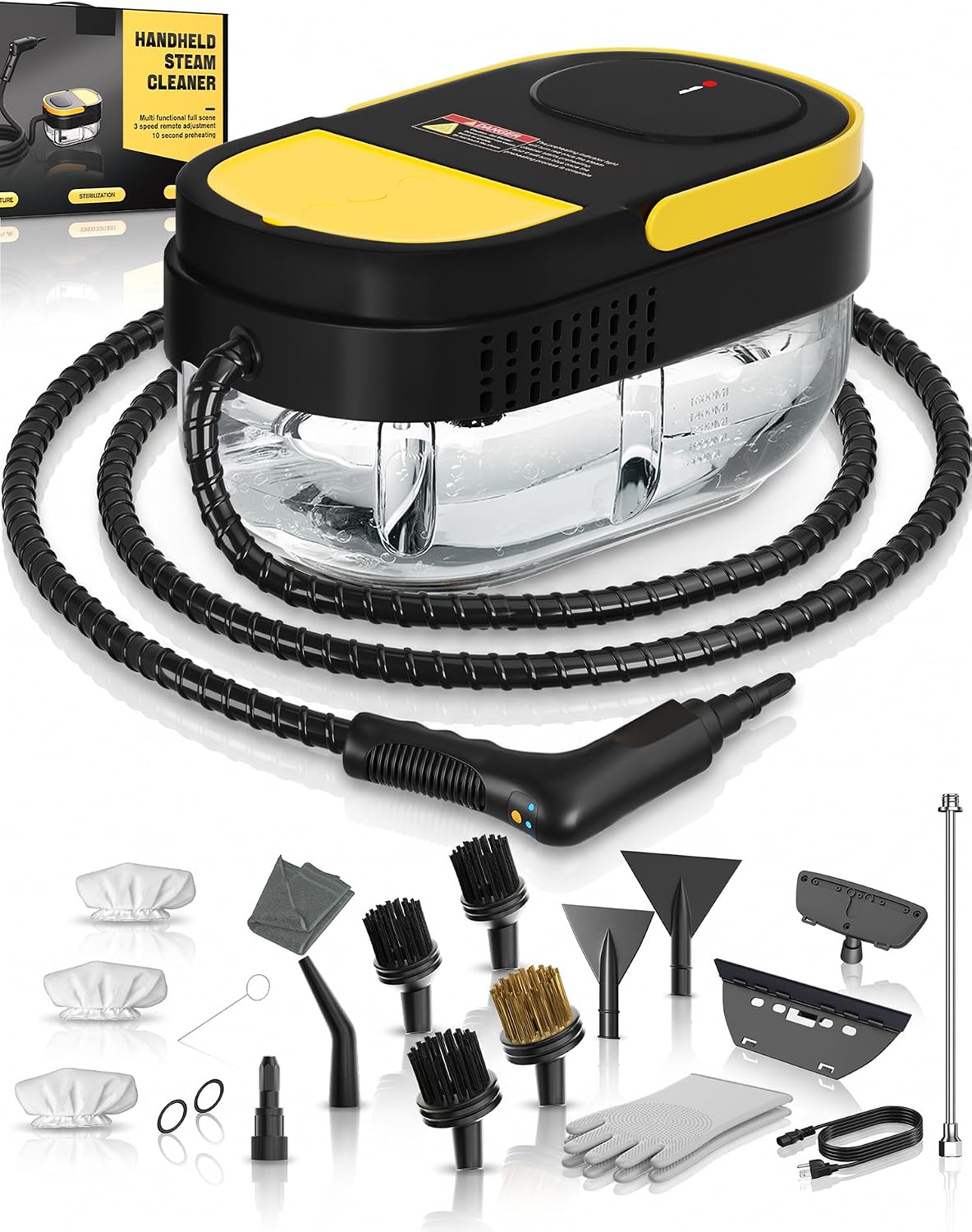
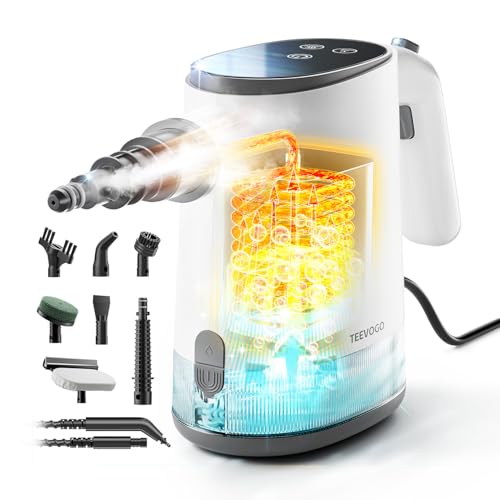
Bathroom kits live on their attachments. A window squeegee with a steam feed clears shower glass without streaks when you work top to bottom and wipe the blade between passes. Round nylon detail brushes scrub around faucet bases, drain rims, and hinge points on toilet seats. A jet nozzle blasts the shower door track, that narrow channel where black film collects beyond any cloth's reach. A fabric or upholstery tool is useless in most bathrooms, so value kits by the bathroom pieces, not the total piece count printed on the box.
Boiler Style and Steam Consistency
Two designs dominate: pressurized boilers that heat a sealed tank and release a strong, steady jet, and instant or pump designs that heat water on demand with a lighter, pulsing output. Bathroom work rewards the boiler style, because soap scum and scale yield to sustained heat, and a fading jet turns glass work streaky. Boiler designs ask patience in return: longer heat up and a cap that stays locked until pressure falls. If your sessions are quick touch ups, the instant style is fine; for a weekly full detail, the boiler earns its wait.
Tank Size Against Bathroom Size
A small powder room needs little steam; a primary bath with a glass shower, double vanity, and tile floor asks for far more. Tank size maps to minutes of output, and every mid job refill restarts the heat up clock. Measure your ambition honestly. Owners of one large bathroom often do better with the biggest tank they can hold at shoulder height for glass work, because a heavy unit at arm's length above a shower door is the one comfort limit nobody mentions on the box.
Reach: Cord, Hose, and Working Angles
Bathrooms hide their dirt at odd angles: behind the toilet base, inside the tub overflow, under the rim of the sink. An extension hose turns a bulky tank into a light nozzle you can aim anywhere, and it keeps the hot body away from your other hand. Cord length still matters for the room's far corner, so count the distance from the outlet to the shower's back wall. The outlet itself must be GFCI protected, standard in modern bathrooms, and cords should be routed so they never drape through standing water in a tub or sink.
Controls, Locks, and Steam Adjustment
A trigger lock matters in a room full of starts and stops, because you set the unit down every time you wipe a surface. Some models add steam level adjustment, which is genuinely useful in bathrooms: full power for the shower track, a gentler flow for mirrors and plated fixtures you do not want to flood. Check that the controls work one handed with a wet grip, since your other hand usually holds a cloth or the shower door. Fiddly dials and stiff triggers show up as annoyance by the second room.
Surface Safety Range
Steam is safe on sealed tile, porcelain, glass, and most chrome, but a bathroom holds delicate exceptions. It can cloud some acrylic tubs and shower pans if parked in one spot, loosen the adhesive on peeling vinyl flooring edges, and damage unsealed natural stone or the finish on some plated fixtures with prolonged blasting. Laminate countertops with swollen seams can take on water at the joints. Know your materials before the first session, try a hidden patch on anything uncertain, and keep the jet moving so heat never pools on one surface.
A Bathroom Routine That Gets the Most From Steam
Dry dust and hair first, because steam turns loose debris into wet clumps that smear. Then work top to bottom: mirror and glass, fixtures, tile walls, tub or shower floor, sink, and the toilet exterior last, wiping each zone with a microfiber cloth as you go so loosened film leaves instead of resetting. Steam loosens; the cloth removes. Around drains and faucet bases, let the jet dwell a few seconds, brush, then wipe. Finish by steaming the sink drain and overflow slot, the two spots that hold the odors people blame on the pipes.
On mold, be precise about what steam does: it can clean surface mold it contacts and lifts the film off hard surfaces, which is ideal for tile, glass, and porcelain. Mold that has grown inside silicone caulk or deep into porous grout will not vanish, because the roots sit where steam cannot reach; that caulk needs cutting out and replacing. Treat steam as the maintenance tool that keeps mold from establishing on surfaces, and keep ventilating the room after showers, since dry surfaces are the real long term mold defense.
Common Mistakes to Avoid
- Steaming acrylic tubs or shower pans with the jet parked in one spot, which can dull or warp the surface where the heat pooled.
- Skipping the wipe as you go, so loosened soap scum dries back onto glass and tile in a thinner but still visible film.
- Using the steamer on unsealed natural stone or damaged laminate seams, letting heat and water reach materials that cannot tolerate them.
- Handling the plug with wet hands or letting the cord drape through a filled sink, defeating the GFCI protection the bathroom provides.
- Blasting the wax ring area and base bolts of a toilet aggressively, which can soften seals and start a slow leak under the fixture.
- Expecting steam to fix mold inside silicone caulk, then re caulking over it and sealing the problem in place.
How to Make Your Handheld Steam Cleaner Last Longer
Hard water households should treat descaling as routine, not rescue: follow the maker's schedule, or use distilled water and skip most of it. Empty the tank after each bathroom session, because a steamer stored full in a humid bathroom ages its seals and grows its own film inside. Rinse the squeegee blade and brushes, and let attachments dry fully before they go back in a closed caddy, since trapped moisture is what makes stored accessories smell. Coil the cord loosely, keep the unit out from under sink plumbing where leaks drip, and check the safety cap's seal each season.
FAQ
Can a handheld steam cleaner remove hard water scale from faucets?
Steam softens fresh and moderate scale so a detail brush can sweep it away, especially around faucet bases and aerators where crust builds in rings. Thick, years old scale may need a first pass with an acidic cleaner or a vinegar soaked cloth to break the bulk, then steam for the remainder. The honest division of labor is chemistry for the heaviest mineral rock, steam for everything after. Regular short steam passes after that keep scale from ever rebuilding to the stubborn stage.
Is steam safe on chrome fixtures and shower glass?
Yes, with normal technique. Chrome and glass both tolerate steam well, and glass in particular cleans beautifully because the squeegee leaves it dry and streak free. The cautions are about duration and distance: keep the jet a short distance off the surface and moving, rather than pressed against one spot. Very hot steam held against cheap plated plastic fittings can dull them, so try the trim pieces on budget fixtures once, in a hidden spot, before the full detail.
How often should you steam clean a bathroom?
A weekly ten minute pass over glass, fixtures, and the shower keeps scum and scale from bonding, and a deeper monthly session can add tracks, drains, and the toilet base. Bathrooms that host daily showers for a family sit at the frequent end; a guest bath needs far less. The pattern that works is frequency over force: short regular sessions need only light steam, while a neglected bathroom demands the long, multi tank marathon everyone dreads.
Does steaming a bathroom replace disinfectant entirely?
Steam cleans hard surfaces without chemicals, which covers most day to day bathroom needs. During an illness in the household, or when you want a registered disinfectant's specific claims on the toilet and handles, follow with the labeled product used as directed, and never mix cleaning chemicals together. Keep disinfectants stored locked and away from children and pets, and ventilate the room while they work. Steam first for soil removal actually makes any disinfectant after it more effective, since disinfectants struggle through grime.
Can you steam clean a mattress with the same handheld unit?
You can give a mattress surface a light steam pass with an upholstery attachmentand freshens the top, but a handheld's small tank makes it a slow job. Let the mattress dry fully before remaking the bed. Shoppers whose priority is bedding should compare dedicated options in the guide to the best handheld steam cleaner for mattress use, where larger tanks and fabric tools matter more than bathroom detail brushes.
Final Thoughts
The product table above compares the classes, so check the attachment kit and boiler style against your bathroom's surfaces first. Choosing the best handheld steam cleaner for bathroom cleaning comes down to steady steam for scum and scale, a squeegee and detail brushes that fit your fixtures, and a tank sized to your largest room. Buy for the bathroom you actually scrub every week, and the machine will feel less like a gadget and more like the reason the glass stays clear. Prices and availability can change, so check the product page before ordering.