
Best Handheld Steam Cleaners for Grout in 2026: A Buying Guide
Disclosure: We may earn a commission when you buy through links on this page, at no extra cost to you. As an Amazon Associate I earn from qualifying purchases. Learn more

Choose the best handheld steam cleaner for grout by tank size, pressure, nozzle kits and heat up time for tile floors and shower walls.
Grout fails quietly. The tile still shines, but the lines between tiles hold cooking splatter, soap film, and ground in dirt that a mop only pushes deeper. Steam attacks that grime without chemicals: a focused jet softens the buildup so a small brush can lift it out of the line. The catch is that grout work is slow, close, detail work, so the machine has to sustain pressure and reach into a narrow line for minutes at a time. This guide shows how to choose the best handheld steam cleaner for grout by looking at tank size, nozzle kits, and duty cycle rather than headline wattage.
Handhelds vary more than their similar shapes suggest, and the differences decide whether a bathroom floor takes one tank or four. Our wider guide to the best handheld steam cleaner range covers the category beyond grout duty. Read on for the grout specific checks that matter most.
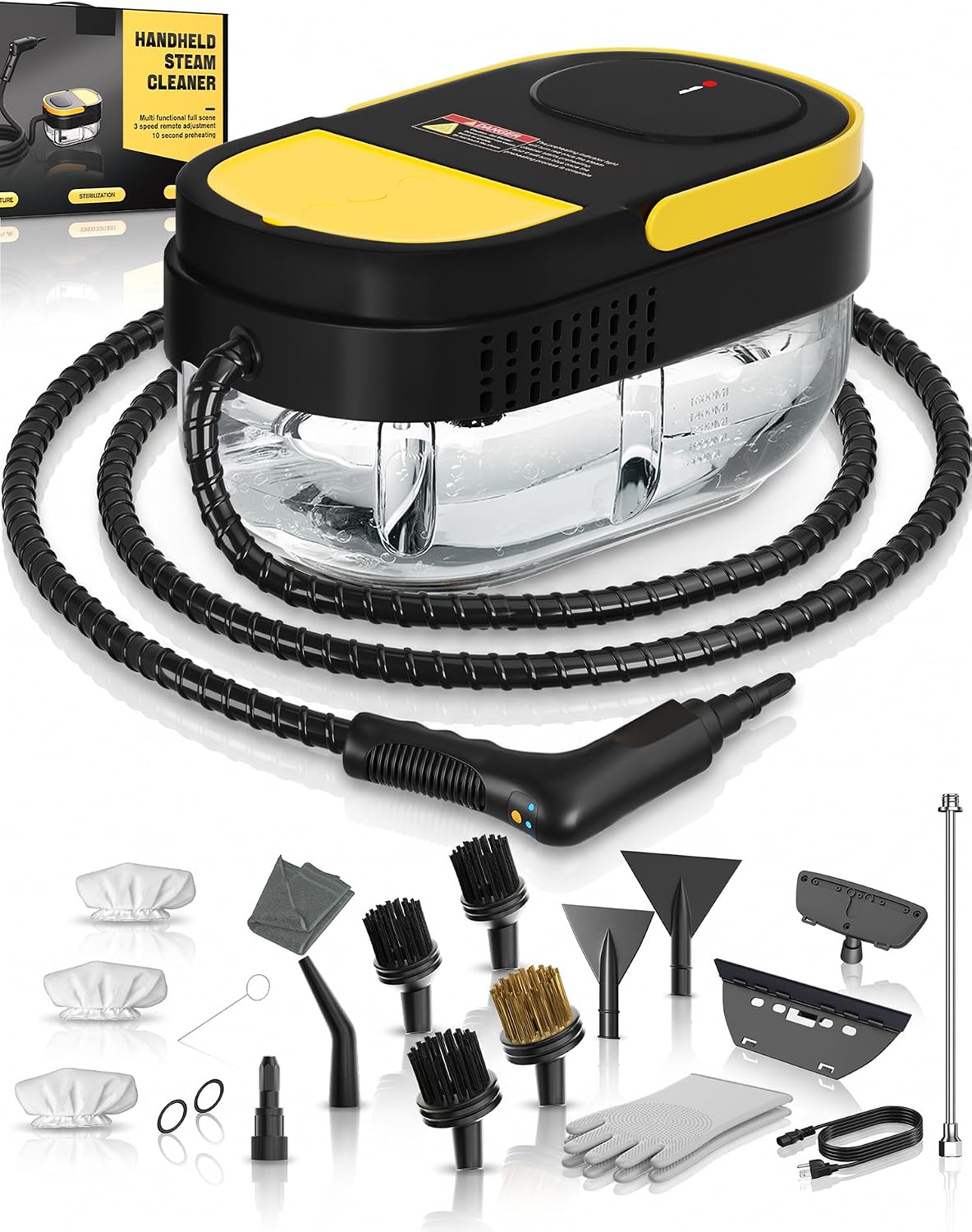
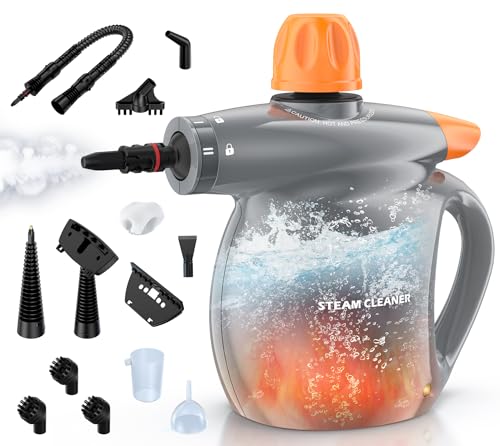
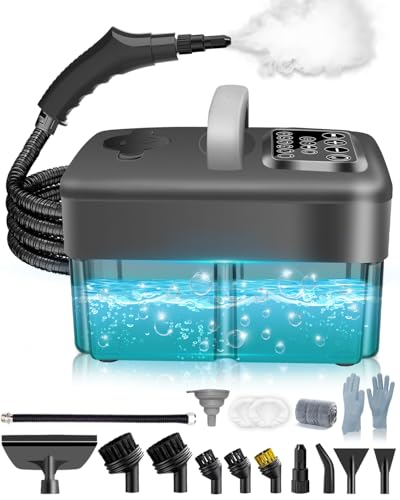

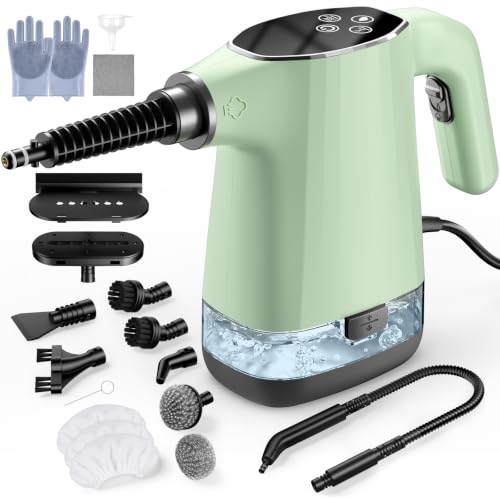
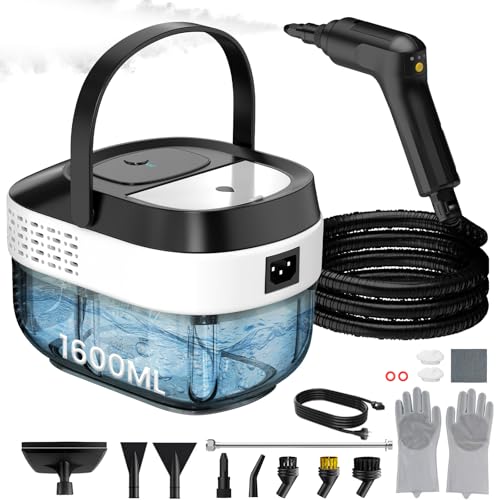


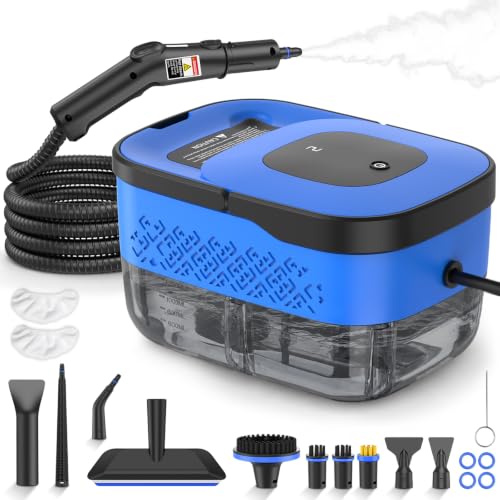
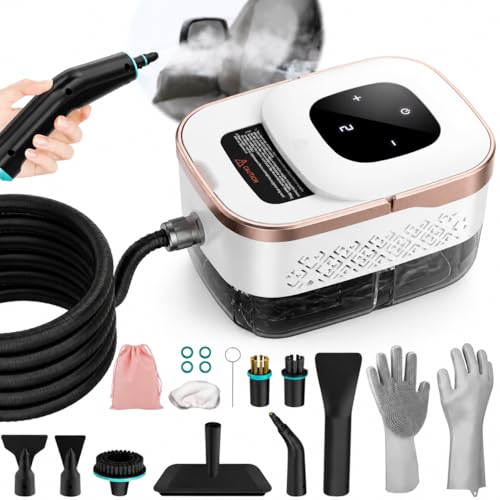
Who Should Buy Which Handheld Steam Cleaner for Grout?
Homeowners Refreshing One Bathroom at a Time
If your grout problem is a single shower stall and a small floor, a standard handheld with a mid size tank and a real jet nozzle covers it. You will work in short passes, refill once or twice, and finish in an afternoon. Prioritize a lockable trigger so your hand is not squeezing constantly, and a brush set with stiff nylon bristles sized for grout lines. This shopper does not need the largest tank; maneuverability around fixtures matters more than capacity.
Kitchen and Entryway Tile Owners Battling Grease and Tracked In Dirt
Kitchen grout holds grease that repels plain water, and entryway lines collect gritty soil that needs pressure plus agitation. Look for higher sustained steam output, a metal or heavy duty nozzle path, and the largest tank you can still hold comfortably at floor level for a long session. A model with a hose extension earns its keep here, letting the tank rest on the floor while the light nozzle works the line. Expect to move slowly: grease films melt in layers, and rushing leaves a shadow in the line.
Move Out Cleaners and Landlords Turning Over Rentals
Turnover cleaning means whole units of tile, one after another, so heat up time and refill downtime dominate your day. Choose the shortest heat up, a tank you can refill without a long cool down wait, and a cord long enough to cross a bathroom without outlet hunting. A second set of brushes matters too, because grout brushes wear down fast under daily use. Shoppers in this group should also weigh whether a canister steamer, covered in the guide linked above, fits the workload better than any handheld.
Key Features to Compare
Steam Pressure and Sustained Output
Grout cleaning runs on sustained pressure at the nozzle, not the burst a spec sheet advertises. Pressurized boiler designs hold a steadier jet than simple pump designs, which pulse and fade as the tank empties. What you feel in practice is simple: a strong unit keeps lifting grime on minute fifteen the way it did on minute two. Look for pressure expressed in bar or PSI and for honest wording about continuous steam time. Then plan your technique around short overlapping passes with the brush, because even the strongest handheld softens grime rather than blasting it out in one sweep.
Tank Capacity and Refill Routine
Handheld tanks are small, and tank size translates directly into minutes of steam depending on output. Grout is the most steam hungry job these machines do, because you park the jet on each line. Every refill costs the heat up time again, and some caps will not open until pressure drops, adding minutes. A larger tank stretches each session, but it also adds weight your wrist carries at floor level. Balance the two: the biggest tank you can hold steady in a working crouch is the right tank.
Nozzle and Brush Kit for Lines
The kit decides whether the steam actually works in a narrow line. You want a concentrated jet nozzle for softening, small round nylon brushes for scrubbing, and ideally a narrow grout brush with bristles in a line rather than a circle. Brass brushes exist for unsealed stone and metal jobs but can scratch glazed tile and some grout, so treat them as specialty tools, not defaults. An angled nozzle or flexible hose helps behind toilets and along tub edges where the machine body will not fit. Check replacement brush availability before buying, because brushes are consumables.
Continuous Steam Trigger and Controls
Grout sessions are long, and a trigger you must squeeze the whole time will cramp your hand and make the jet inconsistent as your grip tires. A trigger lock or a press and hold button on top changes the job completely, freeing you to guide the brush with the other hand. Child safety locks are worth having in homes with curious kids. Also check where the steam button sits: a control you can feather with a thumb lets you pulse steam onto a stubborn spot without flooding the line and cooling the surface.
Cord Length and Hose Options
Bathrooms rarely offer an outlet where you need it, and a short cord chains you to one wall. Longer cords on stronger models let you cross a full bathroom and into the shower stall. Extension hoses trade a little steam heat for a lot of reach and a lighter working end, which matters along baseboards and behind fixtures. Whatever the setup, the outlet should be a GFCI protected one in any bathroom, and the plug should never be handled with wet hands. Reach is a safety feature as much as a convenience here.
Heat Up Time and Safety Cap Design
Heat up times run from under a minute on small pump models to several minutes on pressurized boilers, and across a whole floor those minutes multiply with every refill. The safety cap tells you how the refill behaves: pressurized designs lock the cap until the boiler cools enough to open safely, which protects you from a steam burst but enforces patience. Know which design you are buying and plan the work in zones so one zone scrubs while the boiler reheats. Never force a cap, and never refill past the marked line, since overfilling leaves no room for steam to build.
How to Steam Grout Without Damaging It
First, identify your grout. Sanded and unsanded cement grout handle steam well when they are sound. Epoxy grout and grout that is already cracked, crumbling, or hollow sounding needs repair first, because steam and brushing will loosen failing material and open the line. Work a small hidden area first, then steam in short passes, brush while the line is hot and wet, and wipe the slurry away before it resets. Sealed grout cleans more easily, and heavy steam sessions are a good moment to plan resealing afterward, since the cleaning strips tired sealer. Keep the jet moving and let heat, not force, do the work.
Mold staining deserves honest framing: steam can clean surface mold on contact and lifts the film, but black staining deep inside porous grout may lighten rather than vanish, and silicone caulk with mold inside it needs replacement, not steaming. Many of the same machines earn a second living on fixtures and glass, and the guide to the best handheld steam cleaner for bathroom work covers that broader routine. Owners who also freshen soft furnishings can compare the fabric side of these machines in the guides to the best handheld steam cleaner for upholstery and the best handheld steam cleaner for mattress. For floors beyond the bathroom, the techniques here transfer directly to kitchen tile.
Common Mistakes to Avoid
- Steaming cracked or crumbling grout lines, which knocks loose material out and turns a cleaning day into a regrouting project.
- Using a brass brush on glazed tile or soft grout, which scratches the glaze and gouges the line you meant to clean.
- Overfilling the tank past the marked line, leaving no space for steam to pressurize and causing sputtering instead of a steady jet.
- Holding the jet in one spot for a long stretch, which overheats the surface and can loosen tiles with failing adhesive behind them.
- Skipping a trial patch on colored or epoxy grout, then discovering fading or softening across the whole floor instead of one corner.
- Refilling a pressurized boiler the moment it empties, fighting a locked safety cap instead of letting it cool as designed.
How to Make Your Handheld Steam Cleaner Last Longer
Water choice decides most of the machine's future. Use distilled water if your tap water is hard, or descale on the schedule the manual sets, because mineral scale coats the boiler, slows heat up, and clogs the jet. Empty the tank after each session rather than storing the unit full, and leave the cap loose in storage so seals do not take a set. Wipe brushes clean, replace them when bristles splay, and store the cord loosely coiled. If output weakens, descale before assuming failure; most fading handhelds are scaled, not broken.
FAQ
How long does a handheld steam cleaner usually last?
With distilled water or regular descaling, a handheld commonly lasts for years of household use, and brushes wear out long before the boiler does. Hard water is the main life shortener, because scale insulates the heating element and strains it. Owners who empty the tank after use and descale on schedule routinely get the long end of that range, while a unit left full of tap water in a damp bathroom cabinet fades fastest.
Is a handheld steam cleaner worth it for grout alone?
For one small bathroom, a handheld bought only for grout is a judgment call; for homes with tile in the kitchen, entries, and multiple baths, it earns its place quickly. The same machine refreshes sealed counters, stove edges, and fixtures between grout sessions, which spreads the cost across many jobs. Renting or hiring out a single deep grout clean can approach the price of a mid range handheld, so the second project usually tips the math in favor of owning.
How do you clean a handheld steam cleaner?
Cleaning the machine means descaling the boiler and washing the attachments. Run the maker's descaling method or a water and vinegar cycle if the manual allows it, then flush with plain water. Brushes and nozzles soak in warm soapy water and rinse clean. Wipe the body with a damp cloth once it is cool and unplugged. Do this after grout marathons especially, because the slurry you lifted off the floor ends up dried onto every attachment.
Does steam cleaning remove the need to reseal grout?
No, and deep steam cleaning actually makes resealing more timely. Sealer wears with age and cleaning, and a freshly steamed line is clean, dry within a day, and ready to accept new sealer better than at any other moment. If water no longer beads on your grout lines or darkens instantly when wet, the sealer is spent. Plan to reseal after a major steam session and the next cleaning will go noticeably faster.
Can steam damage epoxy grout or colored grout?
It can if you are careless. Epoxy grout softens at lower temperatures than cement grout tolerates, so keep the jet moving and avoid parking it on epoxy lines. Strong pigments in colored cement grout can fade under very hot, prolonged steaming in one spot. The safeguard is a trial patch: steam a hidden corner, let it dry fully, and compare the color before committing to the room. Sound cement grout in standard colors handles normal steaming without drama.
Final Thoughts
The product table above lines up the main classes, so check tank size, trigger lock, and the grout brush kit against your rooms before choosing. The hunt for the best handheld steam cleaner for grout ends when the machine can hold a steady jet for a full zone of tile, refill without a long penalty, and put a stiff brush exactly in the line. Match that to your largest tiled room and grout day becomes slow, satisfying work instead of a wrestling match. Prices and availability can change, so check the product page before ordering.


