
Best Sponge Mops in 2026: 3 Top Picks + Buying Guide
Disclosure: We may earn a commission when you buy through links on this page, at no extra cost to you. As an Amazon Associate I earn from qualifying purchases. Learn more

Three sponge mops compared on absorbency, wringing and durability, plus a buying guide.
Sponge mops soak up spills fast, scrub textured tile and grout better than flat pads and wring out with a pull of a lever, so you never touch dirty water. The best sponge mop pairs an absorbent head with a smooth roller wringer, a handle long enough to avoid stooping and refills that are easy to find.
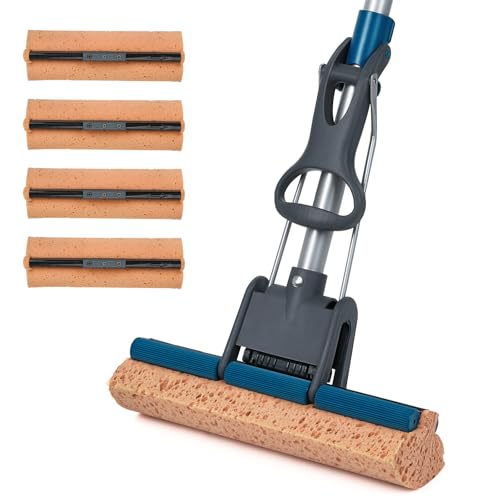
This guide compares three sponge mops on absorbency, wringing and durability, then explains how sponge mops compare with other types and what features are worth paying for. Our top pick is the TreeLen roller sponge mop, which comes with four cellulose refill heads.


Our Top Picks at a Glance
| Award | Product | Key Specs | Best For |
|---|---|---|---|
| Best Overall | TreeLen Roller Sponge Mop | 10 inch cellulose head, 50 inch handle, 4 refills | Tile, laminate and everyday spills |
| Best Budget | Yocada Sponge Mop | Honeycomb sponge, squeegee, 2 heads | Bathrooms, garages and budget buyers |
| Best Premium | The Super 11 Inch Double Roller PVA Mop | PVA sponge, double roller, extra refill | Heavy use and textured floors |
Our 3 Top Picks for the Best Sponge Mop
Prices change often, so treat them as approximate.
1. Best Overall: TreeLen Roller Sponge Mop
The TreeLen mop made the list because it combines a hands free roller wringer with four refill heads, which covers months of mopping out of the box. It costs around $32.
- Highlights: a 10 inch honeycomb cellulose head; a 50 inch telescopic handle for floors, walls and ceilings; an easy pull wringer; tear resistant cellulose that TreeLen says stays soft after drying instead of hardening like PVA.
- Trade off: cellulose heads can hold odors if they are not rinsed and dried after each use.
- Best for: tile, laminate, marble and sealed wood in kitchens and baths.
2. Best Budget: Yocada Sponge Mop
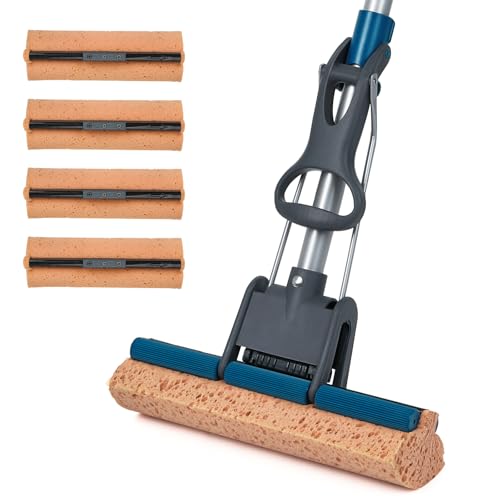
The Yocada is the pick for buyers who want a capable sponge mop for less. It costs around $23 and has a large base of buyer reviews.
- Highlights: a honeycomb sponge head that Yocada says is absorbent and dries quickly; an adjustable iron handle from 42.5 to 52 inches; a built in squeegee for pushing water and dirt; a removable sponge for deep cleaning.
- Trade off: the box includes two sponge heads in total, so stock up on refills if you mop often.
- Best for: bathrooms, garages and commercial style tile floors.

3. Best Premium: The Super 11 Inch Double Roller PVA Sponge Mop
The Super PVA mop is the upgrade for heavy users and textured floors. It costs around $47 and includes one extra refill.
- Highlights: an 11 inch PVA sponge head that holds a lot of water; a double roller wringer; an extra refill in the set.
- Trade off: PVA sponges harden when dry and must be soaked before use.
- Best for: large tiled areas, garages and frequent deep cleaning.

How We Chose the Best Sponge Mops
We compared manufacturer specs and verified buyer feedback on absorbency, wringing ease, handle strength, head durability, refill cost and value. We favored mops with hands free wringers and easy to find refills, and left out models with frequent reports of wringers breaking or heads falling off.
How to Choose the Right Mop
A sponge mop is one of several mop styles. Knowing what each does well helps you decide whether a sponge mop fits your floors.
Type
Sponge mops absorb lots of liquid and scrub textured surfaces. Flat microfiber mops use less water and reach under furniture; see our guide to flat mops. Spin mops wring in a spinning bucket. Spray mops carry a bottle on the handle; see spray mops. Steam mops loosen sticky grime with heat. Self wringing mops twist to wring; see self wringing mops. String and commercial mops handle big areas with buckets and wringers.
Features Worth Paying For
A roller wringer that squeezes the sponge evenly keeps hands dry and controls moisture; double or quadruple rollers, like the Kitchen + Home 11 inch quadruple roller mop, wring more evenly. A telescopic handle reduces back strain. Extra refill heads add value. A built in scrub strip or squeegee helps with stuck on spots and water.
Sponge Materials
Cellulose sponges, used on the TreeLen, stay soft when dry and are gentle on floors. PVA sponges, used on The Super, hold more water and scrub well but harden when dry and need soaking. Melamine sponge pads, like those on the BAISENJIE Magic Sponge Eraser Mop, act like an eraser on scuffs but wear down faster.
Machine Wash or Hand Wash
Sponge heads should not go in the dishwasher or washing machine. Rinse them in warm water after each use, squeeze out as much water as possible and let them air dry away from direct heat. Replace heads when they tear, crumble or smell even after rinsing.
How Much Should You Spend?
Under $20: basic sponge mops with simple wringers and one head. Under $40: sturdier handles, roller wringers and multiple refill heads, which suit most homes. Under $80: commercial PVA mops with double rollers and heavy duty frames.
Sponge vs Other Mops: Pros and Cons
Sponge mops are the best choice for spills, bathrooms and textured tile, where their absorbent heads and scrubbing action pull dirt from grout lines. They wring hands free and need no special pads.
The downsides are odor and reach. Sponge heads can sour if left wet, and the thick head does not slide under furniture as easily as a flat mop. They also use more water, which is not ideal for unsealed wood.
| Mop Type | Best On | Main Advantage | Main Drawback |
|---|---|---|---|
| Sponge | Tile, grout, spills | Absorbent, hands free wringing | Can hold odors |
| Flat microfiber | Hardwood, laminate | Low water, slim head | Weaker on grout |
| Spin | Mixed floors | Easy bucket wringing | Round head misses corners |
| Steam | Sealed tile | Loosens sticky grime | Not for some wood floors |
How to Mop with a Sponge Mop
Sweep or vacuum first so the sponge does not push grit around. If you use a PVA head, soak it in warm water for a few minutes until it softens. Fill a bucket with warm water and a floor cleaner labeled for your surface, dip the sponge and wring it until it is damp rather than dripping.
Work from the far corner of the room toward the door in overlapping strokes, rinsing and wringing the head often so you are not spreading dirty water. Use the edge of the sponge or a scrub strip for grout lines and stuck spots. For tile and stone, finish with a pass of clean water to remove cleaner residue, which can leave floors sticky.
When you finish, rinse the head under running water until the water runs clear, wring it hard and hang the mop head up to dry in a ventilated spot. Change the bucket water whenever it turns cloudy, and replace the head as soon as it starts to tear or smell, since a worn sponge spreads more dirt than it lifts.
FAQs
What is the best sponge mop?
For most homes, the TreeLen roller sponge mop is the best sponge mop, with a hands free wringer, a 50 inch handle and four refill heads. The Yocada is the best budget choice, and The Super PVA mop is best for heavy use.
Are sponge mops worth it?
Yes, especially for bathrooms, kitchens and textured tile. They absorb spills fast, scrub grout and wring without touching dirty water. For wood floors, a flat microfiber mop may be gentler.
How long does a mop last?
A sponge mop frame can last years, while heads usually need replacing every few months with regular use. Rinsing and drying the head after each use extends its life.
Is a mop worth it?
A mop is worth it in any home with hard floors. Vacuums pick up loose dirt, but spills and sticky film need damp cleaning. See our guide to the best mop options for more styles.
How do you clean a mop?
Rinse the sponge head in warm water, squeeze it out with the wringer and let it air dry. Occasionally soak it in a mild cleaning solution, then rinse well. Replace heads that smell or crumble.
What is the most reliable mop brand?
Libman, O-Cedar and Rubbermaid have long track records, and Yocada and TreeLen have strong buyer review counts. Reliability depends on wringer strength and refill availability, so check both before buying.
Final Verdict
The TreeLen roller mop is the best sponge mop for most homes, the Yocada is the budget pick and The Super PVA double roller mop is the premium choice for heavy use. Keep spare heads on hand and dry the sponge after every use. For floor specific advice, see our guides to mops for tile floors and mops for hardwood floors.


