
Best Seventh Generation Laundry Detergent for 2026: How to Choose
Disclosure: We may earn a commission when you buy through links on this page, at no extra cost to you. As an Amazon Associate I earn from qualifying purchases. Learn more

Compare Seventh Generation laundry detergent liquids, packs, and free and clear formulas by skin sensitivity, dose, machine type, and cost per load.
Seventh Generation sells one promise in several shapes: laundry cleaning built on plant based ingredients, with formulas that skip dyes and synthetic fragrances if you want them skipped. The lineup includes liquids, packs, a powder, and free and clear versions of most of them, so choosing the best seventh generation laundry detergent is mostly about matching the format and the ingredient profile to your machine, your water temperature, and your skin.
This guide explains how the formats differ, what the labels actually tell you, and where the trade offs sit between cleaning power, sensitivity, and cost per load. The product table below lists current options first.




Who Should Buy Which Seventh Generation Laundry Detergent?
Households with sensitive skin, eczema, or babies
For skin that reacts to laundry residue, the free and clear members of the line are the reason this brand lands on the shortlist: no dyes, no synthetic fragrances, and ingredient lists published in full. Choose the liquid so you can dose small loads precisely, and run an extra rinse while you learn how your skin responds. Shoppers comparing across brands for the same need should also see our guide to the best laundry detergent for sensitive skin.
Buyers who want plant based cleaning without giving up performance
If reducing petroleum based ingredients matters to you, this line states the plant based content of each formula on its label, which makes honest comparison possible. The standard liquids handle everyday soil well, while the concentrated versions cut packaging and cost per load. Readers weighing the whole category can cross check with our guide to the best natural laundry detergent and our guide to the best non toxic laundry detergent for rival approaches to the same goal.
Large families watching cost per load
High laundry volume punishes expensive formats. Concentrated liquid in the largest bottle, dosed with the cap honestly rather than by habit, usually gives the lowest cost per load in this line. Packs are the priciest way to wash but remove measuring errors by teens and guests doing their own laundry. Powder sits between the two and stores well in bulk. If your household washes daily, run the math on cost per load before falling for any single format.
Key Features to Compare
Format: liquid, packs, or powder
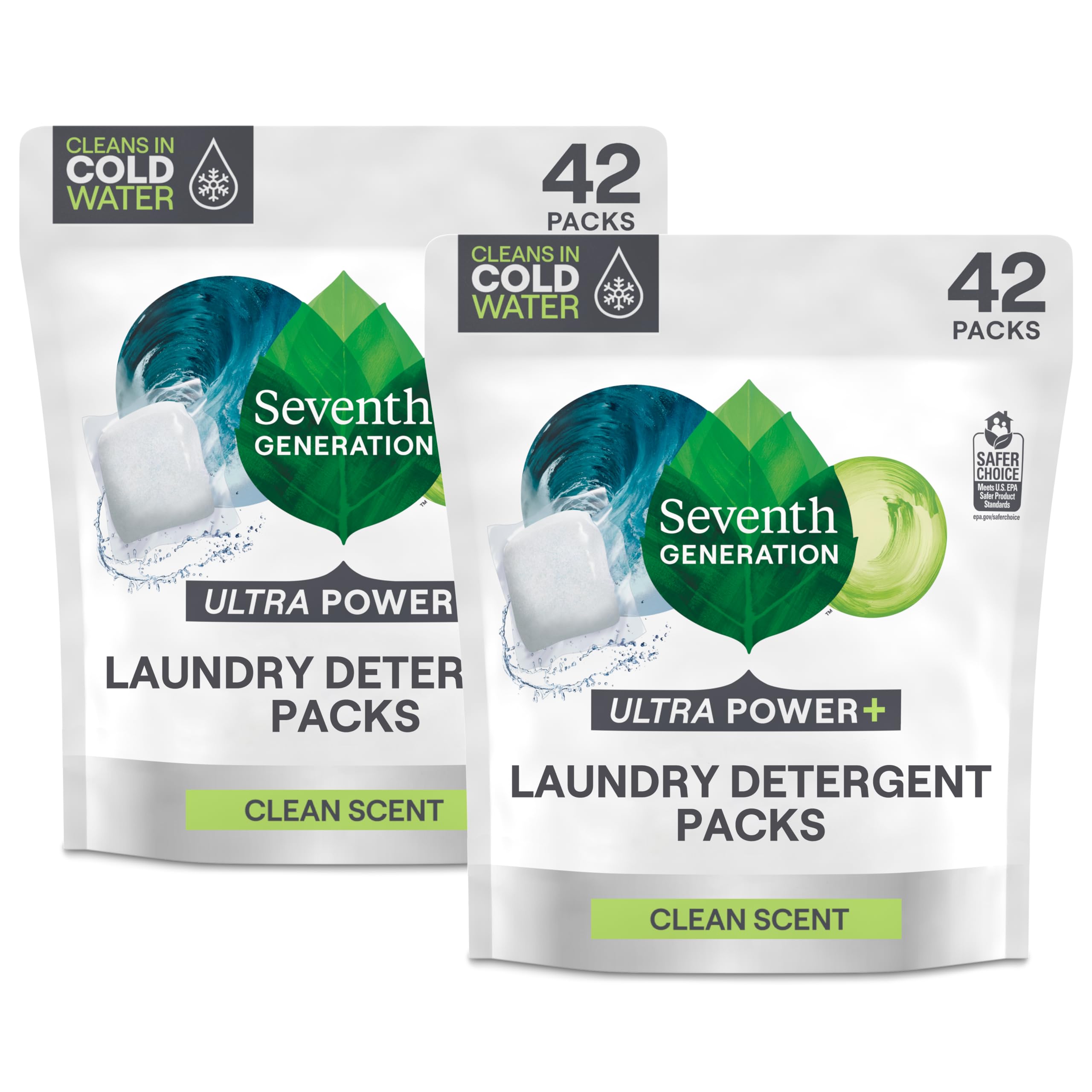
Liquid doses flexibly, dissolves in any temperature, and doubles as a pretreat when you dab it on a stain before washing, which makes it the most versatile format in the line. Packs trade that flexibility for consistency: one pack per load, no spills, no overpouring, though very small or very large loads break the one size logic. Powder costs little per load and stores for a long time, but it can leave residue in cold water or in short cycles. Households new to the brand usually start with liquid, because it reveals the cleaning strength of the formulas without format quirks getting in the way.
Free and clear versus scented versions
Free and clear formulas remove dyes and fragrances entirely, which is what sensitive skin actually needs, since scent is the most common laundry irritant. The scented versions in this line use plant derived fragrance ingredients rather than synthetic blends, and the scent is mild after drying. Cleaning power between the two is essentially the same base formula, so this choice is about skin and preference, not performance. When in doubt, start free and clear, because you can always switch for scent later, while a reaction tells you the answer the hard way.
Machine compatibility and dosing
The liquids and packs in this line are made for both high efficiency and standard machines, and the bottle carries the HE mark where it applies. Dosing is where most users go wrong: concentrated formulas need far less per load than the big cap suggests, and overdosing leaves residue that dulls fabric and can irritate skin. Use the lowest dose line for normal loads and reserve full doses for genuinely heavy soil. For a sense of how this brand sits in the wider market, our guide to the best laundry detergent puts its formats beside the mainstream competition.
Cold water performance
Most household laundry can wash cold, which saves energy and protects colors, so a detergent must dissolve fully and activate in cool water. The liquids in this line are built for that and perform consistently in cold cycles. Powder needs more agitation time to dissolve, so give it a head start in standard machines by adding it before the clothes. Packs should go in the drum before the laundry, never in the dispenser, so the film dissolves completely instead of clogging the drawer.
Cost per load and bottle size games
Sticker prices mislead because concentrations differ. Divide the bottle price by the load count printed on the label, then adjust for the dose you will honestly use, since a half cap habit doubles your real cost. Concentrates win this math in most sizes, and the largest bottles win within each formula. Packs look simple but usually cost the most per load in the line. Sales rotate often, so the smart habit is knowing your per load ceiling and buying whichever qualifying format dips under it.
Reading a Seventh Generation Label: What the Claims Mean
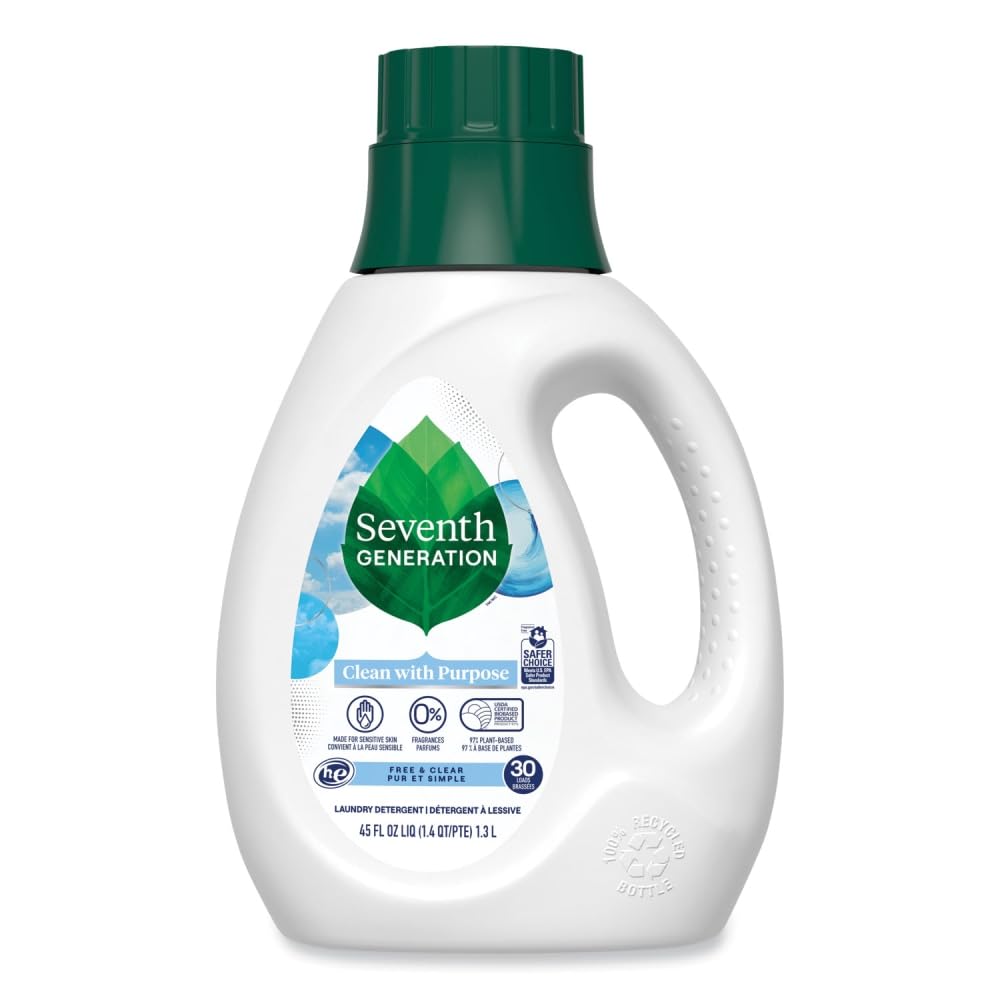
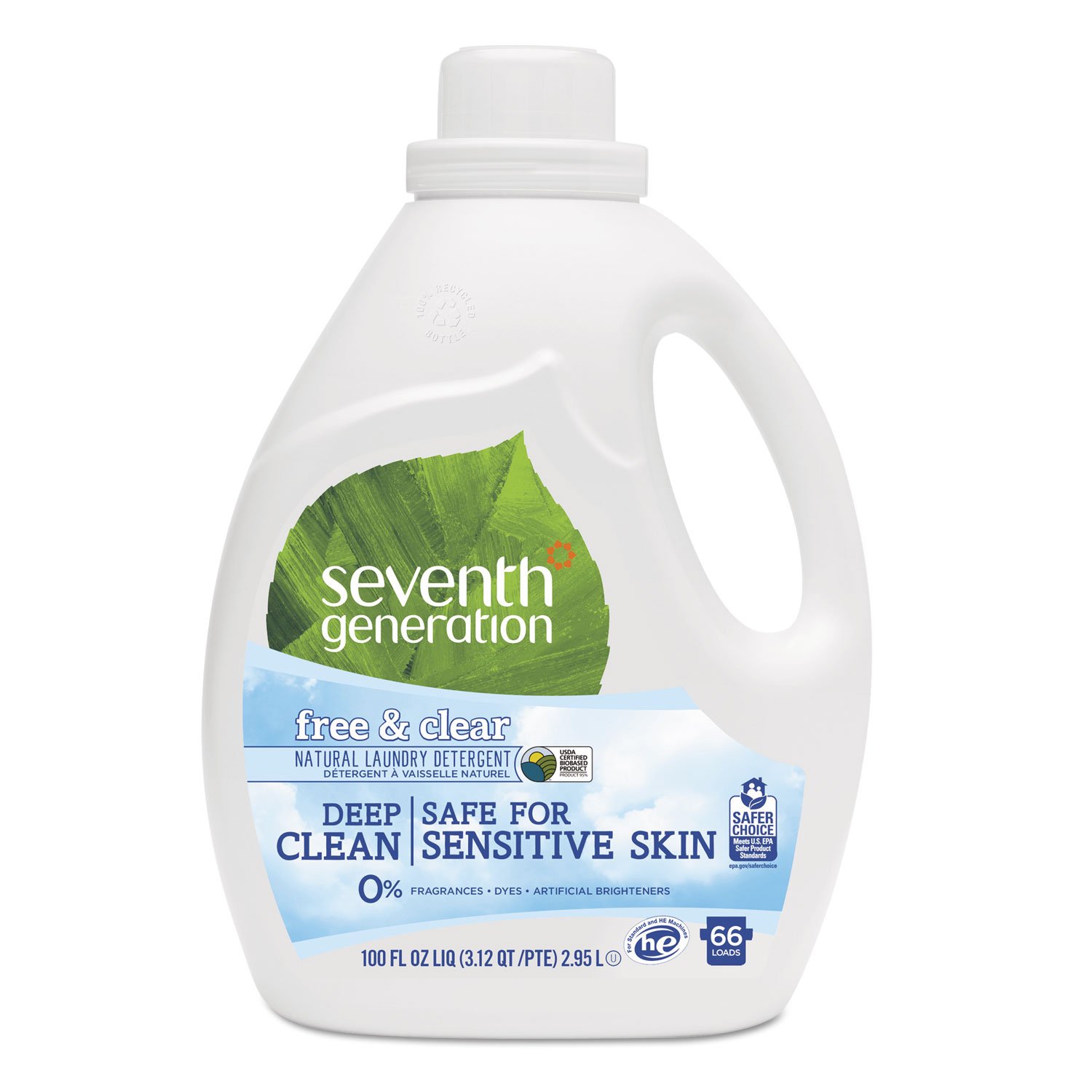
The front of each bottle states the share of plant based content in the formula, measured under the USDA biobased program, so you can compare a liquid against a pack without guessing. Many formulas in the line also carry the EPA Safer Choice label, which means the ingredient list passed a government review for safer chemistry. Free and clear means the formula contains no dyes and no fragrances at all, which is a stricter claim than unscented, a word that can hide masking agents. None of these labels promises stronger cleaning; they describe what the product is made of and what it leaves out. The cleaning side still depends on dose, water temperature, and how soiled the load is, so treat label claims as ingredient information, not as a performance grade.
Common Mistakes to Avoid
- Overdosing concentrated liquid, which leaves residue that stiffens fabric and can irritate skin.
- Putting laundry packs in the dispenser drawer, where the film can clog instead of dissolving.
- Expecting a plant based formula to rescue an overloaded machine, where clothes cannot move and soil redeposits.
- Storing packs where children can reach them, since the colorful pods look like candy to toddlers.
- Judging cost by bottle price instead of the cost per load at the dose you actually use.
- Assuming free and clear means weak, then doubling the dose and causing the very residue you wanted to avoid.
How to Store and Handle Laundry Detergent Safely
Keep all detergent in a locked cabinet or on a high shelf away from children and pets, in the original container with the label intact. Packs deserve special discipline: store them in their closed, child resistant packaging, handle them only with dry hands so the film does not start dissolving, and never cut a pack open. Keep liquids away from heat sources and out of freezing garages, since temperature extremes can separate the formula. Wipe drips from bottle threads so caps seal and the shelf stays clean, and never transfer detergent into drink bottles or food jars. If a child swallows detergent or a pack, call Poison Control or seek medical care right away rather than waiting for symptoms, and keep the product container with you so you can read its ingredients to the clinician.
FAQ
Is Seventh Generation laundry detergent safe for baby clothes?
The free and clear formulas are the usual choice for baby laundry because they leave out dyes and fragrances. Wash new baby clothes before the first wear, use the correct dose, and add an extra rinse for the first few washes while you watch for any skin reaction. If a rash appears or persists, stop using the product and talk with your pediatrician, since laundry is only one of several possible causes.
Does Seventh Generation detergent work in high efficiency machines?
Yes. The liquids and packs are formulated for both high efficiency and standard machines, and the packaging carries the HE symbol where it applies. The main risk in an HE machine is overdosing, because these machines use little water and excess suds cushion the tumbling action that does the cleaning. Measure to the lowest line for normal loads and let the machine do the work.
Can Seventh Generation detergent clean well in cold water?
The liquids are designed to dissolve and clean in cold water, which covers most everyday loads of soil and odor. Powder needs a longer wash or warmer water to dissolve fully, and packs dissolve best when placed in the empty drum before clothes go in. For heavily soiled work clothes, a warm wash once in a while still helps any detergent, including this line.
Does the free and clear version clean as well as the scented version?
Yes, the cleaning base is essentially the same, and the difference is what is left out: dyes and fragrance ingredients. In practice, any small gap users notice usually comes from dosing or load size rather than the formula. If your laundry smells clean but carries no scent at all after drying, that is the free and clear formula working exactly as intended.
Is Seventh Generation laundry detergent safe for septic systems?
The formulas are generally considered suitable for septic systems when used at the labeled dose, since the ingredients break down and the line avoids phosphates. Dose discipline matters more than brand here, because any detergent in excess can disturb the bacterial balance a septic tank depends on. If your system is old or sensitive, choose the liquid, measure carefully, and spread laundry across the week rather than running many loads in one day.
Final Thoughts
Within this brand, format and ingredient profile decide more than any ranking: liquid for flexibility and pretreating, packs for consistency, free and clear for reactive skin, and concentrate for the lowest honest cost per load. Read the biobased and Safer Choice labels as ingredient facts, measure your dose, and keep packs locked away from small hands. Compare the formats in the product table above to settle on the best seventh generation laundry detergent for your machine and your household.


