
Best Dish Drying Rack for Counter in 2026: Drainage, Size and Materials
Disclosure: We may earn a commission when you buy through links on this page, at no extra cost to you. As an Amazon Associate I earn from qualifying purchases. Learn more

Choose a counter dish rack by footprint, drainage and material with this guide, and find the best dish drying rack for counter space in your kitchen.
A dish rack earns its keep in the least glamorous way: it keeps water where water belongs. The wrong rack leaves a slow puddle creeping across the counter, swollen laminate at the sink edge, and glasses spotted from sitting in their own drips. The right one drains cleanly into the sink, fits the footprint you actually have, and holds a full load without a balancing act. Choosing the best dish drying rack for counter use is mostly about drainage and measurements, because capacity and looks matter only after the counter stays dry.
This guide covers the features that decide daily satisfaction, how to measure before ordering, and the habits that keep a rack fresh. The comparison table below outlines the main rack formats, and our full guide to the best dish drying rack range covers sink and cabinet mounted alternatives as well.
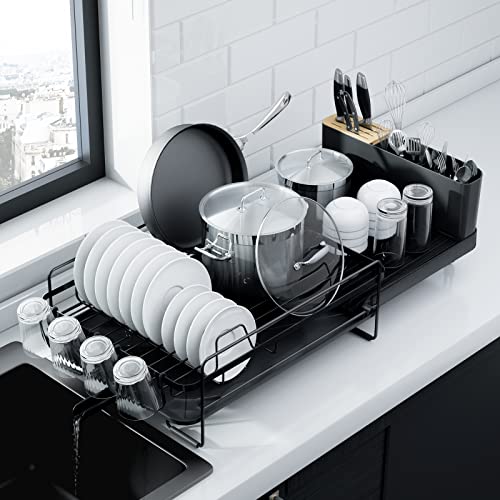
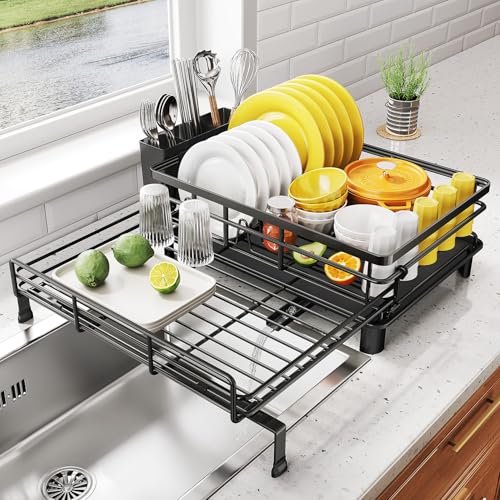


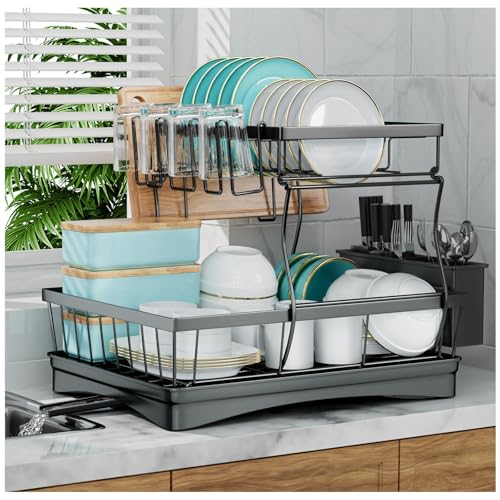


Who Should Buy Which Counter Dish Drying Rack?
Families Air Drying a Full Load Every Day
If your household fills the rack at least once a day, capacity and slot spacing run your life. Look for a rack that takes a full place setting count with room for bowls, and plate slots spaced so dishes stand apart and actually dry instead of leaning wet against each other. A sturdy frame matters more than clever features at this volume, because a rack that flexes under a cast iron pan will not survive the year. Utensil cups with drainage holes keep flatware from sitting in a puddle of its own.
Small Kitchens Where the Rack Lives Beside the Sink
When counter space is tight, every inch of footprint is a negotiation with the coffee maker and the cutting board. Compact racks, slim racks that run along the back edge, and two tier designs that build upward all serve this kitchen. If even a compact rack feels too large, consider whether an best in sink dish drying rack fits your basin, since drying inside the sink frees the counter completely. Measure honestly before falling for a design; a rack that overhangs the counter edge drips on the floor and the cabinets below.
Homes With Wood or Laminate Counters That Must Stay Dry
Some counters forgive standing water and some record every drop. Butcher block swells, laminate seams lift, and even stone suffers around the sink cutout when water sits daily. For these kitchens, drainage design is the whole decision: a raised rack on feet with a sloped tray and a spout that reaches into the sink, so water never pools beneath the dishes. Avoid flat mats as your main rack on these surfaces, because a mat holds moisture against the counter it was meant to protect.
Key Features to Compare
Footprint and Under Cabinet Clearance
Measure the counter space you can truly give up, length, depth, and the distance to the sink edge, then compare it with the rack footprint including its drain spout extended. Height is the forgotten dimension: plates standing in a rack need roughly 12 inches of clearance, and upper cabinets in many kitchens hang lower than that over part of the counter. A rack that fits on paper but forces you to angle every dinner plate in sideways will irritate you daily. Also leave a small margin around the rack; a rack wedged tight against the backsplash traps moisture behind it and complicates wiping the counter.
Drainage Design: Spouts, Sloped Trays and Raised Feet
Drainage separates good racks from puddle makers. The strongest designs lift dishes on a frame above a sloped tray, and the tray funnels water through a spout that extends over the sink lip so every drop lands in the basin. Swivel spouts add flexibility for corner sinks. Flat drain boards that rely on you to tip them out work only if you actually do it daily. Check that the spout reaches past your sink edge, because a short spout pours water down the cabinet front instead, which is worse than a tray you empty by hand.
Capacity, Slot Spacing and Glass Holders
Capacity claims in listings are optimistic, so judge by slot count and layout instead. Wide slots fit thick stoneware and pans; narrow slots suit thin plates and boards. A dedicated row or pegs for glasses and mugs keeps them off the plate area and lets them drain mouth down, which prevents the cloudy pool that collects in upright glasses. Cutting board storage along the side is genuinely useful in small kitchens. If you regularly wash a stockpot or a sheet pan, look for an open end or a flat section where oversized pieces can rest without crushing the plate slots.
Materials: Stainless Steel, Coated Wire and Plastic
Material decides how the rack ages. A best stainless steel dish drying rack resists rust in a wet environment and wipes clean, though lower grades can spot over time in hard water areas. Coated wire racks cushion dishes and cost less, but the coating eventually chips at contact points and rust follows. Plastic racks are light and cheap, yet they stain, hold odors, and grow slimy in the tray faster. Silicone and plastic mats suit overflow drying rather than main duty. Match the material to your water and your tolerance for replacing the rack every few years.
Utensil Cups, Cup Drainage and Small Parts
The utensil cup is where racks quietly fail. A cup without drainage holes becomes a small pond of gray water; a cup with a divided interior keeps knives pointed down and forks from tangling. Removable cups that hang on the rack edge free interior space for plates. Check whether the cup and tray come off for washing, because the underside of a drain tray grows a biofilm that only a real scrub removes. Small design touches, like feet that grip rather than slide, decide whether the rack stays put when you load it one handed with wet dishes.
How to Measure Your Counter Before You Order
Start with the sink. Note which side of the basin your rack will sit on and whether the drain spout can reach over the lip from that spot; many kitchens only work on one side. Measure the clear counter run in inches, from the sink edge to the nearest obstacle, and the depth from backsplash to counter edge. Then measure the height from the counter to the underside of the upper cabinets at that exact spot. Compare those three numbers with the rack dimensions plus an inch of breathing room on each side, and the fit question answers itself.
Think about load shape too. Count your typical wash: dinner plates, bowls, glasses, one pan, flatware. If that load is large and daily, a best large dish drying rack with a two tier layout may serve better than a compact model you overflow every night, because overflow dishes end up on towels on the counter anyway. A rack bought one size too small does not save space; it just moves the excess onto the very counter you were protecting.
Common Mistakes to Avoid
- Buying by looks without measuring cabinet clearance, which forces plates in at an angle and chips their edges over time.
- Choosing a flat drain board and never emptying it, which leaves dishes standing in stale water that spots glass and feeds odor.
- Picking a spout that stops short of the sink lip, which pours drainage down the cabinet front with every load.
- Overloading narrow slots with heavy pans, which bends wire frames and makes the whole rack wobble within months.
- Letting the drain tray go unwashed for weeks, which grows a slimy film that smells every time warm water hits it.
How to Make Your Dish Drying Rack Last Longer
Wash the rack itself on a schedule, not when it looks dirty. Once a week, take the tray and utensil cup to the sink, scrub them with hot soapy water and a brush that reaches the corners, and let them dry fully before reassembling. Hard water kitchens should add a monthly vinegar soak for the tray and spout, because lime scale narrows the spout and slows drainage until water backs up under the dishes. Dry the counter beneath the rack during the same routine and check the sink edge sealant while you are there.
Load with a little care and the frame lasts years. Put heavy pans in last and low, keep knives pointed down in the cup rather than balanced across plate slots, and do not use the rack as permanent storage for clean dishes, because constant weight and moisture age both the rack and the dishes. If a coated wire rack starts to chip, retire it before rust stains the counter or the dishes. A rack is a working tool in the wettest spot in the kitchen; treated like one, a good model stays fresh for a long time.
FAQ
How do you keep a counter dish rack from pooling water on the counter?
Choose a raised rack with a sloped tray and a spout that reaches into the sink, and position it so the spout truly overhangs the basin. Then keep the path clear: scale and crumbs in the spout are the usual reason water backs up and spills underneath. If your current rack pools, check whether it sits level on the counter, since a slight tilt away from the sink defeats even a good tray. Emptying a flat board daily is the fallback that works for any design.
What size dish drying rack fits under standard kitchen cabinets?
Most upper cabinets leave about 18 inches between counter and cabinet bottom, and plates standing in a rack need around 12 inches, so a standard rack fits comfortably in most kitchens. The exceptions are cabinets hung low or racks with tall two tier frames, which can reach 13 inches before a plate is even loaded. Measure your exact gap and compare it with the rack height plus the height of your largest plate standing upright. That ten second check prevents the most common return in this category.
How do you remove lime scale from a dish drying rack tray?
Soak the tray in the sink with warm water and plain white vinegar for about half an hour, then scrub the softened deposits with a brush and rinse. For a stainless rack, wipe with the grain and dry it afterward to prevent water spots. Avoid abrasive pads on coated racks, since they strip the coating that protects the wire from rust. In very hard water homes, a quick vinegar wipe every week or two stops scale before it builds into a drainage problem.
Can a counter dish drying rack hold large pots and sheet pans?
Some can, if the layout includes an open section or wide end slots, but most compact racks are built around plates and bowls. A stockpot balanced across plate slots bends wires and blocks drainage for everything under it. If big cookware is your daily reality, favor a rack with a flat side area or plan a simple overflow spot, such as a towel on the stove top, for the largest piece. Buying for your biggest regular item, rather than your average one, keeps the rack stable.
How often should you wash a dish drying rack?
Once a week suits most households: tray, utensil cup, and frame get hot soapy water and a brush, then full air drying before reassembly. Homes with hard water or a rack that stays loaded around the clock may need the tray twice a week, because biofilm grows fastest where water stands warm. If the rack ever smells when wet dishes land in it, that is the signal the schedule slipped. A clean rack also dries dishes faster, since airflow is not fighting a layer of slime.
Final Thoughts
Measure first, drain second, and let capacity come third, and the rack decision mostly makes itself. The product table above compares the main formats side by side, so match its footprints against the numbers you took from your own counter and sink. Protect the counter surface you have, stainless on hard water, coated wire on a budget, and keep the tray on a weekly wash rhythm. Done that way, the best dish drying rack for counter space in your kitchen disappears into the routine, which is exactly what a good rack should do.


