
Best Motion Sensor Kitchen Trash Can for 2026: A Hands Free Guide
Disclosure: We may earn a commission when you buy through links on this page, at no extra cost to you. As an Amazon Associate I earn from qualifying purchases. Learn more

Compare sensor placement, opening speed, battery life and capacity to find the best motion sensor kitchen trash can for busy, hands full cooking days.
A motion sensor trash can watches for movement, not just presence. Wave a hand, approach with both arms full of grocery bags, or swing a pan over the lid, and it opens before you have to ask. That eagerness is the whole appeal and the whole risk: tuned well, it feels like the kitchen is helping you; tuned badly, it flaps at every passerby. The best motion sensor kitchen trash can is the one whose detection zone matches how your kitchen actually moves.
This guide focuses on how motion detection differs from simple proximity sensing, where the detection field should point, and how delay settings tame false alarms. Look over the comparison table below, then read the placement notes with your own floor plan in mind.

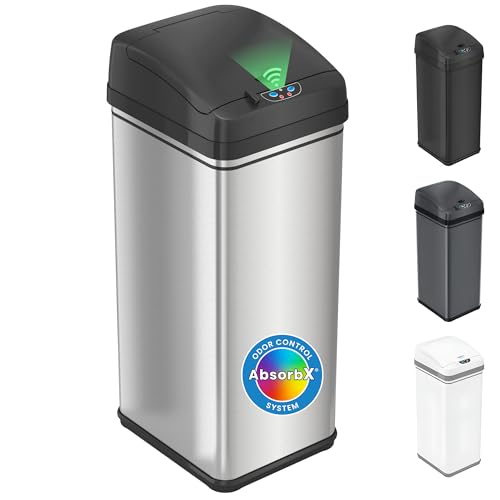
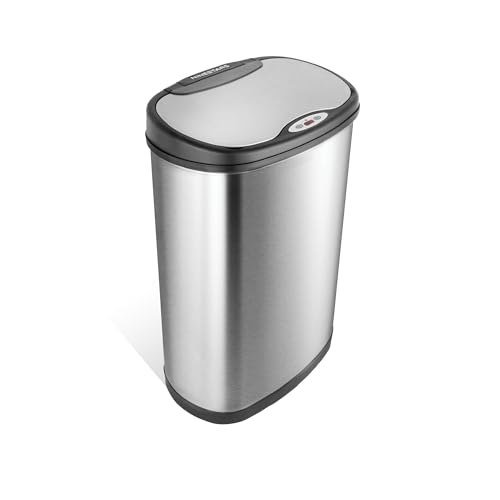
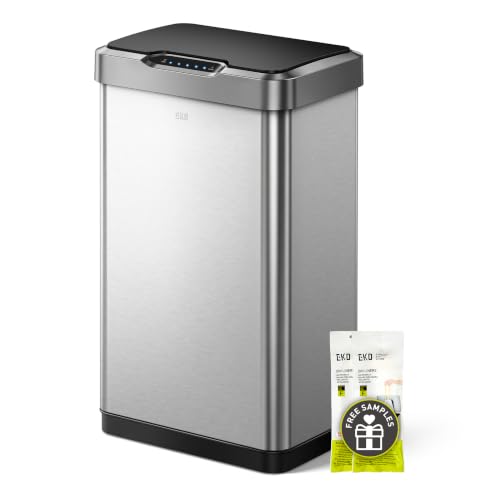
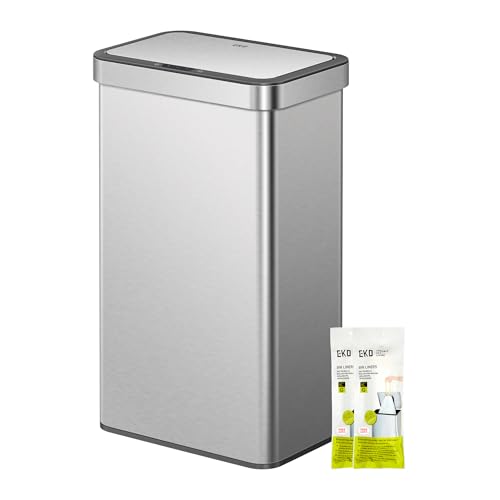
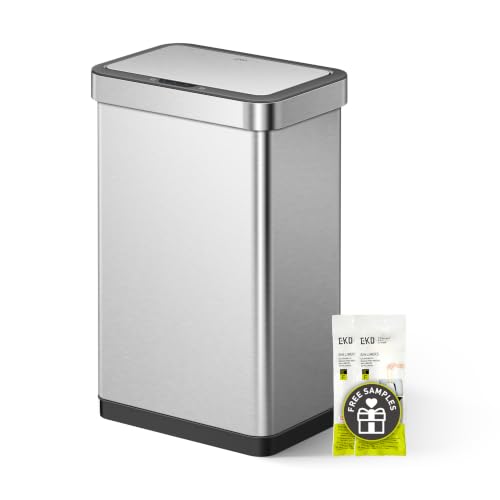

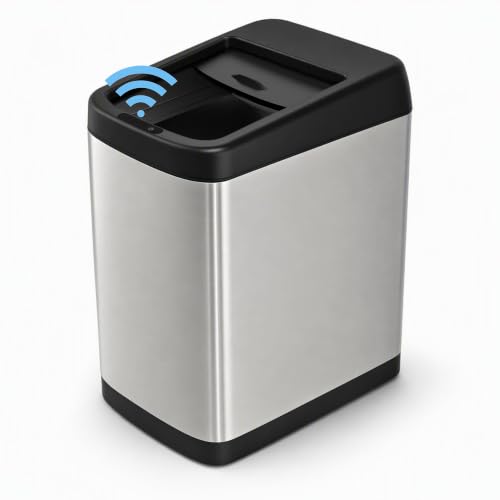
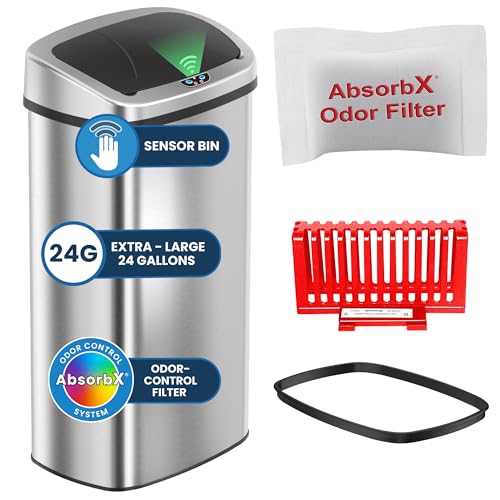
Who Should Buy a Motion Sensor Kitchen Trash Can?
Cooks Who Carry Everything in Both Arms
Motion activation rewards the two handed approach: a roasting pan in one hand and a hot pad in the other, a mixing bowl against your hip, a grocery bag on each wrist. You do not need a free finger to hover in a precise spot, because a broad sweep of movement near the lid does the job. Bakers moving trays and hosts clearing a table in armfuls feel this difference most.
Open Plan Kitchens With an Island Station
An island prep station generates scraps on all sides, and a motion can parked at the island end catches peels and packaging from any angle as you turn. The wide detection field suits that orbit of movement. If your kitchen is a galley instead, check the placement section below, because narrow traffic lanes are where motion models get trigger happy.
Homes Practicing Strict Kitchen Hygiene
During cold season or in homes with an immunocompromised family member, reducing shared touch points is a real goal, and the trash lid is one of the most touched surfaces in the kitchen. A motion can removes it from the routine almost entirely. Pair that with hand washing habits rather than treating it as protection on its own, and keep the sensor lens wiped so the system stays responsive.
Key Features to Compare
Detection Zone: Direction and Distance
Motion sensors read a cone or fan of space, and its aim matters. Top facing sensors read movement above the lid, which is deliberate and calm. Front facing wide angle sensors read the room, catching approaches from several steps away and also every walk past. Adjustable range, offered on better models, lets you shrink the field to arm length. As a rule, the busier the traffic near the can, the shorter and more upward the zone you want.
Close Delay and Adaptive Timing
The lid should stay open while the job continues. Fixed short delays of three to five seconds suit single tosses, while motion refreshed timing, where continued movement resets the countdown, fits long scraping and peeling sessions. Some models learn nothing and simply offer two or three delay presets. Pick a can whose shortest delay is not frantic and whose logic extends the opening when you are still working, because a lid that closes on your wrist twice will be switched off by the end of the week.
Opening Speed and Lid Mechanics
Motion cans compete on speed, with full opening in under a second on good mechanisms. Speed is worthless without control at the end of travel, so look for a damped close that lands softly instead of snapping. The lid should also open silently enough for open plan living, since a whirring motor announcing every banana peel gets old. Where the mechanism sits matters too: rear hinge units need wall clearance behind them, which tight corners may not have.
Power Management and Battery Reality
Motion sensing draws a small constant current because the sensor never fully sleeps, so battery life depends heavily on how often the lid fires. In a high traffic spot, frequent false openings can cut a nominal year of battery life to a few months. Prioritize models with an off switch for parties and cleaning, a genuine low battery indicator, and either economical AA cells or an adapter option. Our best kitchen trash can guide shows how running costs compare across lid types.
Body, Capacity and Bag Handling
Most motion cans are tall 13 gallon bodies built for standard tall bags, and many add a wide mouth so plates clear without tilting. A bag retention ring keeps the liner from sliding in under a heavy drop, and a fingerprint resistant finish keeps the front presentable where hands wave near it all day. A best stainless steel kitchen trash can body handles the dents of a busy island station better than thin painted steel, which matters when the can lives in the busiest square meter of the home.
Placing a Motion Sensor Can Without the False Alarms
Walk your kitchen mentally before choosing the spot. The detection field should face the prep zone, not the hallway. Keep the can at least a few feet from the main traffic line between fridge and stove, and never directly opposite a doorway where people pass at sensor height all day. Watch for moving curtains, a dog bed in the field, or a ceiling fan shadow that sweeps the sensor on sunny afternoons. If false alarms persist, rotate the can so the sensor faces a wall at an angle and reads only the arc in front of the lid. Kitchens where no spot passes these tests are pedal can kitchens, and the best 13 gallon kitchen trash can step models will frustrate you far less.
Common Mistakes to Avoid
- Setting the can in the busiest walkway, where the lid performs for every passerby and the batteries vanish.
- Choosing the widest detection range for a galley kitchen, when a short, upward reading zone was the right spec.
- Ignoring the close delay, then fighting a lid that drops while both hands are still over the opening.
- Skipping the off switch, so the can keeps firing while you mop around it or host a crowded party.
- Placing the lid swing tight under a counter lip, so the lid taps the edge on every opening and wears the hinge.
Care and Maintenance for Motion Sensor Trash Cans
The sensor lens is the maintenance item owners forget. A film of cooking grease builds on it within weeks and first shows up as sluggish response, so wipe it gently with a dry microfiber cloth every week. Keep all liquids out of the lid housing when you clean the shell, using a wrung out cloth only. Wash the inner bucket separately and dry it fully before reinstalling, because rising damp can fog the sensor from inside. Switch the unit off before deep cleaning so it does not fire while your hands are around the lid. Replace batteries as a matched set, and if the can will be stored, take the cells out entirely.
FAQ
What is the difference between a sensor can and a motion sensor can?
A basic sensor can reacts to a hand held in a fixed zone near the lid. A motion sensor can reacts to movement across a wider field, so approaching with full arms triggers it without precise hovering. The wider field is more forgiving mid task and more prone to false openings in traffic, which is why range adjustment matters on motion models.
How do motion sensor trash cans avoid opening for pets?
The field is usually aimed upward and set to read at counter height, above the movement pattern of a dog or cat on the floor. Tall dogs that rear up can still enter the zone. Placement helps most owners: keep the can where pets do not loiter, and use the off or lock mode overnight if a determined pet keeps experimenting.
How far away should a motion sensor trash can detect you?
For most kitchens, a trigger distance of about 6 to 12 inches from the lid is the sweet spot: close enough to be intentional, far enough that carrying a pan across the front works. Room scale detection sounds convenient but fires for people who are simply walking to the fridge. Shorter range plus motion refresh timing is the calmer combination.
Are motion sensor kitchen trash cans worth it?
They earn their price in kitchens where cooks regularly arrive at the bin with both hands full and where a low traffic placement spot exists. In a narrow kitchen where everyone squeezes past the can hourly, the false openings erase the benefit and a pedal can is the smarter buy. The technology is only as good as the placement it allows.
How long does a motion sensor kitchen trash can last?
The body can last as long as any quality steel can, while the lid unit is the wear item, with motors and sensors typically serving several years of daily use. Battery neglect and liquid damage shorten that more than opening count does. When lids stop responding despite clean lenses and fresh batteries, replacement lid units are sometimes available from the maker.
Final Thoughts
Detection zone, delay logic and an honest placement spot: those three decide whether a motion can feels helpful or haunted. Weigh them against your floor plan and the best motion sensor kitchen trash can for your home will be clear in the product table above. Households that outgrow motion models usually step up in size next, where the best large kitchen trash can range offers the same tall bag fit with simpler mechanics.


