
Best Expandable Dish Drying Rack for 2026: One Rack, Two Sizes
Disclosure: We may earn a commission when you buy through links on this page, at no extra cost to you. As an Amazon Associate I earn from qualifying purchases. Learn more

Pick the best expandable dish drying rack by comparing extension strength, drainage across both sections and how small it folds on quiet days.
Your Tuesday wash load is four plates and a pan. Your Sunday load is the roasting pan, every prep bowl you own, and glasses for six. A fixed rack forces you to choose which load it fits, and either wastes counter all week or overflows on the day you cook properly. That swing in demand is exactly what the best expandable dish drying rack is built for: it slides or unfolds wider for the big load, then shrinks back so the counter is yours again.
Expansion sounds simple, but the mechanisms differ, and a rack that sags when extended is worse than a small honest one. This guide compares extension styles, drainage, and support strength, so you can pick a design that stays rigid at full stretch.



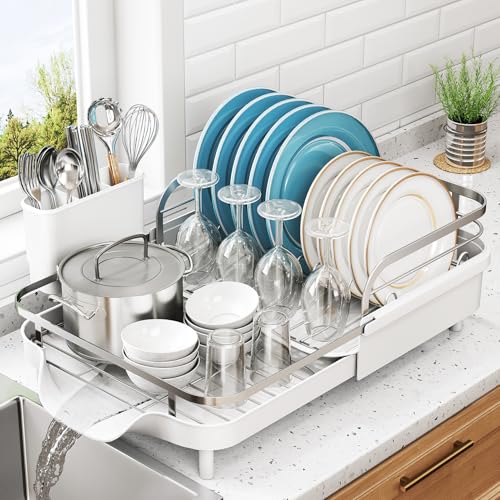
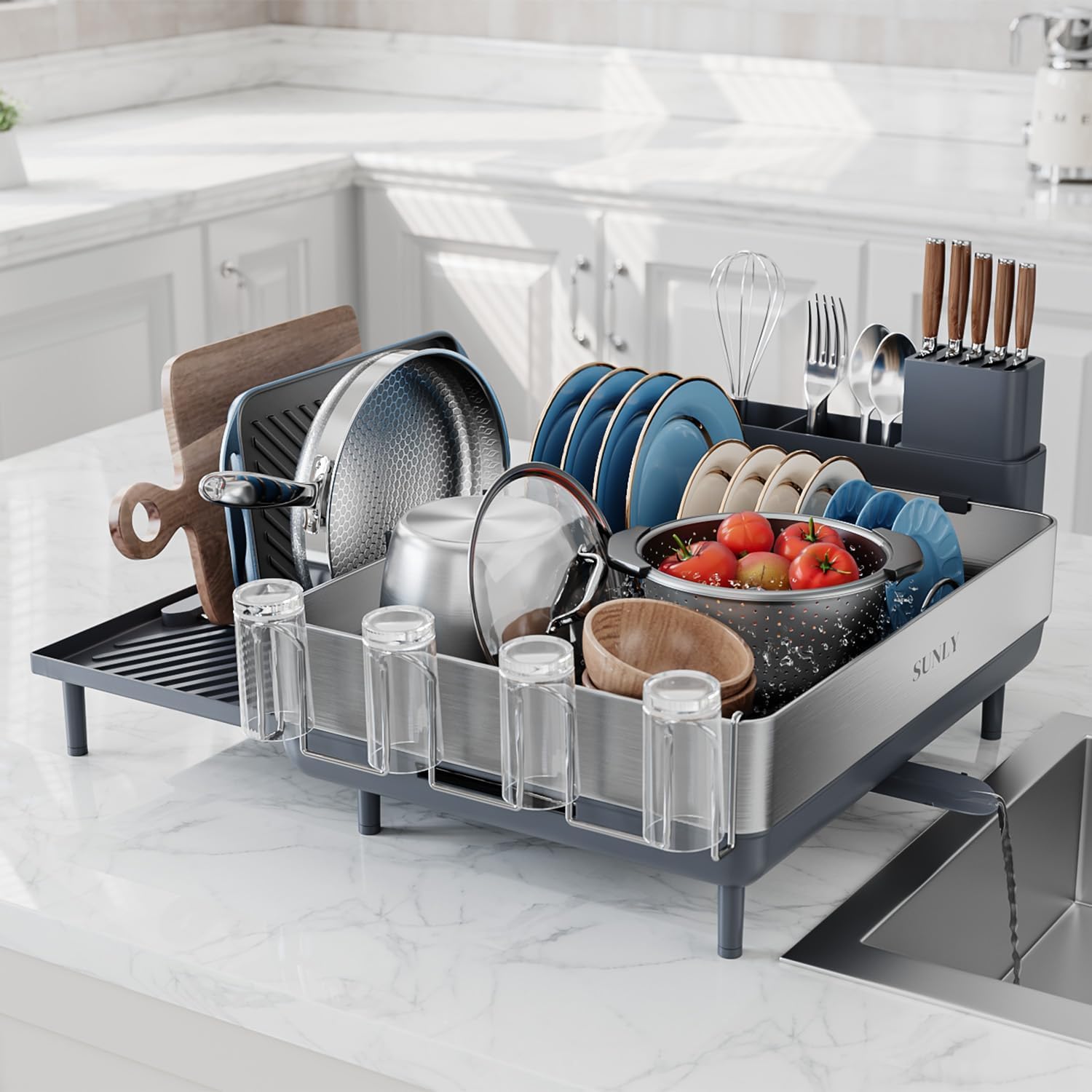
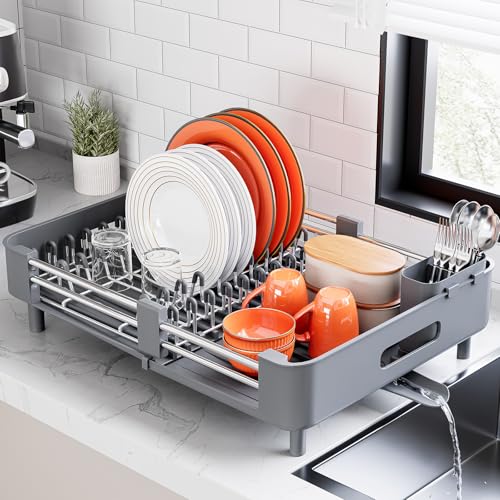
Who Should Buy an Expandable Dish Drying Rack?
Small Households With Big Cooking Days
Couples and solo cooks who entertain on weekends live exactly the swing described above. Collapsed, the rack handles daily plates; extended, it swallows the holiday aftermath without a second rack or a counter covered in towels. If that rhythm is yours, expansion is not a gimmick, it is the feature you will use weekly. Size the collapsed footprint to your counter first, since that is the shape you will live with most days.
Renters Whose Next Kitchen Is Unknown
Renters move, and the rack that fit this counter may not fit the next one. An adjustable rack hedges that bet: it narrows for a galley kitchen and stretches in a bigger one, and some designs sit over the sink where counter space does not matter at all. Buyers in this group should also value flat storage, because a rack that folds thin rides out the move in a box instead of the donation pile. The general best dish drying rack guide is a good cross check of fixed alternatives.
Families That Batch Wash After Big Meals
Some households let dishes collect through the day and wash once, in a single mountain. That habit needs peak capacity, not average capacity, and an expandable rack opened to full width beside the sink gives the mountain somewhere to drain. Look for models whose extension adds real slot space rather than a shallow shelf, and a tray system that covers the whole extended length so the extra load does not drip on the counter.
Key Features to Compare
Extension Mechanism and Usable Range
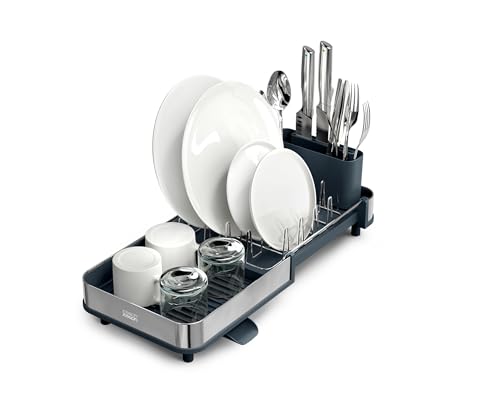
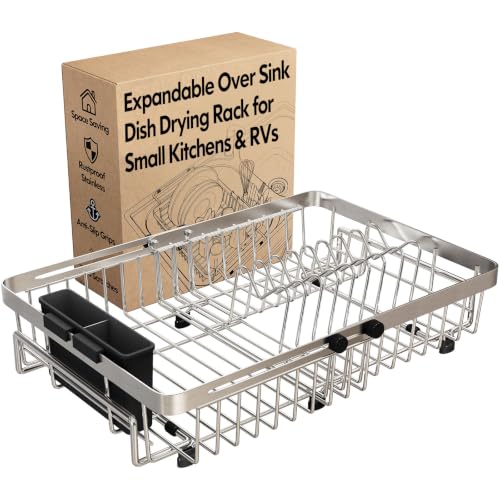
Most expandable racks use one of three tricks: sliding rails that pull out sideways, a pull out lower tray that adds a second zone, or folding wings that swing up. Note the expanded and collapsed measurements in inches and ask whether the moving part locks in place, because a rack that creeps closed under a load of wet plates is maddening. Sliding designs tend to keep one continuous drainage plane, while wing designs can leave a step between levels that tall glasses dislike.
Support Strength When Fully Extended
Extension is where cheap racks confess. A pulled out section carried by thin rails will bow under two heavy saucepans, and bowed rails pool water instead of draining it. Check the product details for a weight rating and favor steel rails over all plastic sliders. In your own kitchen, load the extension in the middle, not at the edges, and put the heaviest pan near the supported end. A rack that feels solid at full stretch with your real cookware is the one to keep.
Drainage Across the Whole Extended Length
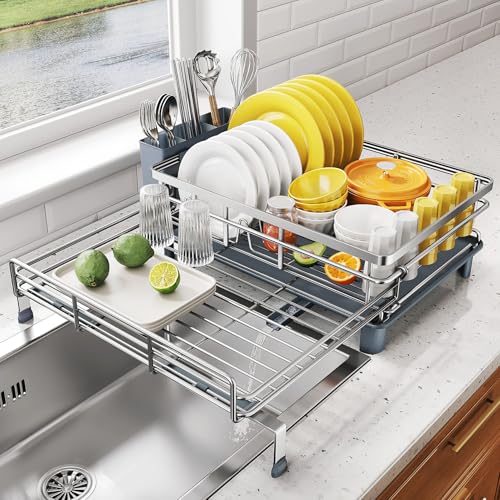
Water does not care which half of the rack a glass sat on. Some designs drain the main body into the sink but let the extension weep onto the counter, which defeats the purpose on exactly the big load days you bought it for. Look for a continuous sloped tray, a spout that serves the full width, or an over the sink layout where every drip lands in the basin. The best in sink dish drying rack approach avoids the counter question entirely and is the natural rival design to compare.
Materials and Moving Part Durability
Sliders, hinges, and latches live wet and get worked daily, so they are the first failure points. Stainless rails and coated steel frames resist the corrosion that makes mechanisms grind and stick, and replaceable plastic feet and end caps are a good sign that the maker expects the rack to be serviced, not binned. Our best stainless steel dish drying rack guide explains which finishes survive a permanently wet life. Avoid painted moving parts, because the paint flakes into the mechanism and the drain water.
Storage When Collapsed
The collapsed shape is your everyday counter reality, so judge it as carefully as the extended one. Some racks fold flat enough to slide beside the fridge or hang inside a cupboard door, which suits households that only wash a few items most days and want the counter bare. Others merely shrink by a third and still occupy a slab of counter full time. Decide which life you actually lead: always out in compact mode, or folded away between washes.
Slot Layout in Both Configurations
A subtle trap: some racks only have useful plate slots in one configuration, with the extension offering a bare tray where items slide around. Check where the plate slots, glass holders, and utensil cup sit collapsed and extended, and whether the cup moves or stays put. Big households washing family sized loads may outgrow even an extended rack and should glance at the best large dish drying rack options, where capacity does not depend on moving parts at all.
Over the Sink or on the Counter: Choosing an Expansion Style
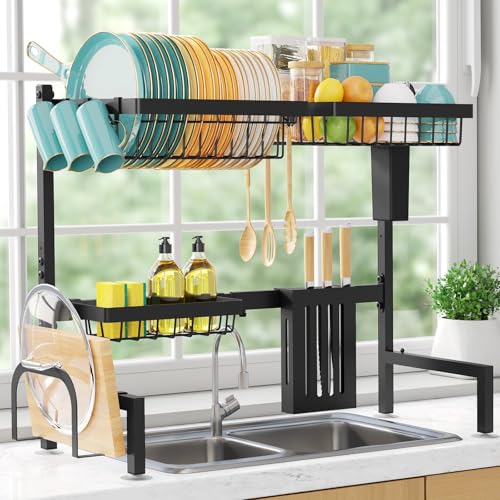
Over the sink expandable racks bridge the basin on adjustable rails, using dead space and draining perfectly by definition. They shine in tiny kitchens and for drying bulky items like roasting pans and cutting boards. Their limits are sink width, faucet height, and the fact that the sink is occupied while dishes dry, which annoys anyone who needs the basin mid wash.
Countertop expandable racks keep the sink free and work beside any sink shape, but they owe you honest drainage across the full width and a tray discipline on big days. Choose over the sink when counter space is the scarcest thing you own, and countertop when the sink stays busy or your basin is unusually wide, deep, or fitted with a tall faucet that blocks a bridge rack.
Common Mistakes to Avoid
- Measuring only the collapsed size: the extended rack may overhang the sink or block a cabinet door on the days you open it fully.
- Assuming the extension drains like the main body: many designs leave the added section dripping onto the counter.
- Loading the extension with the heaviest pots: cantilevered sections flex, pool water, and wear their rails out early.
- Ignoring faucet clearance on over sink models: a tall gooseneck faucet can make the rack unusable or block the sprayer entirely.
- Never cleaning the sliding rails: grit and mineral scale in the tracks make the mechanism grind and eventually jam.
- Buying expansion you never use: if your loads are steady, a fixed rack of the right size is simpler, stronger, and cheaper.
How to Make Your Expandable Dish Drying Rack Last Longer
Moving parts need a little more care than a fixed rack. Rinse the sliding rails and hinges weekly so grit does not grind in the tracks, and work the extension open and closed a few times after washing to shed water from the mechanism. Once a month, wash the whole rack in hot soapy water, paying attention to the joints where the sections meet, because that overlap hides a film of old drain water.
Dry the rack in its extended position now and then so the hidden overlap zone airs out fully instead of staying damp and growing mildew. If the rails start to drag, a drop of food safe mineral oil on the track, wiped nearly dry, restores the glide without contaminating dishes. Store it collapsed and latched if it has a latch, so the frame is not under spring tension for months at a time.
FAQ
How much extra space does an expandable dish drying rack add?
Most designs add noticeably more drying area when open, which is usually the difference between one wash load and two. Judge by the expanded measurements rather than percentages: you want the opened rack to fit your biggest regular load, like a roasting pan plus a full set of plates. If your biggest load is a holiday dinner for ten, even expansion may not cover it, and a second simple rack or drying in shifts is the honest answer.
Are expandable dish drying racks sturdy enough for heavy pans?
The main body generally is; the extended section is the question. Quality steel rail designs carry saucepans and skillets on the extension without drama, while light plastic sliders bow under the same load. Place cast iron and stockpots on the fixed section as a habit, and treat the extension as the zone for plates, bowls, and glasses. That loading habit also keeps the mechanism from wearing unevenly.
Can an expandable dish drying rack go over any sink?
No. Over the sink models fit a range of basin widths, and yours must fall inside it, with enough rim or counter on both sides for the rails to rest on. Undermount sinks in thick stone can leave too little ledge, and very tall faucets block the drying zone. Measure basin width, ledge depth, and the height from the sink rim to the faucet's lowest point before ordering, and keep the numbers with you when comparing models.
How do I stop an expandable dish drying rack from sliding on the counter?
Start with the feet: they should be soft rubber and intact, and worn smooth feet are replaceable on better racks. A thin silicone mat under the rack adds grip and catches stray drips, though it needs rinsing as part of your weekly wash. Also check that the counter is truly dry under the rack when you set it down, because a wet stone counter is slippery even under good feet.
Is an expandable dish drying rack better than a large fixed rack?
It is better when your load size swings and your counter is precious on quiet days. A large fixed rack wins on raw strength and simplicity when the counter can hold it permanently, since there are no rails to clean or wear. Think about your worst week, not your best: if the big load happens twice a year, expansion is a luxury; if it happens every Sunday, it is the whole point.
Final Thoughts
The value of an expandable rack is flexibility you can feel: counter space back on quiet days, full capacity on cooking days. Check the expanded measurements, the drainage across both sections, and the rail strength, then use the product table above to compare the best expandable dish drying rack candidates against your sink and your biggest load. Keep the tracks clean and the heavy pans on the fixed end, and it will flex with your kitchen for years.


