
Best Dish Drying Rack for RV: Drying Dishes in a Tiny Galley in 2026
Disclosure: We may earn a commission when you buy through links on this page, at no extra cost to you. As an Amazon Associate I earn from qualifying purchases. Learn more

Drying dishes in a tiny galley takes the right rack. Compare collapsible and over sink designs to find the best dish drying rack for rv life on the road.
An RV galley punishes ordinary kitchen gear. The sink is half the size of a home sink, the counter is a narrow strip that doubles as your only prep space, and anything left standing on it has to survive being packed away before the wheels roll. A home dish rack is simply too big and too rigid for that life. The best dish drying rack for rv use folds, rolls, or collapses flat, drains into a sink measured in inches, and holds a modest load steady while the rig sits parked at a slight angle on a gravel pad.
This guide focuses on the needs that make RV drying different: storage volume, travel security, tiny sinks, and water that you carried in a tank. The comparison table below shows the main rack formats, and our broader guide to the best dish drying rack designs covers the home sized end of the range for comparison.


Who Should Buy Which Dish Drying Rack for an RV?
Full Time RVers Cooking Every Day
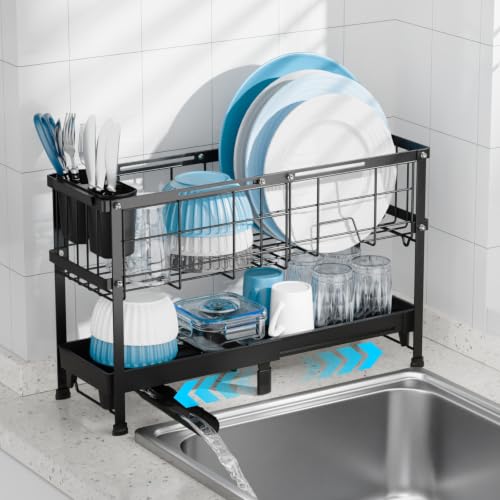
Living in the rig means washing real meals daily, so you need a rack that handles a pot, two plates, bowls, and mugs without a nightly overflow onto a towel. A compact two level or over sink design gives you that capacity while keeping the counter strip free for cooking. You will set it up and put it away hundreds of times, so favor a design that deploys in seconds and has no loose parts to lose in a moving home. Durability outranks cleverness at this usage level.
Weekend Campers Washing a Few Dishes
Short trips mean small loads: a skillet, a couple of plates, coffee gear. A simple collapsible rack or a roll up mat over the sink covers that with room to spare and stores in almost no space at all. Because it lives packed away most of the year, choose materials that tolerate being stored damp once in a while without turning musty, and a shape that fits your smallest cabinet rather than your largest. For this pattern, spending on capacity you use twice a summer makes little sense.
RV Owners Who Must Store the Rack While Driving
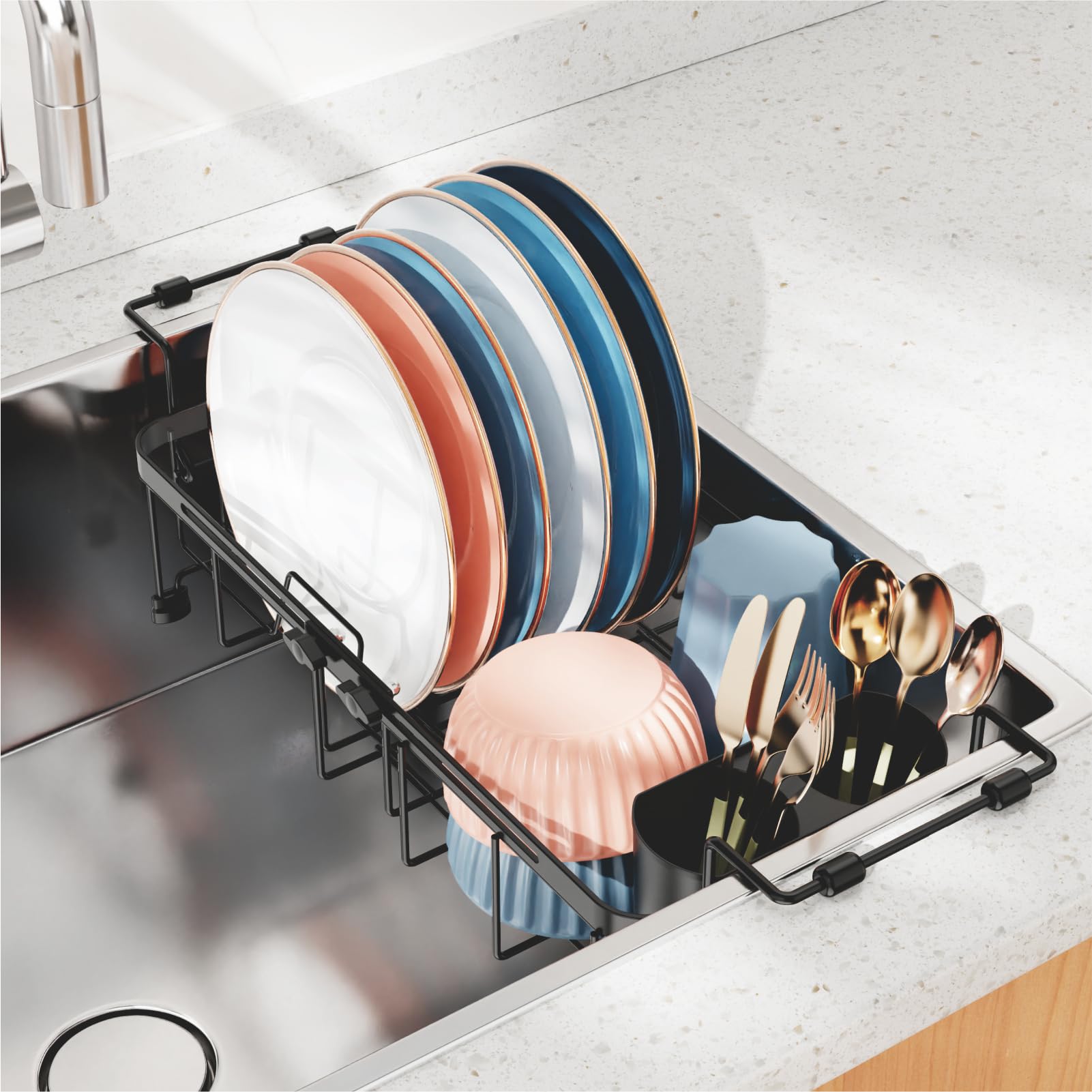
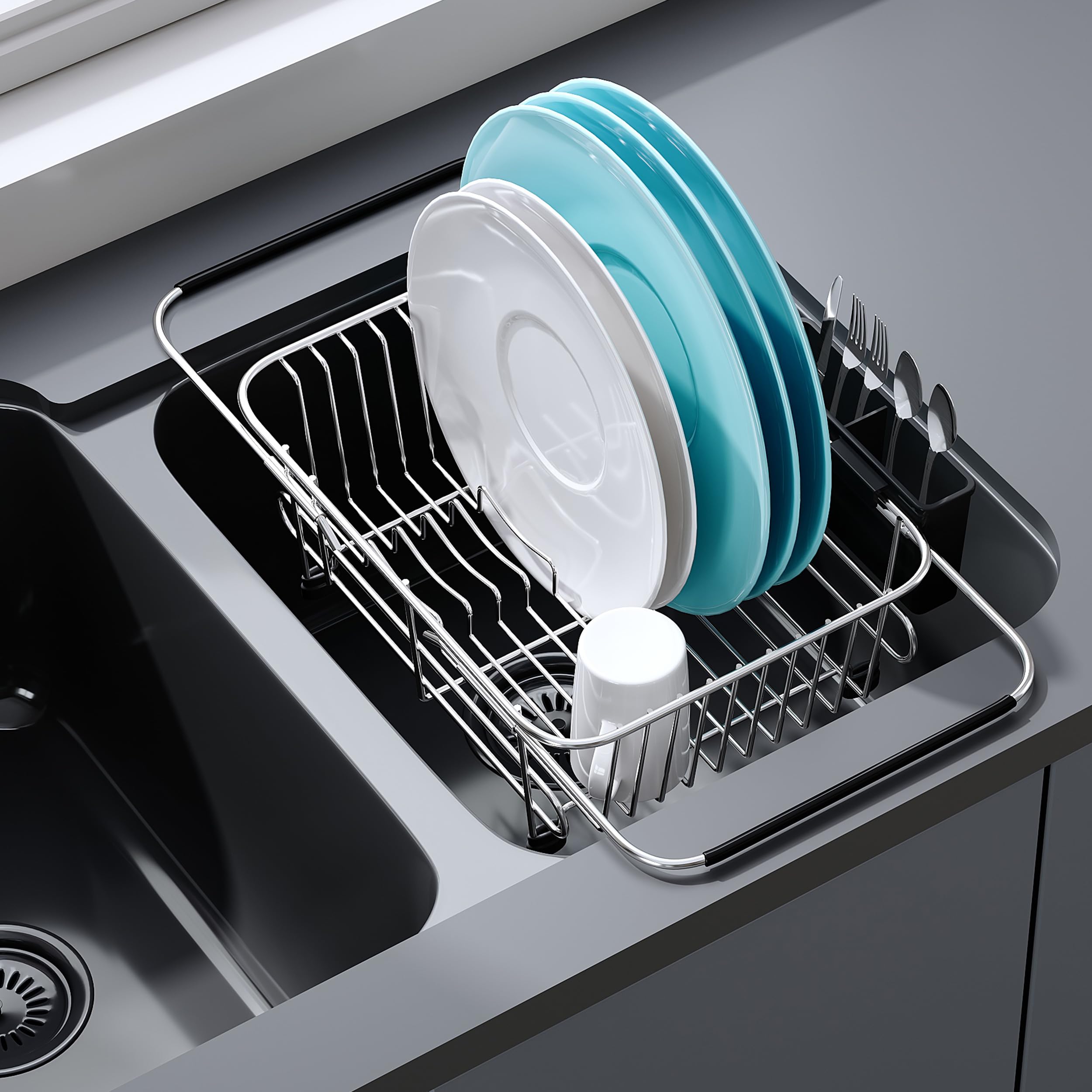
Your deciding question is not how the rack dries but where it goes at 8 in the morning when you pull out. Folding racks that flatten to an inch or two slide into the gap beside the sink cabinet or under the dinette cushion. Roll up racks coil into a drawer. If your layout has neither, an best in sink dish drying rack that lives in the basin full time removes the storage question entirely, at the cost of some sink space while parked. Measure your storage slot with the same care you measure the sink.
Key Features to Compare
Fold Flat, Collapsible and Roll Up Storage Formats
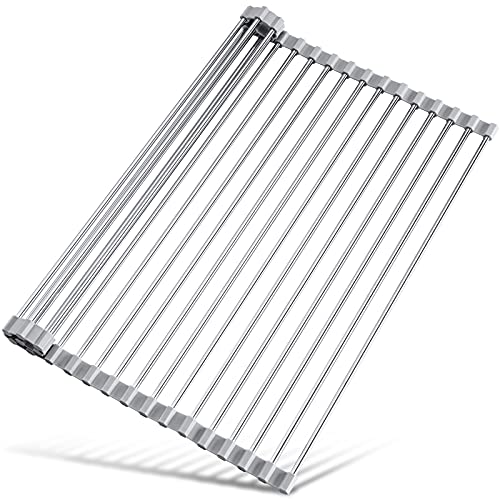
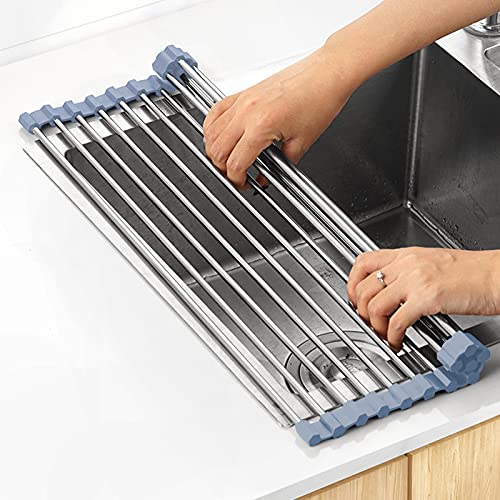
Three formats dominate RV drying. Collapsible racks pop up into a rigid frame and fold flat, giving real plate slots with minimal storage depth. Roll up racks made of rods over a small frame rest across the sink and double as a trivet or extra counter while parked. Folding wire racks collapse sideways and suit medium loads. Judge each by its packed dimensions, not its open ones, and by whether it sets up without small detachable pieces. In a moving home, a rack that needs assembly every stop will quietly stop being used.
Fit Over Small RV Sinks
RV sinks vary more than home sinks: single basins, small double basins, and corner shapes all exist, many far narrower than a standard rack expects. Measure the basin length, width, and the distance between faucet and basin edge before ordering, because an over sink rack must rest on the counter rim with enough purchase on both sides. Adjustable length roll up racks forgive odd sizes best. If your faucet sits low over the basin, check that plates standing in the rack clear it; a rack that forces dishes under a dripping faucet dries nothing.
Drainage Into a Tiny Sink Without Splashing the Counter
Water management matters doubly in an RV, because the gray tank you fill with dish drips is the same tank you are conserving. Racks that drain directly into the basin, either by sitting over it or by a short spout, keep the narrow counter dry and the tank accounting simple. Avoid designs that drain onto a tray you must carry to the sink; in a galley that small, the tray trip crosses your prep space and spills happen. Raised feet and a real slope matter, since parked rigs are rarely perfectly level and water follows the actual tilt, not the intended one.
Lightweight Materials That Resist Rust and Odors
Weight is a budget in an RV, and a rack should cost you ounces, not pounds. Plastic and silicone racks are light and shrug off road vibration, while thin stainless designs dry fast and resist the musty smell that closed cabinets encourage. A best stainless steel dish drying rack in compact form suits full timers who wash daily, since it tolerates constant use without staining. Whatever the material, pick a rack you can rinse and shake almost dry in seconds, because it will often go into a closed cabinet still slightly damp after the morning dishes.
Keeping Dishes Secure on Uneven Ground and Travel Days
Parked on a slope, a plate in a loose slot slowly walks toward the low side. Deep slots, raised rims, and a frame that grips the counter edge keep loads settled overnight. For travel days the rule is simple: nothing rides on the counter. Build the habit of drying, putting away, and stowing the rack before moving, and add a soft item like a towel in the cabinet so dishes do not rattle against each other on rough roads. A rack with rubber feet also doubles as a stable base on a picnic table when you wash up outside at a campsite.
Sizing a Rack for an RV Galley
Work from your real load, not the rack marketing. Count the biggest wash you do after a cooked dinner: usually one pan, two or three plates, bowls, mugs, and flatware. Then measure the three places the rack must fit: the sink rim span if it goes over the basin, the counter strip if it sits beside the sink, and the cabinet or drawer slot where it will ride. A rack that passes all three measurements is the right size, even if it looks small next to home models. If your wash regularly overflows, a best large dish drying rack is rarely the answer in an RV; a second quick wash after big meals protects your space better than a giant rack you cannot store.
Water habits complete the sizing picture. Air drying is the water wise choice in a rig, since every towel you use becomes laundry and every rinse comes from the fresh tank. A rack that drains well lets dishes dry untouched while you do other camp chores, and a quick shake of each item before racking keeps the gray tank from filling with drip water. Those small savings are the difference between a weekend of margin and a mid trip dump station run.
Common Mistakes to Avoid
- Taking a home sized rack on the road, which eats the whole counter strip and still has nowhere to live while driving.
- Leaving dishes standing in the rack while moving, which guarantees chips, rattles, and occasionally a plate on the floor.
- Storing a damp rack in a sealed cabinet for weeks, which grows a musty smell that transfers to the dishes themselves.
- Choosing a rack that drains onto the counter, which swells the thin galley counter material and fills seams with grime.
- Ignoring the parked tilt of the rig, which sends drainage the wrong way on any rack without raised feet and a real slope.
Care and Maintenance on the Road
RV racks live hard: hard water at one park, soft at the next, and long storage between trips. Wash the rack with hot soapy water at least weekly while traveling, scrubbing the corners where slime starts, and let it dry fully in the open air of the campsite before it goes into a cabinet. Before a storage period, wash it, dry it completely, and store it with the cabinet door routine in mind; a rack put away bone dry in autumn smells fine in spring, and a rack put away damp does not.
Scale from hard water parks slows drainage just as it does at home, so a vinegar soak when you return from a long trip restores the spout and tray. Check folding hinges and the joints on collapsible frames each season, since road vibration loosens what home use never would. Keep a microfiber towel dedicated to the galley for the final wipe of the counter under the rack, and you will prevent the moisture damage that thin RV counters are prone to around the sink.
FAQ
Can you leave a dish drying rack on the counter while driving an RV?
No. Even a short drive on a rough campground road will walk dishes out of their slots and can send the rack itself sliding. Dry the dishes, put them away, and stow the rack in its cabinet or drawer before moving. Many RVers build the sequence into their departure checklist, right after securing cabinet latches. The habit takes a minute and saves both dishes and the counter surface from the damage a sliding rack causes.
How do you keep dishes from sliding in an RV dish rack?
Choose deep slots with raised rims, load heavy items low and toward the center, and level the rig as well as your site allows before washing up. Rubber feet keep the rack itself from creeping on the counter. If your parking spot leaves a noticeable tilt, turn the rack so its drainage slope works with the tilt rather than against it. For overnight settling, a silicone mat under the rack adds grip that smooth galley counters lack.
Does a roll up dish rack work over an RV sink?
Usually yes, and it is often the best RV format, because it adjusts to odd basin sizes and stores in a drawer coil. Rest it so the rods span the short dimension of the basin with solid contact on both rims, and check the load rating feel by pressing the center before trusting it with a cast iron pan. Roll up racks also earn their space as a trivet and a small work surface while parked. Measure your basin width before ordering, since some RV sinks are narrower than the shortest standard roll.
How do you stop a dish rack from smelling in a stored RV?
Wash it, then dry it completely before the rig goes into storage, ideally in sunlight for an hour. Store it in a ventilated spot rather than sealed in a plastic bag, and leave the cabinet cracked if your storage setup allows. A small open box of baking soda in the galley cabinet absorbs the background odors that closed RVs collect. If a rack already smells, a hot soapy wash followed by a vinegar rinse and full sun drying resets most plastic and metal racks.
What is the best way to dry dishes in an RV with limited water?
Scrape plates well, wash in a small basin of hot soapy water rather than under a running tap, and rack dishes immediately so they air dry without a towel. Air drying uses no extra water and no laundry, which matters when both come from your tanks. Shake each item once over the sink before racking to return drip water to the basin instead of the rack. Grouping the wash into one session per meal keeps the routine efficient on tank supply.
Final Thoughts
The right RV rack is the one that fits three places: your sink, your counter strip, and its own storage slot. The product table above sets the formats side by side, so check each against your measurements and your travel rhythm, full time daily washing or a few weekend loads. Keep it clean, dry it before it rides, and let air do the drying work your water tank cannot spare. Matched that way, the best dish drying rack for rv life is the small rack you stop noticing, which in a galley this size is the highest praise available.


