
Best Bamboo Dish Drying Rack for 2026: Warm Looks, Honest Limits
Disclosure: We may earn a commission when you buy through links on this page, at no extra cost to you. As an Amazon Associate I earn from qualifying purchases. Learn more

Love the look of wood in your kitchen? Compare frame design, slot spacing and capacity to choose the best bamboo dish drying rack.
A bamboo rack changes the feel of a kitchen corner. Where steel and plastic read as appliances, bamboo reads as furniture, and many people choose it for exactly that warmth. The material asks something in return, though: bamboo that stays wet grows mold, and a folding frame has real weight limits. The best bamboo dish drying rack is the one whose design and daily care fit your habits, not just your counter's color scheme.
This guide covers what separates well made bamboo racks from flimsy ones, how much they realistically hold, and the simple drying routine that keeps the wood sweet for years. The comparison table below shows the main styles, and the sections after it place bamboo honestly against the metal and plastic alternatives in the wider best dish drying rack range.




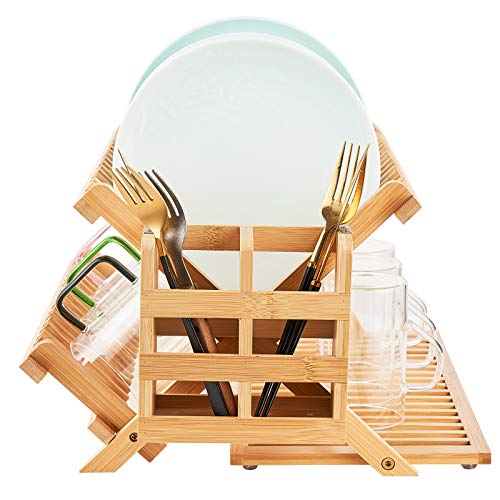

Who Should Buy a Bamboo Dish Drying Rack?
Style Led Kitchens With Moderate Wash Loads
If your kitchen leans natural, with wood boards and open shelving, a bamboo rack belongs visually in a way chrome never will. The fit works when your typical load is plates, bowls, mugs, and a saucepan or two, because that is the load a folding bamboo frame handles with grace. Daily cooks with a mountain of cast iron should read the capacity section carefully before choosing looks over structure.
Households That Put the Rack Away Between Washes
Most bamboo racks fold in an X frame that flattens to a few inches thick, sliding into the gap beside the fridge or hanging inside a cupboard. That habit is doubly good: the counter stays clear, and the rack dries fully between uses, which is the single best defense against mold. If your household can build that fold away rhythm, bamboo will reward you with years of service.
Buyers Avoiding Plastic Near Their Dishes
Some households simply prefer natural materials where their clean dishes rest. Bamboo is a fast growing grass, the racks are light to move, and the slots cradle plates quietly without the clatter of metal. The trade is maintenance: you are choosing a material that needs air and the occasional wipe down, as the care section explains. Buyers who want zero upkeep should compare the best stainless steel dish drying rack designs before deciding.
Key Features to Compare
Bamboo Quality, Lamination, and Finish
Good racks use laminated strips of mature bamboo with tight, even joins and a smooth sanded finish that water beads on at first. Poor ones show gaps at the glue lines, rough splintery edges, and a thin finish that dulls within weeks. Run your eyes along the slot edges in product photos: clean, sealed edges resist water far longer than raw cut ones. A food safe oil or lacquer finish is a plus, and a maker who tells you how to refresh that finish is telling you the rack is meant to last.
Frame Design and Folding Mechanism
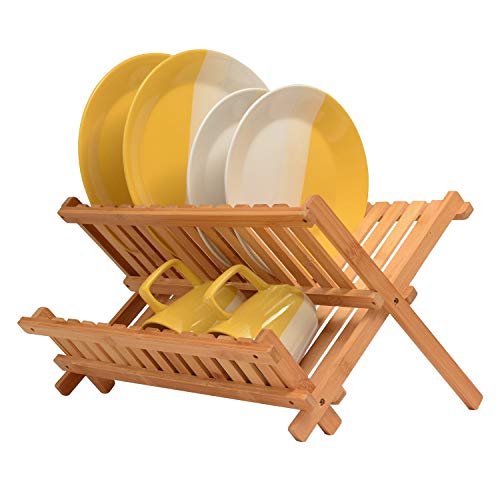
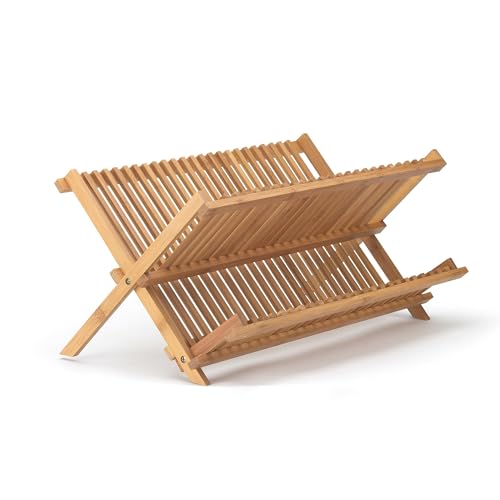
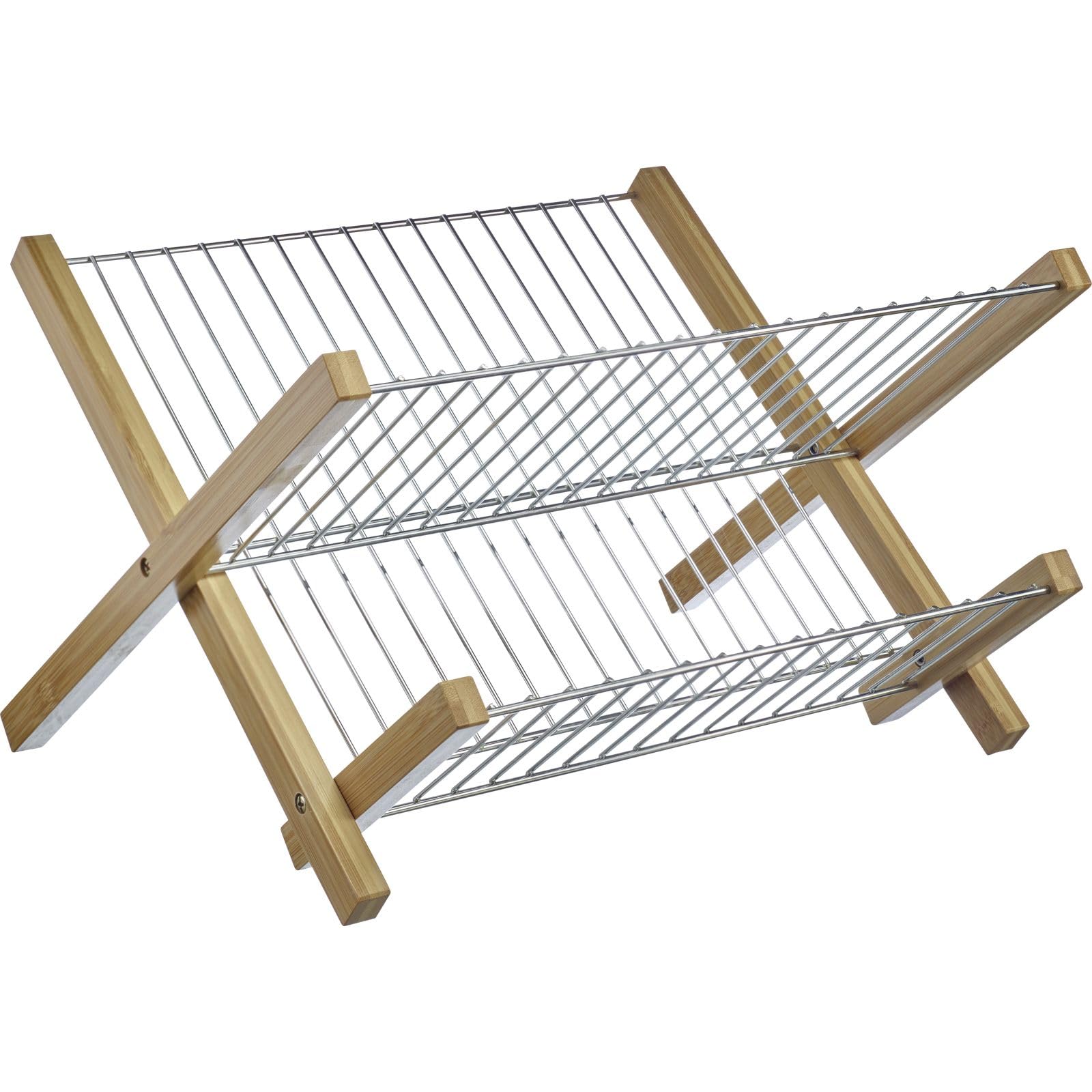
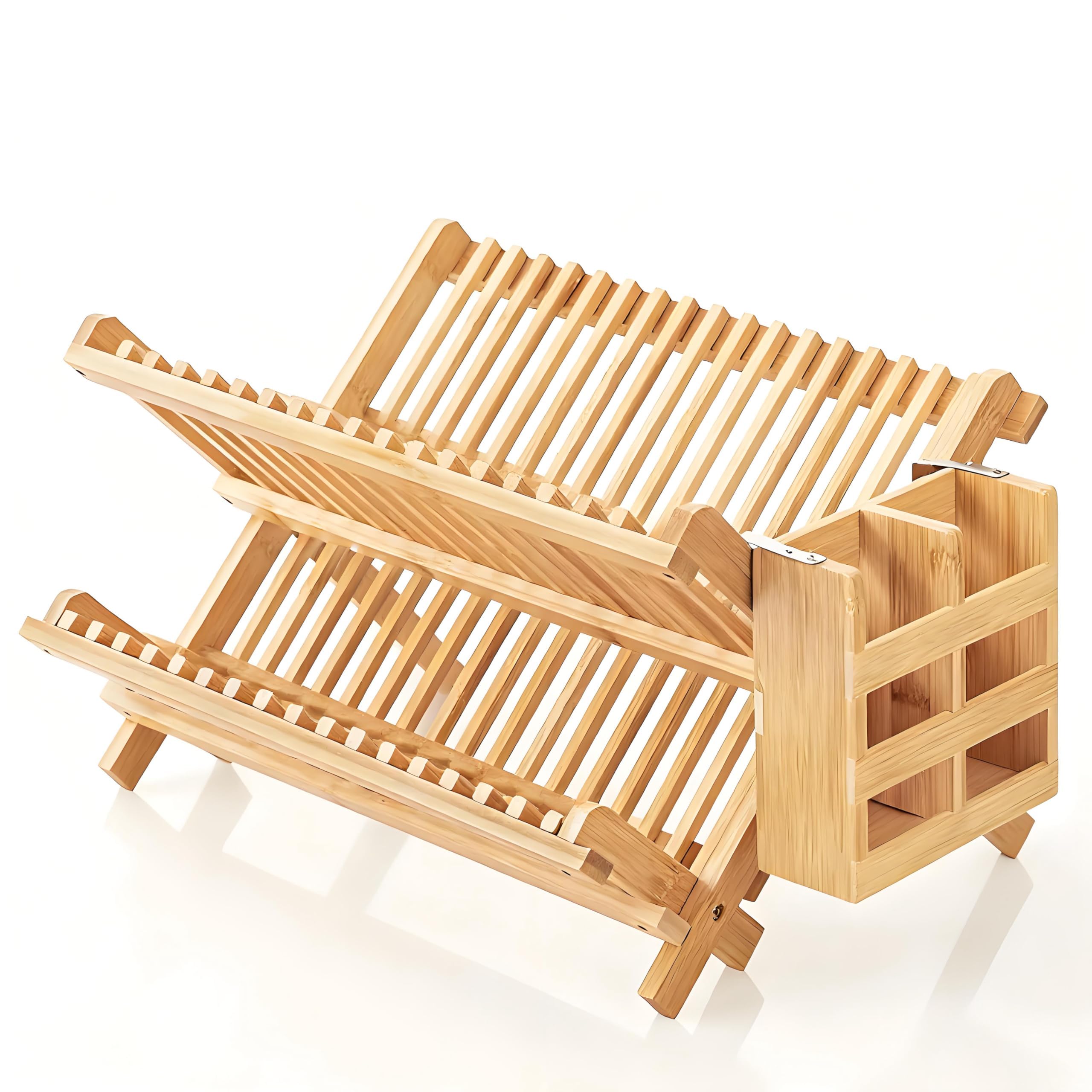
The classic X frame folds flat and locks open with its own geometry, while some designs add a second tier or side arms for cups. Check how the frame locks: a rack that collapses when you lift a plate out by one hand is a daily irritation. Two tier bamboo racks exist but narrow the lower space, so tall pots may not fit beneath the upper shelf. Whatever the design, the feet should sit flat and steady on the counter with no rocking at the corners.
Slot Spacing and What Actually Fits
Slot width decides your real capacity. Narrow slots suit standard dinner plates; wide serving platters and thick stoneware need generous spacing or a section of open deck. Count the slots and be honest about your dishes: a household of heavy handmade pottery will fill a bamboo rack faster than the slot count suggests. Many owners pair the rack with a simple drying mat beside it for the overflow of glasses and utensils, which is a sensible system rather than a failure of the rack.
Capacity and Weight Limits
Bamboo racks are lighter in capacity than steel ones of the same size. They shine with plates, bowls, cups, and light cookware, and they complain, by flexing and creaking, under a full stockpot or a stack of cast iron. Treat the lower deck as a place for one moderate pan at most, and dry the heaviest pieces on the stovetop. If your daily reality is big pots and sheet pans, the best large dish drying rack designs in metal will serve you better, and there is no shame in that match.
Drainage and Counter Protection
Most bamboo racks have no tray and no spout: they are open frames meant to sit beside the sink, often on a mat, and to be moved so the counter beneath dries too. That is a different water strategy from a plumbed steel rack, and it works only if you give the counter its own drying time. Some models include a bamboo or plastic tray; if yours does, empty it daily, because a tray under bamboo holds damp against the wood. In very small kitchens, an best in sink dish drying rack avoids the counter water question altogether.
Size Options and Storage
Bamboo racks come in compact single tier sizes for two person households and wider two level versions for families. Measure the footprint against your counter run and, just as important, measure the folded thickness against the storage gap you actually have. A rack that folds to three inches fits the classic slot between the counter and the fridge; one that folds to six may end up living on the counter anyway, which changes the care routine it needs.
Keeping Bamboo Happy: Placement and Airflow
Bamboo's one rule is that it must dry. Place the rack where air moves, beside the sink rather than in a steamy corner by the kettle, and never leave it folded while still damp from the evening wash. Open it fully for an hour after the last load, or stand it on its side, so both faces air out. Kitchens with a window over the sink are kind to bamboo; interior galley kitchens demand a bit more discipline.
Sunlight deserves a mention too. A rack parked in hard direct sun all day can dry unevenly and, over seasons, fade and crack at the edges. A bright but indirect spot is the sweet spot. Follow those two habits, airflow and gentle light, and the mold problems that give bamboo a bad name mostly never start.
Common Mistakes to Avoid
- Leaving the rack wet and folded: trapped damp between the slats is exactly where mildew starts.
- Parking heavy cast iron on it: the frame flexes, joints loosen, and slots crack under weight they were never built for.
- Letting a drip tray sit full beneath it: standing water against the wood undoes every other good habit.
- Scrubbing with harsh bleach soaks: strong chemicals strip the finish and open the grain to more water, so mild soap and prompt drying work better.
- Expecting it to hold a holiday load alone: overflow belongs on a mat beside it, not stacked until the frame groans.
- Storing it in a damp under sink cupboard: the darkest, wettest spot in the kitchen is the worst home for a wooden rack.
How to Make Your Bamboo Dish Drying Rack Last Longer
Wash the rack itself every week or two with hot water and a little dish soap, using a bottle brush between the slats where grime collects, then stand it open in moving air until bone dry. At the first pale spot of mildew, wipe the area with a cloth dampened with plain white vinegar, let it sit a few minutes, rinse, and dry thoroughly; caught early, that is the whole job.
Every few months, if the finish looks dull and water no longer beads, refresh it with a thin coat of food grade mineral oil, wiped on, rested, and buffed nearly dry. That five minute ritual reseals the surface and noticeably extends the rack's life. Retighten any screws at the pivot points when the frame develops play, and your rack can serve for years instead of the single season its critics predict.
FAQ
Does a bamboo dish drying rack get moldy?
It can, but mold is a habit problem more than a material flaw. Bamboo left wet, folded, or sitting in its own drips will eventually spot, while a rack that airs open after each use and gets a weekly wash usually stays clean for years. The vinegar wipe described in the care section handles early spots. If your kitchen has no airflow and the rack can never dry, choose steel or plastic instead and skip the fight.
How much can a bamboo dish drying rack hold?
A typical folding model handles a full load of plates, bowls, and mugs for two to four people, plus light cookware. Think in terms of a dinner service, not a canning day. The honest limits are the biggest pots and the heaviest pans, which belong on the stovetop to dry. Households that regularly exceed that load do better with a metal rack sized for it, using bamboo, if at all, as the pretty satellite for glasses.
Can I put a bamboo dish drying rack in the dishwasher?
No. A dishwasher cycle soaks the wood for an extended period at high heat, which cracks the lamination and strips the finish in a single run. Hand washing with hot soapy water is quick because the rack is mostly open frame, and standing it in fresh air dries it fully. That same rule protects bamboo cutting boards and utensils, which all age fastest when they stay wet.
Is bamboo better than stainless steel for a dish drying rack?
Better depends on your priorities. Bamboo wins on looks, quiet plate handling, light weight, and folding flat for storage. Stainless wins on capacity, rust proof permanence, and indifference to being wet around the clock. Many kitchens end up with steel by the sink doing the heavy work. Choose bamboo when your loads are moderate and you will enjoy the small care routine; choose steel when the rack is pure infrastructure.
How do I remove water stains and dark spots from a bamboo rack?
Light marks usually lift with a paste of baking soda and water worked in gently with a soft cloth along the grain, then rinsed and dried well. Dark spots that have set into the grain may not vanish entirely, but a vinegar wipe stops them spreading, and a mineral oil refresh evens the color. Prevention remains cheaper: a rack that dries after every use rarely stains in the first place.
Final Thoughts
Bamboo asks for a small daily kindness, full drying, and returns warmth, quiet, and a rack that folds away to nothing. Judge the joinery and finish, respect the weight limits, and use the product table above to compare the best bamboo dish drying rack options for your counter and your loads. If your routine fits its nature, it will be the rare kitchen tool that makes the washing up corner look better, not just work better.


