Best Dolphin Pool Vacuums of 2026: Which Class Should You Buy?
Disclosure: We may earn a commission when you buy through links on this page, at no extra cost to you. As an Amazon Associate I earn from qualifying purchases. Learn more

Compare Dolphin robotic pool cleaners by pool size, scrubbing brushes, filter type, weight and cable length to find the right class for your pool.
Dolphin is one of the longest running names in robotic pool cleaning, and its lineup is wide enough to confuse anyone: compact above ground models at one end, commercial grade robots at the other, with several tiers of filtration and navigation between them. Since every model shares the same brand, the real question is which class fits your pool. Finding the best dolphin pool vacuum for your setup means matching pool size, surface, and debris type to the right tier.
This guide explains the Dolphin range in general terms, class by class, so you can see what each step up actually buys. If you are still deciding between robots and other cleaner types, our guide to the best pool vacuum designs gives the broader picture first.

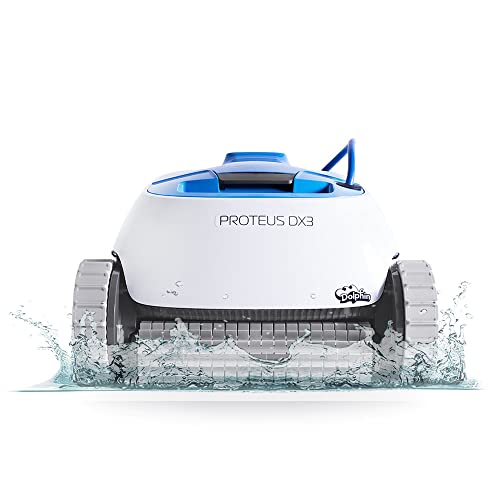
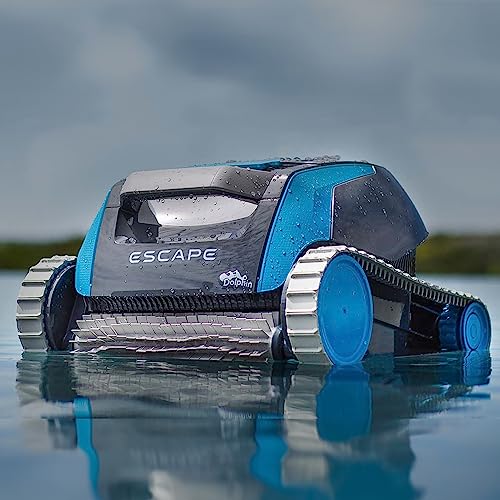

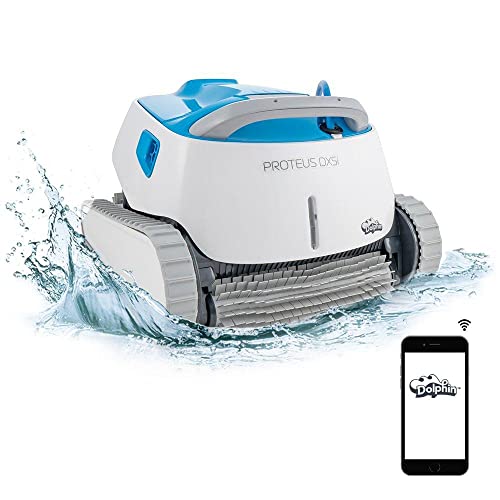
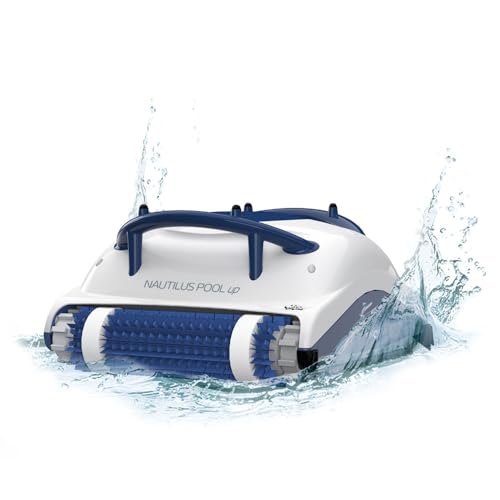

Who Should Buy Which Dolphin Pool Vacuum?
Above Ground Pool Owners
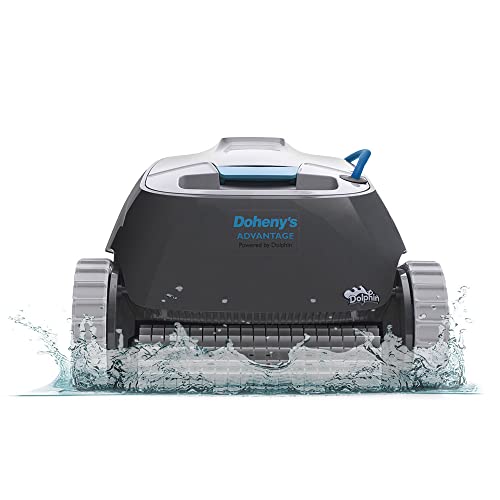
Choose from the compact, lightweight class built for flat bottom above ground pools. These robots are easy to lift in and out with one hand, run shorter cycles, and skip wall climbing, which above ground walls do not need. Our guide to the best above ground pool vacuum options shows how this class compares with handheld and suction alternatives for the same pools.
In Ground Owners With Standard Size Pools
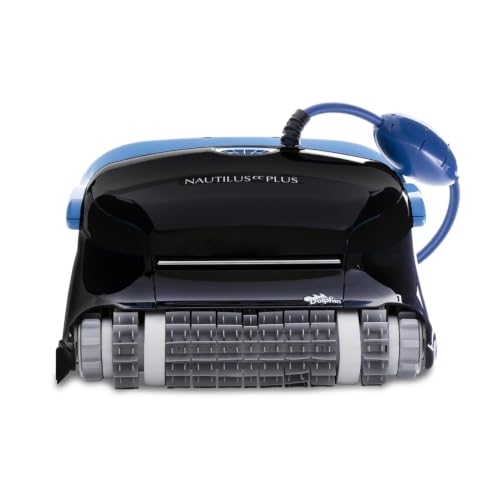
The mid range class is the heart of the lineup: robots sized for typical backyard in ground pools, with wall climbing, waterline scrubbing, and cartridge filtration. This is the right stop for most in ground owners who want the cleaner to handle floors and walls in one cycle. Weekly scheduling on the power supply is common here and worth having if your pool sees daily use.
Owners of Large Pools or Heavy Leaf Loads
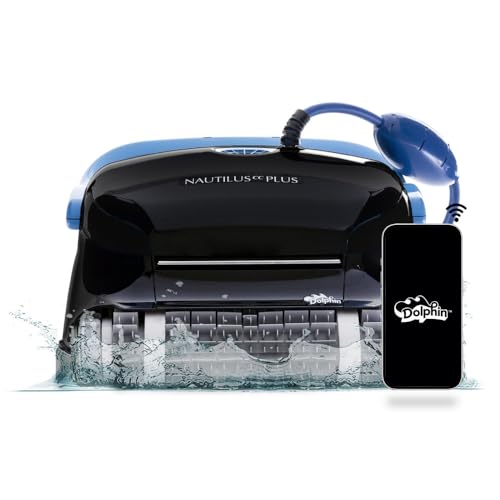
Step up to the premium class when your pool is long, has beach entries or steps that trap debris, or sits under trees. You get larger filter capacity, stronger scrubbing, and smarter navigation that maps the pool instead of wandering. If your debris is mostly wind blown and your pool is modest, this tier is more than you need, and the money is better kept for filters and wear parts.
Key Features to Compare Across the Dolphin Lineup
Pool Size Rating and Cable Length
Every Dolphin class is rated for a maximum pool length, and the cable must reach from the power supply to the far corner with slack to spare. Measure your pool and the distance from your outlet before choosing, because a robot that cannot reach the deep end leaves it dirty. The power supply needs a shaded, dry spot near the pool and a GFCI protected outlet, and it should never sit where sprinklers soak it.
Filtration: Cartridge, Basket, or Fine Options
Lower classes often use a filter basket or bag that catches leaves and coarse debris, while mid and upper classes use cartridge panels that rinse clean and can be swapped for finer media. If your problem debris is sand or silt, confirm that a fine cartridge fits your class before buying. Filtration is the feature owners feel most over a season, because a filter that clogs fast shortens every cleaning cycle.
Scrubbing Brushes and Wall Climbing
Active brushes that spin faster than the robot moves are what separate a robot that scrubs from one that merely vacuums. Basic classes scrub the floor only, mid classes climb walls and scrub the waterline, and brush material varies for tile, plaster, and vinyl surfaces. On vinyl liners choose the softer brush options, and on slippery tile look for classes with enhanced grip tracks or brushes rated for tile.
Navigation and Cleaning Cycle
Entry classes clean in a simple pattern and rely on time to cover the pool, while upper classes scan and map, which shortens cycles on large or irregular pools. Cycle length is shorter on compact models and longer on premium ones, so check the stated cycle time for your class. A weekly timer on the power supply lets the robot run on schedule, which keeps up with steady debris better than occasional long sessions.
Weight, Handling, and Storage
You lift this machine in and out of the water every session, so weight is a daily concern, not a footnote. Compact classes weigh little enough for easy one hand lifting once drained, while premium robots can be heavy enough that a storage caddy earns its cost. All classes should be lifted by the handle and left to drain before carrying, and stored out of the water and sun between sessions to protect seals and plastic.
The Dolphin Lineup Explained by Class
Think of the range as four steps. The compact class serves above ground and small in ground pools with floor only cleaning and simple filtration. The standard class adds wall climbing and cartridge filters for typical backyard pools. The advanced class brings finer filtration choices, stronger brushes, and programmable scheduling. The premium class tops the range with mapping navigation, the largest filter capacity, and in some cases app control or remote steering for spot cleaning.
What you do not get by stepping up is a different kind of clean on a small pool: a compact pool is fully served by the compact or standard class, and premium navigation has nothing extra to map. Spend the step up money only when your pool size, surface, or debris load actually uses it. Owners comparing robots with pump powered cleaners can read our guide to the best suction pool vacuum models to see the trade offs, and those with small pools should check the best battery powered pool vacuum category as well.
What Dolphin Pool Vacuums Cost
The compact class generally starts around $500, standard class robots sit in the mid hundreds up toward $900, and advanced and premium classes climb past $1,000 and beyond $1,500. Prices shift with season and retailer, so treat these as tiers rather than quotes. Ownership costs include replacement cartridges and brushes every season or two, which are modest, and Dolphin robots are widely supported with parts, which protects the investment better than a cheaper robot with no parts network.
Common Mistakes to Avoid
- Buying a class rated for a shorter pool than yours, so the far end never gets cleaned.
- Leaving the robot stored in the pool all week, which ages seals, cable, and plastic in treated water.
- Running the standard coarse filter when your debris is fine sand, then blaming the robot for cloudy water.
- Yanking the robot out by its cable, which damages the cord and the swivel over time.
- Placing the power supply in full sun or in the path of sprinklers, shortening its life.
- Skipping the weekly filter rinse, so a clogged cartridge quietly cuts cleaning power in half.
How to Make Your Dolphin Pool Vacuum Last Longer
Rinse the filter after every cycle and let it dry out of the machine, and deep clean cartridges monthly so fine debris does not cement into the pleats. Store the robot on a caddy or shelf in shade, with the cable loosely coiled and never kinked. Keep it out of the pool when you shock the water, because high chlorine is hard on seals and brushes, and return it only when levels are back in the normal range. Inspect brushes and tracks each month for wear and trapped twigs, and run the cleaner on its regular schedule rather than saving it for visible dirt, since light frequent work is easier on the machine than marathon recovery sessions.
FAQ
How long does a Dolphin pool vacuum last?
With normal residential use and basic care, owners commonly get several seasons from a Dolphin robot before major wear parts or the motor need attention. Lifespan depends most on storage out of the water, filter care, and water chemistry. Parts such as brushes, tracks, and cartridges are replaceable, which extends the useful life well beyond sealed budget robots.
Can a Dolphin robot clean an above ground pool?
Yes, if you choose the compact class rated for above ground pools. These models are lighter, clean floors only, and are sized for flat bottoms. Do not put a heavy in ground class robot in an above ground pool, because its weight and wall climbing behavior are not designed for flexible walls and can stress the liner at the cove.
Do Dolphin pool vacuums pick up fine sand and algae?
They pick up sand well when fitted with the fine cartridge option for their class; the standard coarse media on some models lets the finest grit pass. For algae, the active brushes scrub it off the surface so it can be captured or filtered, but a robot is not a substitute for balanced water chemistry, since algae returns quickly in untreated water no matter how well you scrub.
How often should you run a Dolphin pool vacuum?
Two to three cycles a week keeps most pools clean during swim season, and a daily short cycle suits pools under heavy tree cover. Using the weekly timer on the power supply makes this effortless. In the off season, a weekly cycle or running it before and after storms is enough for pools that stay open.
What is the difference between Dolphin classes for in ground pools?
The steps add wall and waterline scrubbing, finer and larger filtration, longer cables for bigger pools, scheduling, and finally mapping navigation with app features. Cleaning quality on a small, simple pool is similar across classes, so the differences show up on large, irregular, or debris heavy pools. Buy the class your pool dimensions and debris demand, not the highest one available.
Final Thoughts
Dolphin rewards buyers who shop by class instead of by badge: match the size rating to your pool, the filter to your debris, and the brushes to your surface, and any tier will serve you well. The product table above lines the classes up side by side, so you can see exactly which best dolphin pool vacuum belongs in your pool before you spend.