
Best Handheld Power Scrubber: A Buying Guide for 2026
Disclosure: We may earn a commission when you buy through links on this page, at no extra cost to you. As an Amazon Associate I earn from qualifying purchases. Learn more

Compare handheld power scrubbers by brush heads, battery runtime, grip comfort, water sealing and price tier to find the right fit for your home.
A handheld power scrubber does the back and forth motion your wrist usually does, so baked on soap scum and grout grime come off with guiding pressure instead of hard scrubbing. Choosing the best handheld power scrubber comes down to the brush heads in the box, battery runtime, and how the grip feels after ten minutes of work.
This guide focuses on how to choose. You will learn which brush shapes match which jobs, what spin speed actually does to cleaning power, and where the money goes at each price tier. If your cleaning list is mostly tubs and tile, our guide to the best power scrubber options covers the broader category as well.



Who Should Buy Which Handheld Power Scrubber?
People With Sore Hands, Wrists, or Grip Strength Limits
If arthritis or a weak grip makes a stiff brush painful, look for a light body under one pound, a thick rubber coated handle, and a simple one button control. A scrubber that locks on with a single press beats one you must squeeze the whole time. Strong spin torque matters too, because the motor should do the work while you only steer.
Renters and Small Bathroom Owners
In a small bathroom, a compact scrubber with a dome brush and a corner brush handles the tub ring, faucet bases, and grout lines without storing a full size machine. Short bodies fit in a caddy or drawer. Choose a model with a sealed body you can rinse under the tap, since storage space near the sink is usually where these tools live.
Detail Cleaners Who Tackle Kitchens, Tile, and Outdoor Gear
If you plan to scrub stovetop grates, patio furniture, and muddy boots with the same tool, prioritize a kit with many heads and a battery that swaps fast or charges by USB. A cone brush reaches burner rings, a stiff flat brush handles textured tile, and a scouring pad attachment saves painted surfaces from bristle damage.
Key Features to Compare
Interchangeable Brush Heads
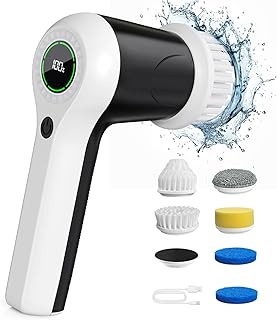
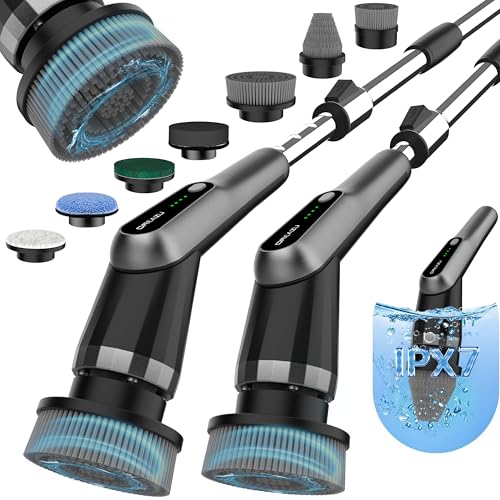
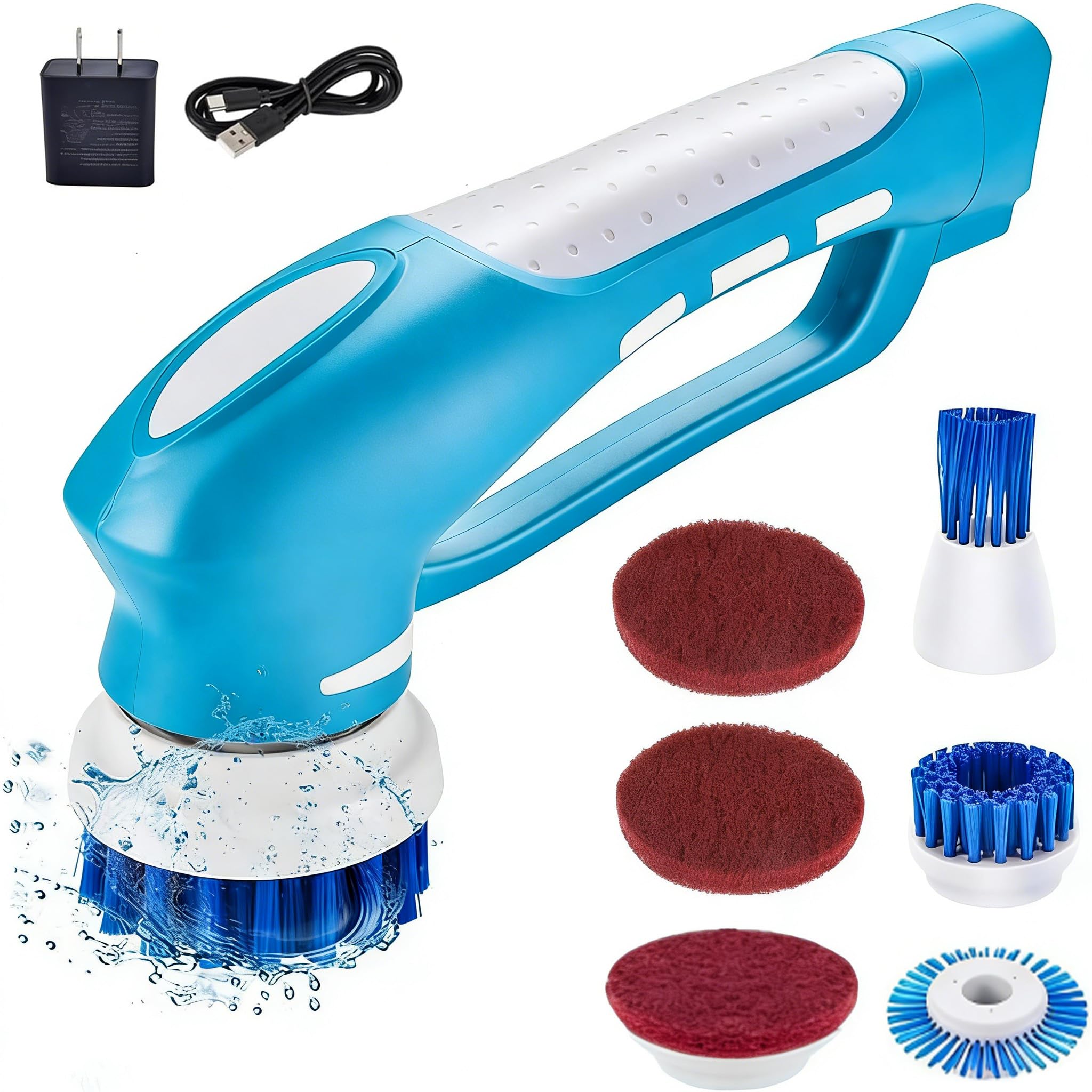
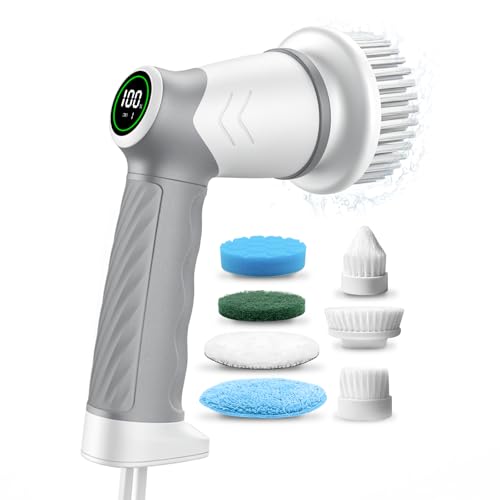
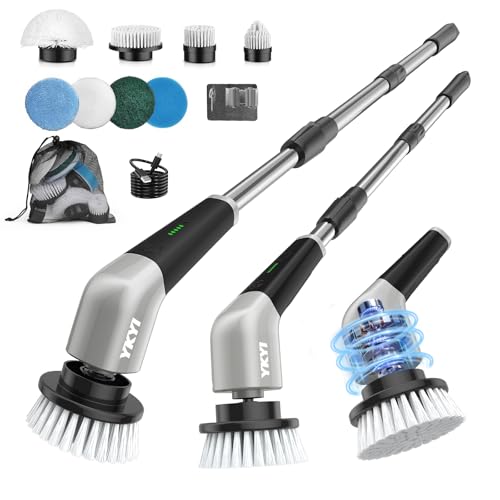
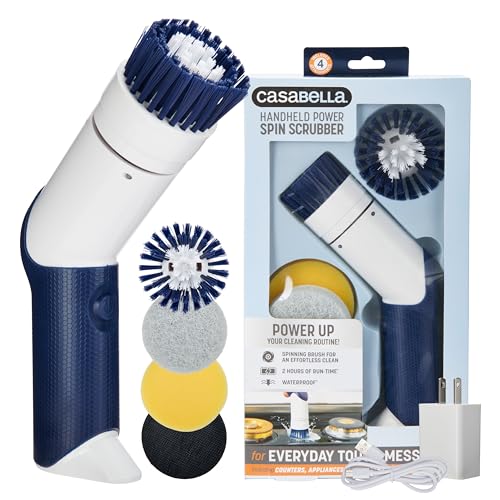
The head set decides what the tool can clean. A round dome brush follows tub curves, a flat brush covers tile and shower doors, a pointed cone brush gets into grout corners and around faucet bases, and soft pads suit delicate finishes. Check that heads click on firmly and that replacements are sold separately, because bristles wear out long before the motor does. A kit with four or more heads covers far more jobs than a single fixed brush.
Spin Speed and Torque
Manufacturers quote speed in revolutions per minute, and handheld models vary widely. Speed alone is not cleaning power. Torque, the twisting force that keeps the brush turning when you press down, is what stops a cheap scrubber from stalling on grout. If a listing only brags about RPM and never mentions power, treat that as a warning sign and favor models with stronger motors and two speed settings.
Battery Life and Charging
Most handheld scrubbers run long enough per charge to cover several bathrooms. A removable battery lets you swap in a spare, while a built in battery keeps the tool lighter and cheaper. USB charging is handy for renters who lack spare outlets. Shoppers who want a larger tool for whole room jobs can compare the best cordless power scrubber category, where longer handles and bigger batteries are standard.
Weight and Grip Comfort
You hold this tool at arm height against shower walls, so every ounce counts. Models between half a pound and one pound feel manageable for most people, and a handle with a slight curve keeps your wrist in a neutral position. Textured rubber grips matter once your hands are wet and soapy. If possible, check the listed weight without the brush head, since some brands quote the lightest possible number.
Water Resistance
A scrubber works in splashing water all day, so sealing matters. Look for a stated water resistance rating or clear language that the body can be rinsed under a faucet. Avoid models with open charging ports near the base unless a rubber cover is included. Good sealing also keeps cleaning spray out of the motor housing, which is the most common cause of early failure in bargain models.
Matching Brush Heads to the Jobs Around Your Home
Start with the bathroom, where most handheld scrubbers earn their keep. The dome brush scrubs the tub floor and curved corners, while the cone brush traces grout lines and the ring where the faucet meets the sink. For a full routine on tile walls and tubs, see our guide to the best power scrubber for bathroom use. Glass shower doors respond better to a flat soft brush or pad, since stiff bristles can haze some coatings, and our guide to the best power scrubber for shower tasks explains the gentler approach.
In the kitchen, use the flat brush on textured tile and the cone brush around stovetop burners, and keep a separate set of heads for food areas so bathroom chemicals never migrate. Outdoors, a stiff brush lifts algae from plastic chairs and cleans shoe treads. The rule is simple: match bristle stiffness to the surface, and let the spin do the work instead of pressing harder.
What Handheld Power Scrubbers Cost
Budget models run under $30 and usually include two or three heads, a built in battery, and modest torque for light jobs. The middle tier, about $30 to $60, adds stronger motors, four or more heads, and better water sealing. Above $60 you pay for two speed settings, replaceable batteries, and sturdier housings. For most homes the middle tier is the sensible stop, since brush heads wear out and get replaced regardless of price. Whatever tier you choose, budget a few dollars a year for replacement heads, and check that the brand sells them before you buy, because a scrubber with no spare heads becomes disposable once the first brush wears out.
Common Mistakes to Avoid
- Pressing down hard to speed things up, which stalls the motor and splashes dirty water everywhere.
- Using the stiffest brush on fiberglass or acrylic tubs, which can dull the finish over time.
- Buying a kit with only one brush head, then finding it cannot reach grout corners or faucet bases.
- Ignoring the water resistance rating, then rinsing a poorly sealed tool until the motor corrodes.
- Sharing one set of brush heads between the bathroom and the kitchen, which spreads grime and chemicals between rooms.
How to Make Your Handheld Power Scrubber Last Longer
Rinse brush heads after every use and shake them dry, because trapped soap scum hardens into the bristles and shortens their life. Pop the head off and clear any hair wrapped around the drive shaft. Store the tool dry rather than in a wet shower caddy, and charge the battery before it sits empty for months, since lithium cells degrade when stored fully drained. Replace heads when the bristles splay outward or stop springing back, and wipe the housing with a damp cloth rather than submerging a model that is only splash resistant.
FAQ
Are handheld power scrubbers worth it?
Yes, if you regularly scrub grout, tubs, or tile and find manual brushing tiring or painful. The motor replaces the repetitive motion that wears out wrists, and long scrubbing jobs often go much faster. They are less useful for flat floors, where a mop or a larger scrubber covers ground faster.
How long does the battery in a handheld power scrubber last?
Most models run for a decent stretch per charge when new. Runtime drops if you press hard, because the motor draws more current under load, so a lighter touch extends each session. Expect the battery to hold noticeably less charge after a few years of weekly use, which is why replaceable battery models stay useful longer.
Can a handheld power scrubber damage grout or tile?
It can if you pair a stiff brush with old, crumbling grout, because the spinning bristles widen cracks that are already failing. Try a hidden spot first, choose a softer head for fragile grout, and keep the brush moving rather than parked in one place. Sound grout and glazed tile tolerate normal use well.
What is the difference between a handheld spin scrubber and a drill brush?
A spin scrubber is a self contained tool with its own motor, battery, and grip, ready to use out of the box. A drill brush is just an attachment that borrows the power and weight of your drill, which gives more torque but worse balance and no water sealing. For bathroom work the dedicated tool is usually easier and safer around water.
How do you clean the brush heads of a handheld power scrubber?
Remove the head, rinse it under warm water, and soak it for ten minutes in warm water with a drop of dish soap if grime is stubborn. A spare toothbrush clears the base where bristles meet the plastic. Let heads air dry fully before storing them, since a sealed wet container grows mildew on the bristles.
Final Thoughts
The right choice depends on your surfaces and your hands, not on the longest feature list. Match the head set to your rooms, favor torque and sealing over headline spin speed, and pick a weight your wrist can steer comfortably. The product table above pulls the key specs together so you can see which best handheld power scrubber fits your home before you order.


