
Best Medify Air Purifier for 2026: How to Choose by Room Size and Filter
Disclosure: We may earn a commission when you buy through links on this page, at no extra cost to you. As an Amazon Associate I earn from qualifying purchases. Learn more

Choose a Medify air purifier by room size class and filter type. A buying guide to coverage, H13 and H14 HEPA filters and replacement costs.
Medify built its name on one idea: offer medical grade style filtration in sizes for almost every room, from a small bedroom to a whole open plan floor. That range is a strength and a trap, because picking the wrong size class leaves you with a unit that strains on high speed or a giant that looms over a nursery. The best medify air purifier for you is simply the one whose coverage, filter grade and noise profile match a single room in your home. This guide walks through the lineup by class rather than reviewing individual models.
Below you will find which buyers fit each size class, how the brand's filter options differ, and what replacement filters do to the true cost of ownership. The product table outlines the classes at a glance, and the sections after it explain how to place yourself in the right one. As with any purifier, these machines reduce airborne particles; they do not diagnose or treat any health condition.


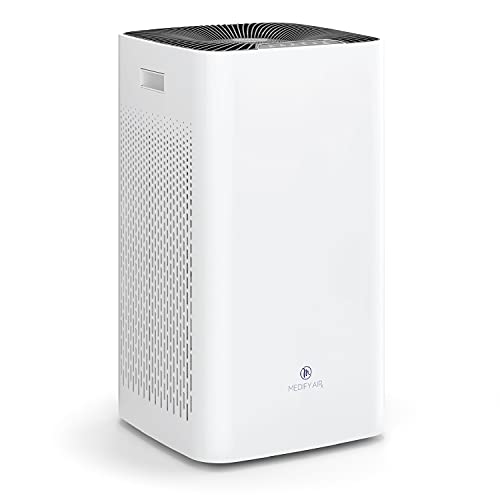

Who Should Buy a Medify Air Purifier?
Shoppers Who Want One Brand Across Several Rooms
Medify sells compact, medium, large and extra large units that share similar filters and controls, so a household can put a small model in each bedroom and a large one in the living room and learn one system. Filter shopping stays simple, and the look stays consistent. If you are comparing brands at this stage, our guide to the best air purifier sets out how the wider market divides by size and filter type.
Allergy Sensitive Buyers Focused on Filter Grade
The brand is known for offering higher grade HEPA options, including H13 and H14 filters on many models, which appeal to buyers who read spec sheets closely. Paired with honest sizing, that filtration suits bedrooms where pollen and dust mite debris are the main targets. Our guide to the best air purifier for allergies explains what filtration can and cannot do for symptoms. Talk with your clinician about your personal needs, since a purifier supports cleaner air but is not a medical treatment.
Pet Owners Who Need Strong Odor Control
Several Medify classes pair the HEPA stage with a substantial activated carbon stage, which is what actually works on litter box and wet dog smells. Pet hair also loads a prefilter quickly, so the washable or easy access prefilters on these units matter in daily life. Homes with multiple animals should size up one class so the unit can run on a quieter speed. Our guide to the best air purifier for pets covers placement near litter and bedding areas in more detail.
Key Features to Compare
Size Class and Coverage Area
Think in four bands: compact units for rooms up to about 200 square feet, medium units for bedrooms and offices of roughly 200 to 500 square feet, large units for living rooms up to about 1,000 square feet, and extra large units for open plan areas beyond that. Brands rate coverage at different air change rates, so compare the CADR or the coverage at two air changes per hour when you can find it. An undersized purifier on turbo is loud and still behind, while the right class hums along on medium. Measure your room before you shop the lineup.
H13 and H14 HEPA Filter Grades
Standard true HEPA captures 99.97 percent of particles at 0.3 microns. H13 and H14 are European grades rated at the most penetrating particle size, with H14 capturing a higher share of the finest particles. In a real bedroom the difference between grades is smaller than the difference made by correct sizing and actually running the unit, so treat grade as a tiebreaker, not the whole decision. What matters daily is that the filter is genuine, well sealed in its frame with no air bypass, and replaced on time.
Activated Carbon and Odor Handling
Carbon quantity decides odor performance. Light carbon sheets handle faint smells briefly, while thicker carbon beds work on cooking odors, pet smells and smoke for months. Some Medify configurations combine the carbon into the main cartridge and others keep it separate, which changes replacement cost and timing. If odors are your main complaint, weight this feature above filter grade. If mold odor is part of the picture, remember the source must be cleaned too, a point covered in our guide to the best air purifier for mold.
Optional UV Light and Ionizer Features
Some units in this brand family offer UV light or an ionizer that can be switched on and off. UV inside a sealed chamber is a secondary feature and never a substitute for the filter. Ionizers deserve a question: they can produce trace ozone, which irritates lungs, so look for certification to a zero ozone standard and keep the feature off if anyone in the home has asthma or is sensitive. When in doubt, buy the unit for its filtration and sizing, and treat switchable extras as optional.
Noise, Controls and Timers
Bedroom use lives or dies on the low speed. Look for a published low speed noise figure, a display that dims, and a timer you can set and forget. Touch controls on top of the unit are easy to wipe clean, a small point that matters in a cleaning focused home. Auto modes with a particle sensor are convenient in living areas, while simple manual speeds are often better in bedrooms where you want a fixed, quiet setting all night. Child lock controls are worth having in homes with curious toddlers.
Filter Replacement Cost and Availability
Price the replacement cartridge for the class you are eyeing before you buy the machine. Across this brand, cartridges vary with size and grade, commonly landing somewhere around $50 to $150, with replacement intervals around 6 to 12 months depending on use and air conditions. Larger classes cost more per filter but also clean more air per hour. Check that the exact cartridge for your class is stocked by several sellers, because a purifier without available filters becomes furniture within a year.
Matching a Medify Class to Your Room
Write down each room's square footage, its main problem, and who sleeps or works there. Bedrooms with allergy concerns get the correctly sized class and the best filter grade you will actually maintain. Living rooms with pets get the class with the strongest carbon stage. Nurseries and small offices are served by compact classes run on low. If one machine must cover two connected spaces, size for the combined area and place it near the doorway between them, accepting that the far room will always clean more slowly than the near one.
What a Medify Air Purifier Costs to Own
Across the lineup, purchase prices commonly run from around $120 for compact classes to around $600 or more for extra large coverage, with the popular medium and large bedroom classes in between. Filters are the steady expense, so a fair comparison adds two to three years of cartridges to the sticker price of each class. Electricity is minor by comparison, since even large units draw modest wattage on the speeds used overnight. Buying the right class once is cheaper than replacing an undersized unit within a year.
Common Mistakes to Avoid
- Choosing a class by the largest coverage number on the box, which is often rated at a low air change rate and disappoints in practice.
- Paying for the highest filter grade while undersizing the unit, when correct sizing cleans a room faster than a small jump in filter class.
- Leaving an ionizer running in a closed nursery or around a sensitive family member without checking its ozone certification.
- Forgetting to budget for the larger cartridges that big classes need, which turns a fair purchase price into a costly surprise.
- Expecting the purifier to fix allergy symptoms on its own, rather than reducing exposure while you follow your clinician's advice.
How to Make Your Medify Air Purifier Last Longer
Keep the prefilter clear by vacuuming it on the schedule the manual suggests, because every purifier in this lineup breathes through that first layer. Replace the main cartridge when the indicator and your nose agree it is due, and do not stretch it far past the interval to save money, since airflow falls off steadily. Keep the unit out of direct cooking grease and heavy humidity, wipe the sensor window so auto mode reads the air honestly, and store spare filters sealed and dry. Steady use on medium beats sporadic blasts on turbo for both the fan and the filters.
FAQ
What room sizes do Medify air purifiers cover?
The lineup spans small bedrooms to open plan living areas, with classes rated from under 200 square feet to well over 1,000 square feet at their stated air change rates. Compare ratings carefully, because a coverage figure at one air change per hour is not equal to the same figure at two or more changes. For bedrooms, choose the class whose rating comfortably exceeds your room size so it can run quietly. When torn between two classes, the larger one on a lower speed usually gives the better night.
What is the difference between H13 and H14 HEPA filters?
Both are high grades rated at the particle size that slips through filters most easily, and H14 captures a higher percentage of those finest particles than H13. In a home, correct sizing, a sealed filter frame and running the purifier consistently each matter more than the step from H13 to H14. Choose H14 when the price difference is small or a clinician has advised maximum filtration for your situation. Either grade far exceeds a basic HEPA type filter with loose fit.
How often do Medify filters need to be replaced?
Main cartridges in this brand generally last about 6 to 12 months depending on class, hours of use and how dirty the air is. Pet heavy and urban homes sit at the short end. The prefilter needs regular cleaning in between, which stretches the main filter's useful life. Watch for falling airflow and returning odors as the practical signals, and keep one spare cartridge on hand so a change is never delayed.
Do Medify air purifiers use an ionizer or UV light?
Some models offer one or both as switchable features, and others omit them entirely. Filtration does the main work either way. If you use an ionizer, confirm the model is certified for zero ozone emissions and turn the feature off around anyone with irritated airways. UV light inside the unit is not a reason to choose a class; room coverage and filter quality should drive that choice instead.
Can a Medify air purifier remove cooking and pet odors?
It can reduce them noticeably when the carbon stage is substantial and fresh, because activated carbon adsorbs many odor causing gases. It will not erase a strong source instantly, and a saturated cartridge stops helping until replaced. Venting the kitchen while cooking and cleaning litter boxes promptly do more per minute than any purifier. Buy the class with the heaviest carbon stage if odors are your primary reason for shopping.
Final Thoughts
Shop this brand by class, not by headline: room size first, then filter grade, then carbon weight, then the cost of the cartridge you will buy every year. The product table above lines the classes up so you can see where each one fits, and the best medify air purifier for your home is the class you can run quietly, all day, with filters you will replace on schedule. If symptoms drive your purchase, keep your clinician involved in the plan for your personal needs.


