
Best Pressure Washer Accessories for 2026: A Buying Guide
Disclosure: We may earn a commission when you buy through links on this page, at no extra cost to you. As an Amazon Associate I earn from qualifying purchases. Learn more

Build a smarter kit with the best pressure washer accessories, from surface cleaners and foam cannons to nozzles, hoses and fittings that fit your machine.
A pressure washer fresh out of the box can clean, but it cleans slowly and unevenly, because the stock wand and one or two tips are a starting point rather than a full toolkit. The right add ons change the whole experience: a flat driveway that took an hour of striping passes becomes a twenty minute walk behind a surface cleaner, and a car wash turns into foam, dwell, rinse. This guide to the best pressure washer accessories explains which categories earn their money, how to check that they fit your machine, and which extras most owners can skip.
Everything here assumes you already own a machine. If you are still choosing one, start with our guide to the best pressure washer models first, because accessory compatibility flows from the machine's pressure, flow, and connection style. Accessory shoppers who get the fitting right the first time avoid the return box entirely.


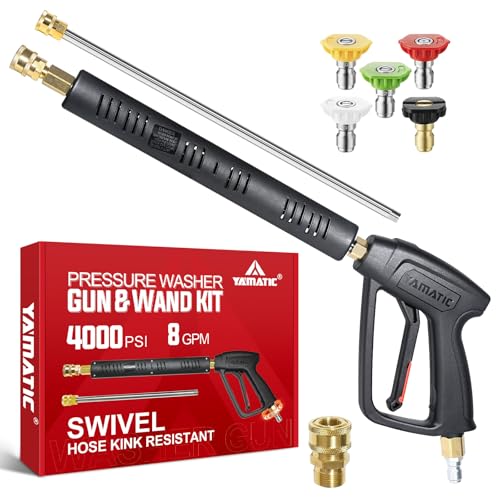


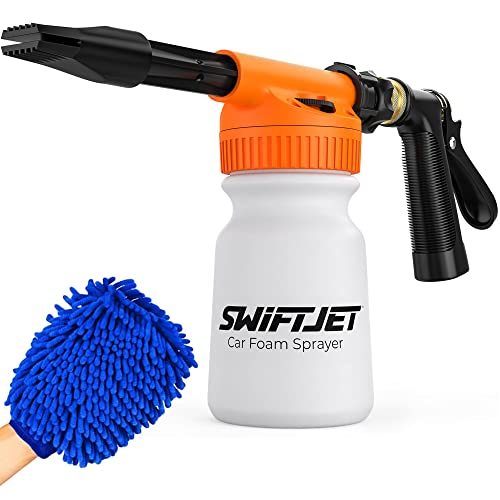
Who Should Buy Which Pressure Washer Accessories?
Driveway and Patio Owners Tired of Striped Concrete
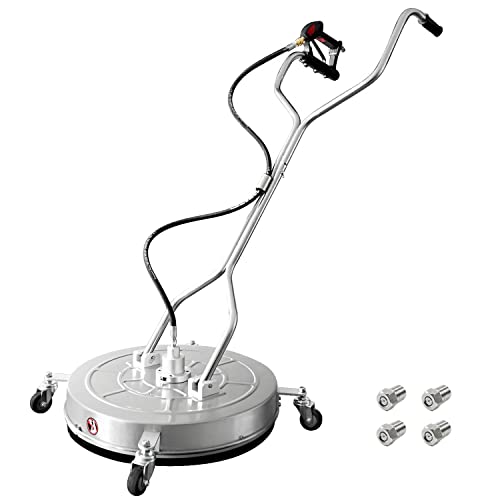
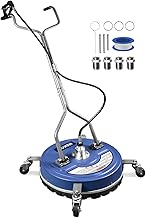
Your priority is a surface cleaner, the round or bar shaped attachment that hovers over flat ground and sprays through spinning nozzles inside a housing. It keeps the cleaning distance constant, which removes the zebra stripes a wand leaves, and it contains the splash. Pair it with a turbo nozzle for the edges and expansion joints where the surface cleaner cannot reach. Owners of large flat areas get more real benefit from this single category than from every other accessory combined.
Car and Boat Washers Who Want Foam and Gentle Rinsing
Your kit centers on a foam cannon, a low pressure soap tip, a soft wash brush with a long handle, and a shorter gun or wand that is easier to swing around wheel arches. Foam clings and loosens road film so the rinse does less work, which means less pressure near paint, trim, and gel coat. Add a garden hose style quick rinse habit: wash in shade, keep panels wet, and never let foam dry on the surface.
Homeowners With Two Story Siding and High Windows
Your kit centers on reach: a telescoping or extension wand, a pivoting coupler for awkward angles, and a second story nozzle set designed to arc soap and rinse water upward from the ground. Working from the ground matters, because pressure washing from a ladder is a genuine fall hazard; the jet's kick and a wet rung are a bad combination. A gutter cleaning attachment with a curved end completes the high work set without climbing at all.
Key Features to Compare
Connection Style and Thread Standards
Compatibility lives or dies at the connection. Most consumer accessories use a 1/4 inch quick connect plug that snaps into the wand, while hoses and pumps commonly use M22 threaded fittings, in 14 mm and 15 mm internal sizes that look identical until they refuse to seal. Some brands use proprietary bayonet fittings that need an adapter before standard accessories will fit. Before ordering anything, identify your wand connection, your hose thread, and whether an included adapter bridges the two. A five minute check with the manual or a ruler saves the most common accessory disappointment there is.
Pressure and Flow Ratings
Every accessory carries maximum PSI and GPM ratings, and both must meet or exceed your machine's output. A foam cannon or surface cleaner rated below your machine's flow starves the spray pattern, while one rated far above a small machine's flow may barely spin or foam. Surface cleaners in particular match to flow: small electric machines drive compact heads of about 11 to 13 inches, and stronger machines drive 14 to 16 inch heads. Undersized nozzles inside any attachment raise back pressure and strain the pump, so respect the stated machine range printed on the accessory.
Nozzle Orifice Size
Inside tips, foam cannons, and surface cleaners sits a tiny orifice that meters water, and its size is chosen for a flow band, not a pressure band. Foam cannons ship with an orifice sized for stronger machines; owners of small electric units often need the smaller replacement orifice to build real foam instead of soapy water. Nozzle tips follow a sizing chart based on GPM and PSI, and a tip one size too small spikes pressure while one too large turns the jet lazy. When an accessory underperforms, the orifice is the first suspect, ahead of the machine itself.
Materials and Build
Brass and stainless steel fittings survive seasons of threading and unthreading, while thin plated metal and brittle plastic crack at the first drop onto concrete. Surface cleaner housings in stainless or heavy composite shrug off driveway work; brushes should use solid brass jets rather than glued inserts. O rings are the quiet consumable in every connection, so accessories that include spare rings, or use standard sizes you can buy anywhere, save real frustration. A small parts kit with assorted O rings, inlet screens, and a nozzle cleaning pin is the cheapest insurance in this whole category.
Hose Quality and Length
An upgraded hose is the accessory owners praise most after living with a stiff stock one. Flexible hoses with a swivel fitting at the gun end resist the kinks and twisting that make you wrestle the line across the yard. Length adds working radius without moving the machine, but remember that very long hoses on small electric machines can soften the spray slightly. Match the hose's pressure rating to your machine, confirm the thread size at both ends, and choose a diameter the manufacturer recommends for your flow range.
How to Check Compatibility With Your Machine
Work through four facts before buying any accessory. First, your machine's maximum PSI and GPM, printed on its label and in the manual. Second, the wand connection style, quick connect or a brand specific bayonet. Third, the hose thread, including whether it is the 14 mm or 15 mm M22 variant. Fourth, for powered or spinning attachments, the flow band the accessory was designed around. Write those four facts on a note in the garage; every future accessory purchase becomes a thirty second check instead of a guess. When a listing says universal, read it as universal among quick connect systems, and confirm your bayonet style machine has an adapter available.
Accessories Most Owners Can Skip
Skip duplicate nozzle sets in novelty colors that repeat angles you already own. Skip the longest telescoping wands if you rarely wash above one story, because their weight makes them tiring and wobbly. Be skeptical of giant variety kits with dozens of pieces at a bargain total: the fittings are often thin, the orifice sizes random, and you will use three pieces while the rest corrode in a drawer. One well made version of each category you need beats a bucket of compromises, every single season.
Common Mistakes to Avoid
- Ordering quick connect accessories for a bayonet wand machine without an adapter, then discovering the mismatch on the first warm Saturday.
- Running a surface cleaner sized for a gas machine on a small electric unit, which leaves it barely spinning and cleaning in slow circles.
- Ignoring the maximum pressure rating on a foam cannon or brush, so the first trigger pull cracks a housing or blows a seal.
- Forcing M22 14 mm and 15 mm fittings together, which cross threads the connection and creates a leak that never quite seals again.
- Storing accessories wet in a closed bin all winter, so O rings stick, brass tarnishes, and spinning heads seize by spring.
- Skipping spare O rings, then losing a whole cleaning day to a connection that sprays sideways from one flattened ring.
How to Make Your Pressure Washer Accessories Last Longer
Rinse every accessory with clean water after use, especially anything that carried detergent, because dried soap solution corrodes orifices and sticks valves. Spin surface cleaner heads by hand after rinsing to confirm the bar turns freely, and clear its jets with a pin when the pattern weakens. Let everything dry before storage, hang hoses in wide loops off the floor, and keep small tips and pins in a lidded box rather than loose in a toolbox. A drop of silicone grease on O rings once a season keeps them supple and sealing. Before freezing weather, drain hoses and spinning heads fully, since trapped water cracks housings just as it cracks pumps.
FAQ
Are third party pressure washer accessories safe to use?
Yes, when their pressure and flow ratings meet or exceed your machine's output and the connections match properly. Reputable third party fittings in brass and stainless steel routinely outlast the plastic accessories packed in machine boxes. The risk sits in bargains with unstated ratings and sloppy threads, which can leak, pop off under pressure, or strain the pump with wrong orifice sizes. Buy from listings that state PSI, GPM, thread, and orifice plainly, and inspect new pieces for cracks before the first use.
What accessories does a new pressure washer owner need first?
Start with the pieces matched to your two most frequent jobs rather than a full kit. For most homes that means a surface cleaner for flat concrete and a set of standard fan tips plus a turbo nozzle for edges and stubborn spots. Add a foam cannon when vehicles join the routine, and an extension wand when two story siding does. Each addition solves a named problem, so you build a kit of tools you reach for instead of a bin of almosts.
Why does a foam cannon make thin foam on a small electric machine?
Foam cannons meter water through a small orifice, and the common stock orifice is sized for stronger machines, so a compact electric unit cannot push enough flow through it to whip thick foam. The fix is the smaller orifice insert many cannon makers sell for low flow machines, plus using the detergent dilution the cannon maker suggests. Warm water in the bottle and a dedicated car wash soap also thicken the foam noticeably without any hardware change.
How do you know which surface cleaner size fits your machine?
Match the head diameter to your machine's flow, not its pressure. Compact electric machines around 1.2 to 1.5 GPM drive heads near 11 to 13 inches well; mid range machines handle about 14 to 15 inches; strong gas units can run 16 inches and beyond. A head too large for the flow crawls and leaves swirl marks, while a small head on a strong machine just means more passes. Manufacturer charts pair sizes to GPM bands, so check the chart before choosing.
Do quick connect fittings wear out?
They do, slowly: the socket's internal O ring flattens and the locking balls polish the plug until the connection seeps or feels loose. The good news is the fix is usually a new O ring rather than a new fitting, and standard sizes cost very little in multipacks. Replace a ring when you see a fine mist at the joint or feel the plug wobble. Keep fittings clean, because grit ground into the socket during connections is what chews the rings up in the first place.
Final Thoughts
The product table above groups the main accessory categories, so use it to plan a kit in order: compatibility first, then the attachments for your most common jobs. The best pressure washer accessories for your home are not the most numerous or the most expensive; they are the ones whose fittings click onto your machine without adapters stacked on adapters, whose ratings cover your output, and whose jobs match your driveway, siding, and vehicles. Buy them one category at a time and each wash day gets visibly faster. Prices and availability can change, so check the product page before ordering.


