
Best 2 Tier Dish Drying Rack for 2026: A Buying Guide for Small Counters
Disclosure: We may earn a commission when you buy through links on this page, at no extra cost to you. As an Amazon Associate I earn from qualifying purchases. Learn more

Short on counter space? Compare footprint, tier layout and drainage to pick the best 2 tier dish drying rack for your kitchen.
A small kitchen counter fills up fast. Cook one real dinner, and the cutting board, two pans, four plates, and a forest of glasses are competing for a strip of counter barely wider than the sink. A best 2 tier dish drying rack solves that squeeze by stacking the drying zone upward: plates and pans below, glasses and bowls above, all inside the footprint of an ordinary rack.
The trick is choosing one whose layout matches how you actually wash up, because tier designs differ a lot in what fits where and how the water drains. This guide walks through footprints, drainage, and materials, and the comparison table below shows the main styles side by side so you can picture each one next to your sink.

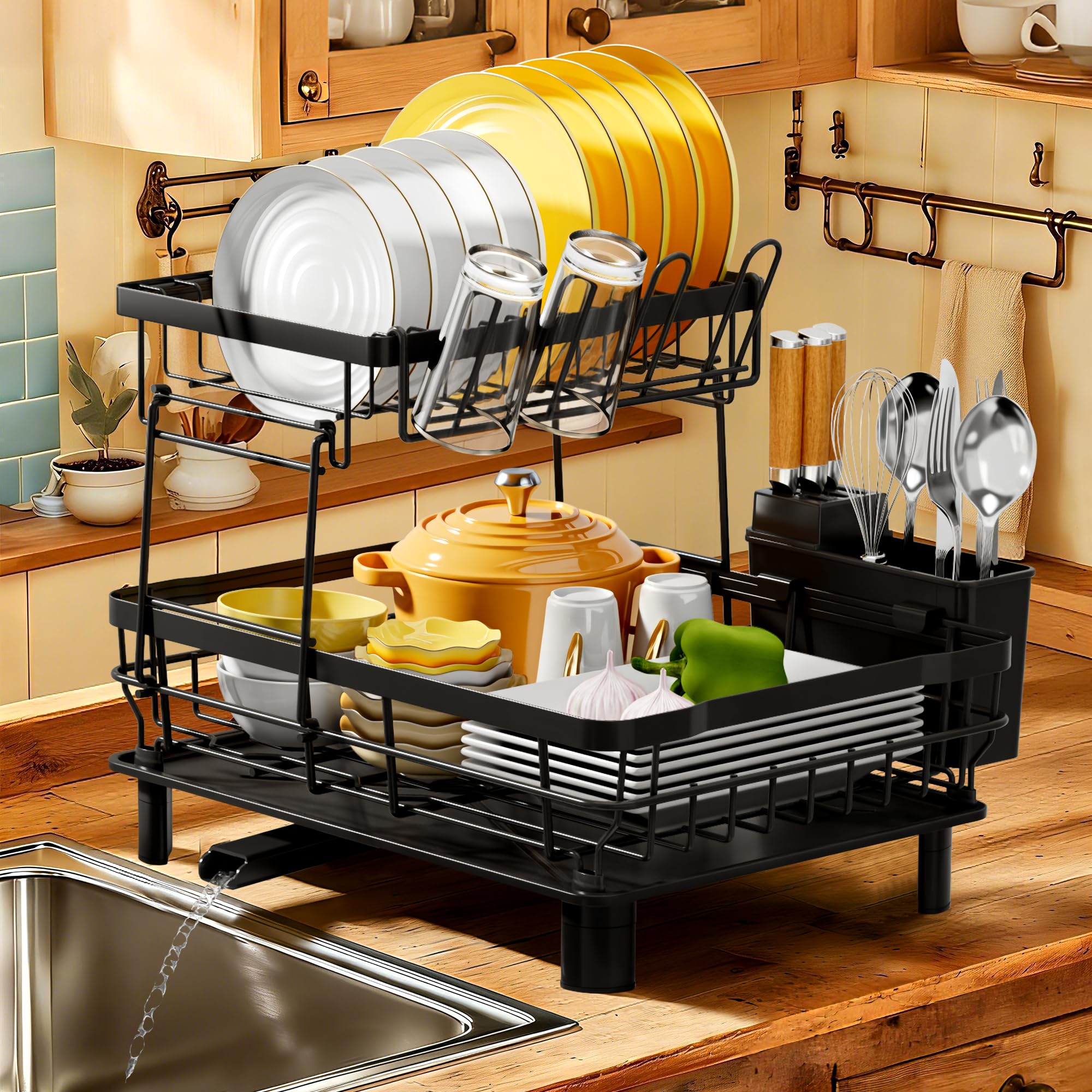

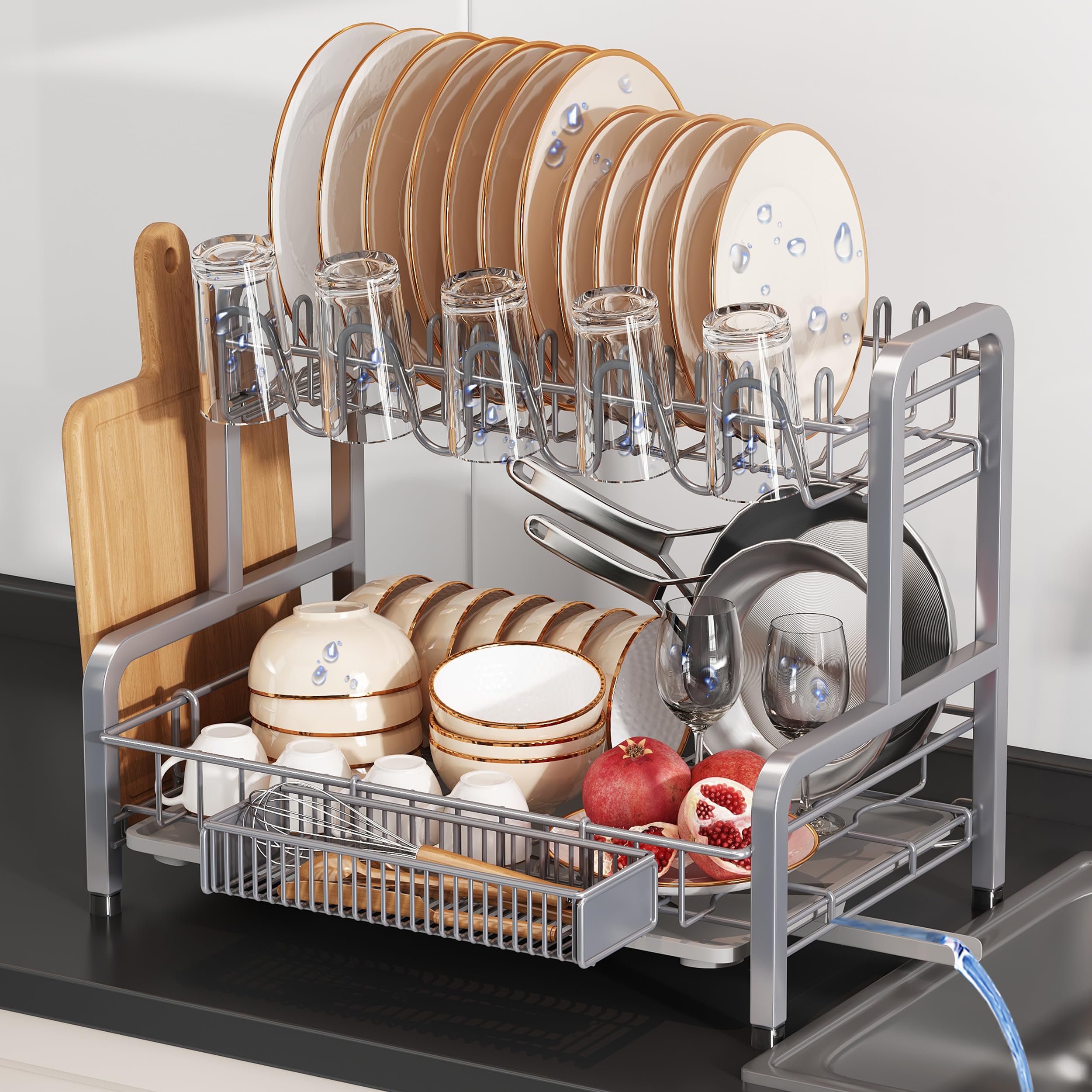
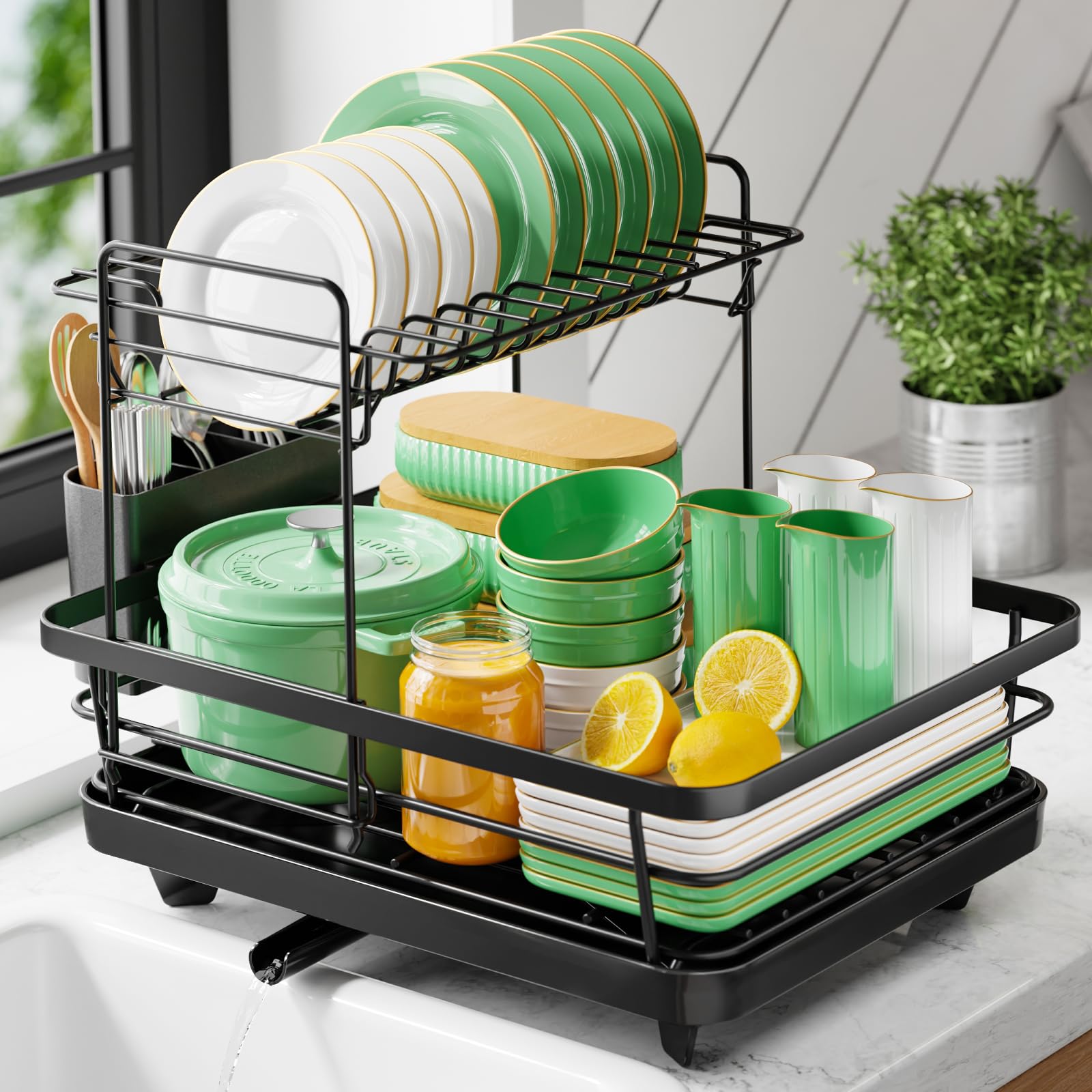
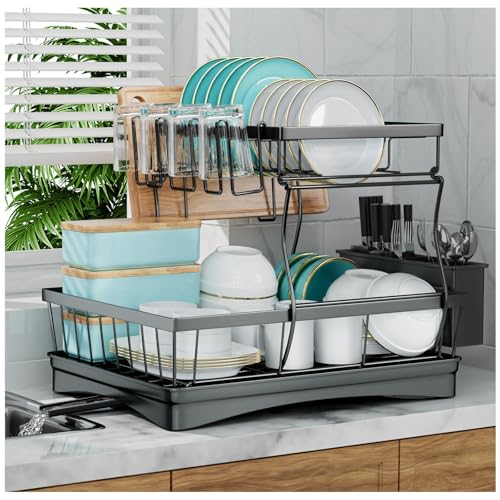
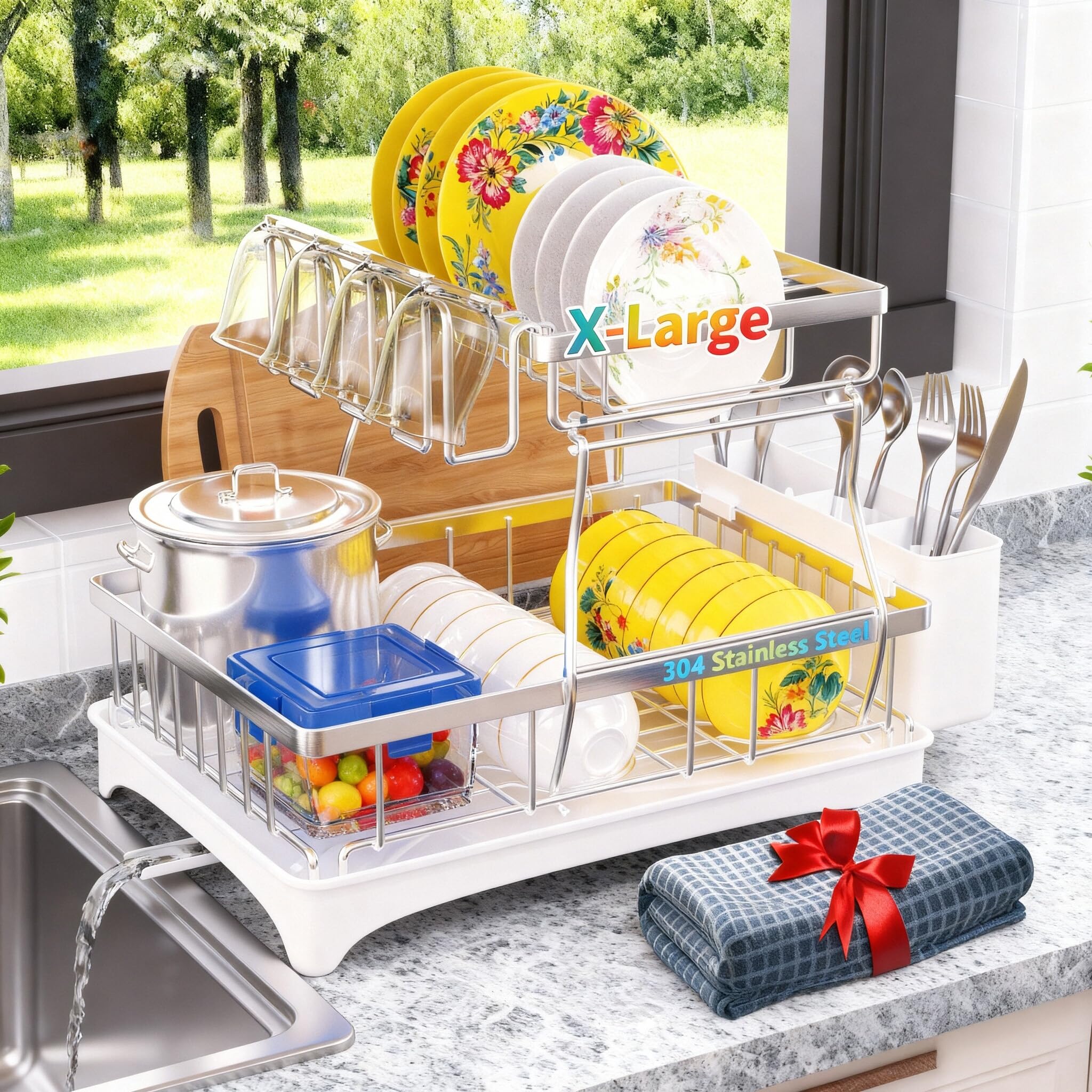
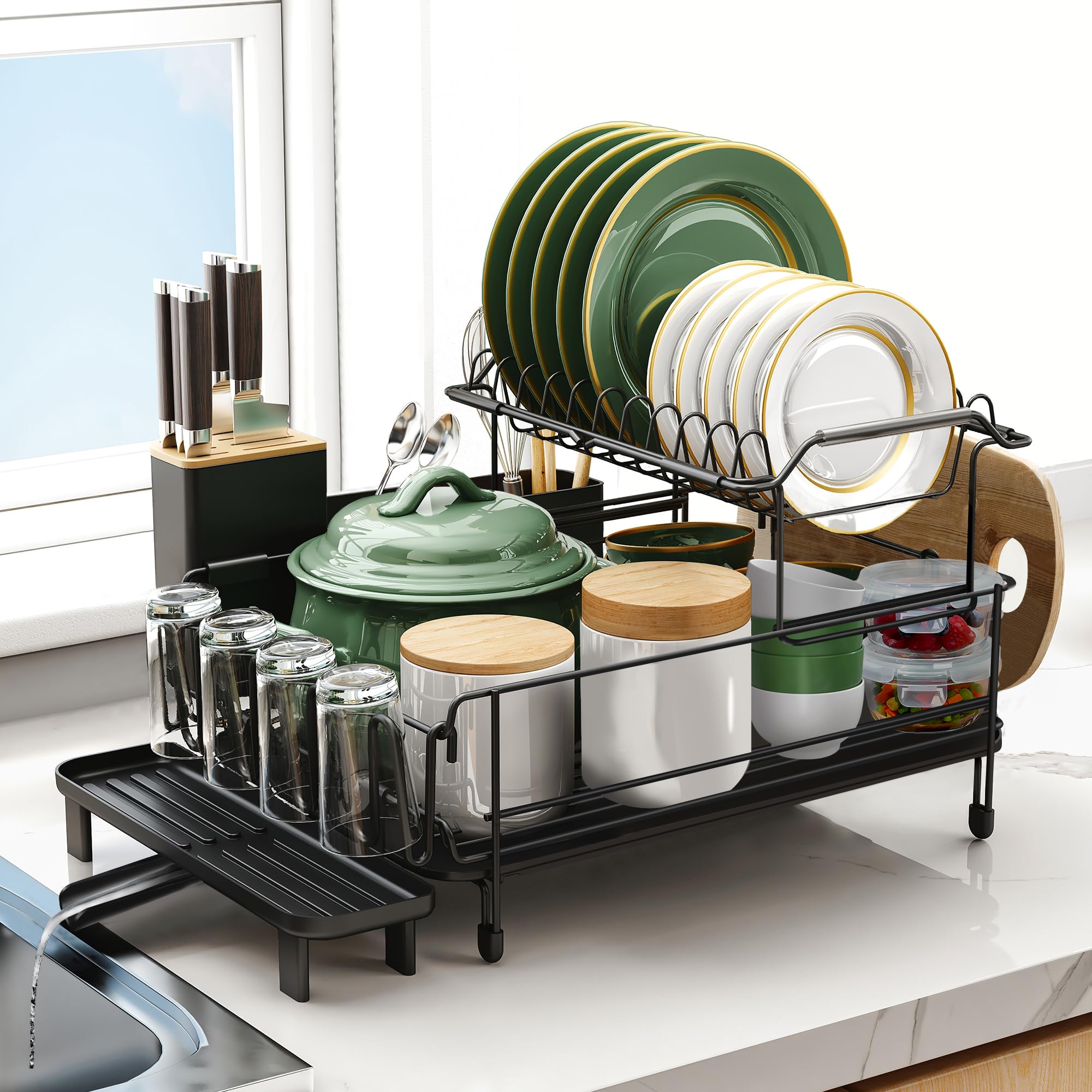

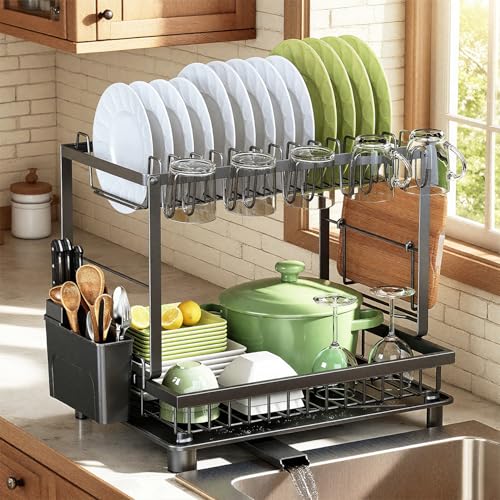
Who Should Buy a 2 Tier Dish Drying Rack?
Small Kitchen Renters With Almost No Counter
If your counter run is short and every inch already holds a kettle or a toaster, vertical drying is the only way to get a full load off the counter. A two level rack holds dinner dishes for a household without spreading puddles across your only prep space. Measure before you buy, though, because upper cabinets limit the usable height, and some tiered racks are taller than the gap under standard wall cabinets.
Households That Cook Every Day
Daily cooking creates a rolling mix of sheet pans, saucepans, and prep bowls that a flat rack swallows in one load. A second tier keeps the light, clean items like glasses and lunch containers up and away from the heavy greasy pieces below, so everything dries in one pass instead of in shifts. Families in this group should favor sturdy frames and wide lower slots, covered in the broader best dish drying rack guide as well.
Hand Washers Without a Dishwasher
When every dish passes through your hands, the rack is not an accessory, it is half your kitchen workflow. Two tiers double your staging space for the big weekend wash, and a good drain spout keeps the counter dry through the whole session. If your sink itself is the only spare space, an best in sink dish drying rack is the other layout worth weighing before you commit to a countertop model.
Key Features to Compare
Footprint and Tier Layout
Start with the tape measure: length, depth, and the height to the underside of your wall cabinets. Then study what each level is shaped to hold. Some racks put plate slots on top and an open lower deck for pots; others reverse it. The better layout for you depends on your load: households washing many plates and few pans want generous vertical slots, while stockpot cooks need a flat, strong lower shelf. Cup arms on the side and a utensil cup that hangs outside the footprint add capacity without adding inches.
Drainage: Spout, Tray, and Counter Protection
Where the water goes decides whether a rack saves work or creates it. The best designs tilt slightly toward a spout that pours into the sink, so the counter stays dry all day. Flat drip trays are the weaker option: they collect a shallow pool that needs emptying and grows slimy within days. If your counter slopes or the rack must sit away from the sink edge, a tray with a rotating spout bridges the gap. Wooden and stone counters especially need drainage you can trust, because standing water stains and swells them.
Frame Materials and Rust Resistance
A rack lives wet, so material is destiny. Powder coated steel looks tidy and costs less, but the coating chips at weld points and rust follows. Plastic frames never rust yet flex under heavy pots and stain over time. Stainless steel costs the most and shrugs off years of daily soaking, which is why busy kitchens gravitate to it; our best stainless steel dish drying rack guide compares grades and finishes. Whatever you choose, check how the upper tier attaches, because wobble at that joint is where cheap racks fail first.
Real Capacity in Place Settings and Pots
Makers describe capacity in glowing terms, so translate it yourself. Count the plate slots, then imagine your largest dinner plate, your widest skillet, and a stockpot in the mix at once. A rack that holds twelve plates but no pan forces you to dry the pan on a towel anyway, which defeats the purchase. Tall items are the other limit: check that serving platters and tall glasses clear the upper tier and the cabinets above it, not just the rack's own frame.
Stability Under a Full, Uneven Load
A two level rack is top heavy by design, and a load of glasses on the upper tier raises the center of gravity further. Wide feet, grippy pads, and a lower tier that takes the heavy items first keep it planted when you bump it with a hip mid wash. Read the stated weight guidance if the maker gives one, and be suspicious of featherweight racks with narrow bases. In a busy kitchen, a rack that rocks every time you add a mug gets replaced within the year.
Extras That Earn Their Space
Some additions genuinely help: a stemware holder that keeps wine glasses from clinking, a knife block insert that stores blades safely, and a cutting board slot that dries boards vertically instead of flat and damp. Others just complicate cleaning. Removable utensil cups with drainage holes beat fixed cups that fill with gray water, and any part you cannot take off and wash will eventually smell. Keep the extras honest by asking whether you would use each one weekly.
How to Measure Your Counter and Sink for a 2 Tier Rack
Measure the counter space from the sink edge to the backsplash and across the run you can spare, then measure up to the cabinet underside and subtract a couple of inches for lifting plates in and out. Check the sink side too: the drain spout needs to reach the basin, and on many kitchens that fixes exactly where the rack can stand. Finally, measure your biggest plate and your tallest glass, because those two numbers veto more racks than any marketing claim.
If the measurements say even a compact tiered rack will not fit, do not force it. A large single level rack on the other side of the sink, or a roll up rack over the basin, may serve you better; the best large dish drying rack guide covers those generous single level layouts. The right rack is the one that fits your kitchen's actual geometry, not the one with the most tiers.
Common Mistakes to Avoid
- Forgetting the cabinet height: a rack that fits the counter but not the space under your wall cabinets leaves the top tier useless.
- Choosing a flat tray over a drain spout: standing water in the tray turns slimy and starts to smell within days.
- Loading heavy pots on the top tier: weight up high makes the whole rack tippy and strains the frame joints.
- Buying by plate count alone: a rack that cannot take a skillet or stockpot still leaves half your wash up on a towel.
- Skipping the rust question: chipped coated steel in a permanently wet spot rusts fast and stains the counter beneath it.
- Never washing the rack itself: mineral film and mildew build up in trays and utensil cups until the clean dishes sit in a dirty rack.
How to Make Your Dish Drying Rack Last Longer
Empty and wipe the drip tray or spout channel every few days, before the slimy film sets in. Once a month, take the rack apart as far as it allows and soak removable parts in hot soapy water, scrubbing the joints and the utensil cup where gray water collects. A paste of baking soda on a soft sponge lifts mineral deposits without scratching coated or stainless finishes, and an old toothbrush reaches the corners a sponge cannot.
Dry the rack itself during your lowest use hour, for example after breakfast dishes are put away, so the frame is not permanently wet. At the first sign of rust on a coated rack, dry the spot, and touch it up or move the rack so water no longer pools there. Stainless racks benefit from a quick towel pass along the lower rails, where standing droplets leave water spots and, over months, dull patches.
FAQ
Does a 2 tier dish drying rack really save counter space?
Yes, roughly the area of its own footprint, because the second level holds the glasses, bowls, and containers that would otherwise spread across the counter. The saving is real only if your cabinet clearance lets you use the top tier fully. In kitchens with very low wall cabinets, a wide single level rack can dry the same load with less frustration, so measure your vertical space before assuming tiers are the answer.
Can a 2 tier dish drying rack hold pots and pans?
The lower tier of a well built rack handles saucepans, skillets, and lids comfortably, and that is where heavy items belong for stability. Very large stockpots and roasting pans are the exception: many tiered racks lack the depth, so those pieces may still dry on the stovetop or a towel. Check the lower shelf depth against your biggest pan's diameter, and look for racks whose plate slots can fold or remove to open a flat bay.
How do I keep a dish drying rack from smelling?
Odor comes from the water that sits in trays, cups, and joints, so drainage and a weekly wash matter more than any material. Empty the tray before it films over, wash the utensil cup with the dishes once a week, and let the whole rack dry out fully at least once a week. If a smell persists, a soak in hot water with a splash of white vinegar loosens the mineral and soap film that feeds it.
Is stainless steel worth it for a 2 tier dish drying rack?
For a rack that stays wet all day, usually yes. Stainless resists the rust that creeps into chipped coatings, and it tolerates scrubbing when mineral deposits build up. The exception is a household that dries the rack completely every day and washes mostly glasses and plates; a coated or plastic rack can serve well there for years. Match the material to how wet your rack's life will be, not to the showroom shine.
Where should a 2 tier dish drying rack sit in a small kitchen?
Beside the sink on the side you naturally work toward, with its spout reaching the basin and its back close to the wall to free the front of the counter for prep. Keep it out of the splash zone of the stovetop if you can, because grease mist settles on drying dishes. If both sides of the sink are spoken for, an over the sink model uses the one space that is always free: the sink itself.
Final Thoughts
A tiered rack earns its place when it fits your counter, drains into the sink, and swallows your real wash load, pans and all. Measure the height under your cabinets, favor a spout over a flat tray, and use the product table above to compare layouts of the best 2 tier dish drying rack for your kitchen. Set it up once, wash it weekly, and the after dinner pile stops spreading across your only workspace.


