
Best Over the Sink Dish Drying Rack for 2026: Fit, Materials and Care
Disclosure: We may earn a commission when you buy through links on this page, at no extra cost to you. As an Amazon Associate I earn from qualifying purchases. Learn more

Pick the best over the sink dish drying rack by measuring your sink and comparing roll up, fixed and two tier designs for fit, capacity and rust resistance.
Counter space disappears fast in a small kitchen, and a bulky rack beside the sink is usually the first thing in the way. Moving the drying zone over the basin solves two problems at once: drips fall straight into the sink, and the counter stays free for cooking. Choosing the best over the sink dish drying rack starts with your sink dimensions, because a rack that spans the bowl poorly will sag, slide or block the faucet.
This guide covers the three main designs, the measurements that decide fit, and the materials that survive daily soaking without rusting. The comparison table below gives a quick view of the classes before you measure anything.




Who Should Buy Which Over the Sink Dish Drying Rack?
Small kitchen cooks who need the counter back
If your prep space doubles as your drying space, an over the sink design returns the whole counter to cooking. Roll up models suit you best, since they cover the sink while dishes dry and then roll away into a drawer. Households comparing every format before deciding can start with our wider guide to the best dish drying rack styles and then narrow down to the sink mounted options here.
Big families washing pots, pans and bottles daily
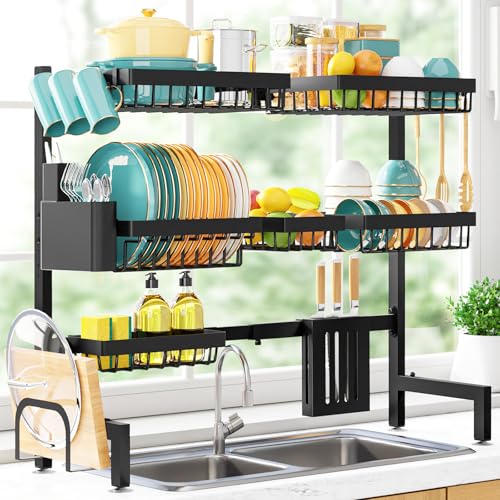
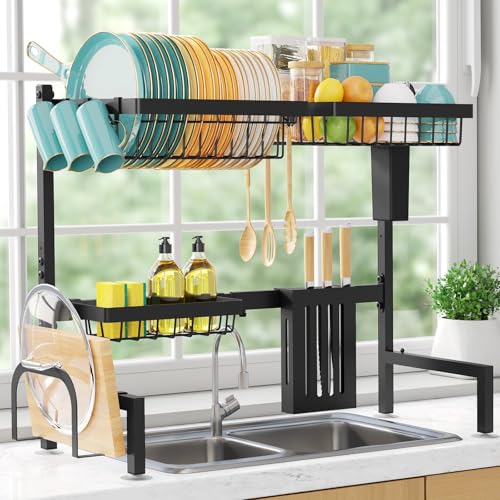
High volume washing needs a rigid frame with a high load rating, wide slots for cutting boards and a shelf layout that keeps heavy pans off the glassware. Two tier racks that stand over the sink like a bridge give you that capacity, provided your faucet is tall enough to clear the lower shelf. Measure before you buy, because family size loads punish weak frames quickly.
Renters who cannot drill or mount anything
Every design in this category sits on the sink rim or counter edge, so nothing here needs screws or adhesives. Roll up and expandable racks are the most renter friendly of all, since they pack flat when you move. Just confirm the rack rests on solid rim on both sides, because a rack balanced on a thin undermount lip can shift when loaded with wet dishes.
Key Features to Compare
Sink width and adjustable span
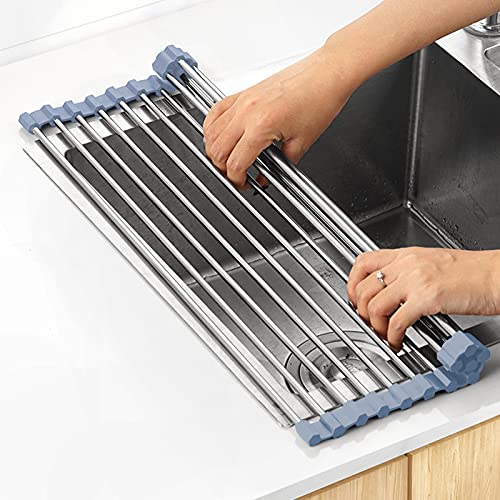
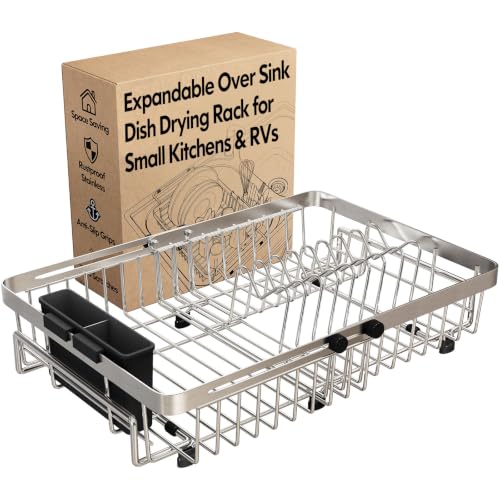
Measure the inside width of your sink bowl and the full width including the rim, then compare both numbers with the rack span. Roll up racks list a maximum sink width, and the rods need rim contact on both ends to stay level. Expandable frame racks slide to fit, which helps with unusual sink sizes but adds moving joints that can loosen. A rack that barely reaches both rims will dip in the middle under a load of plates, so a little extra span is safer than an exact match.
Design type: roll up, fixed frame or two tier bridge
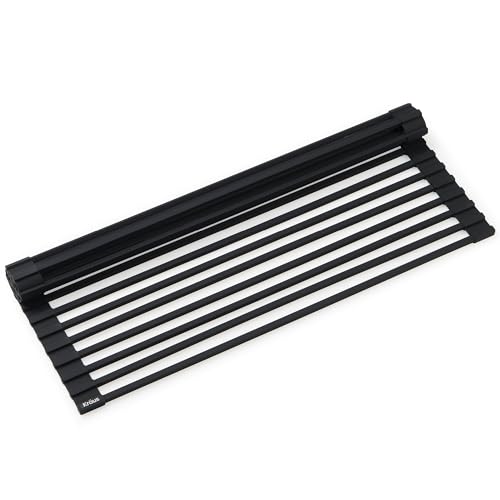
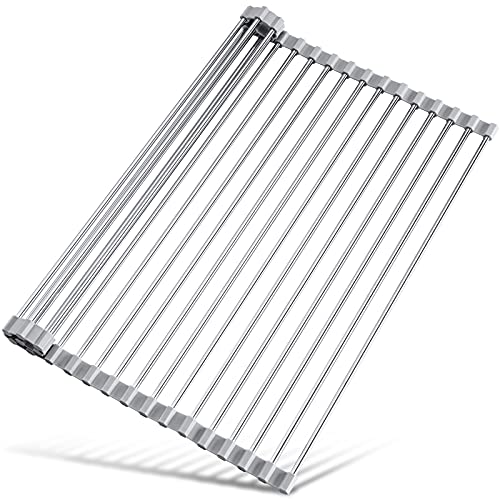
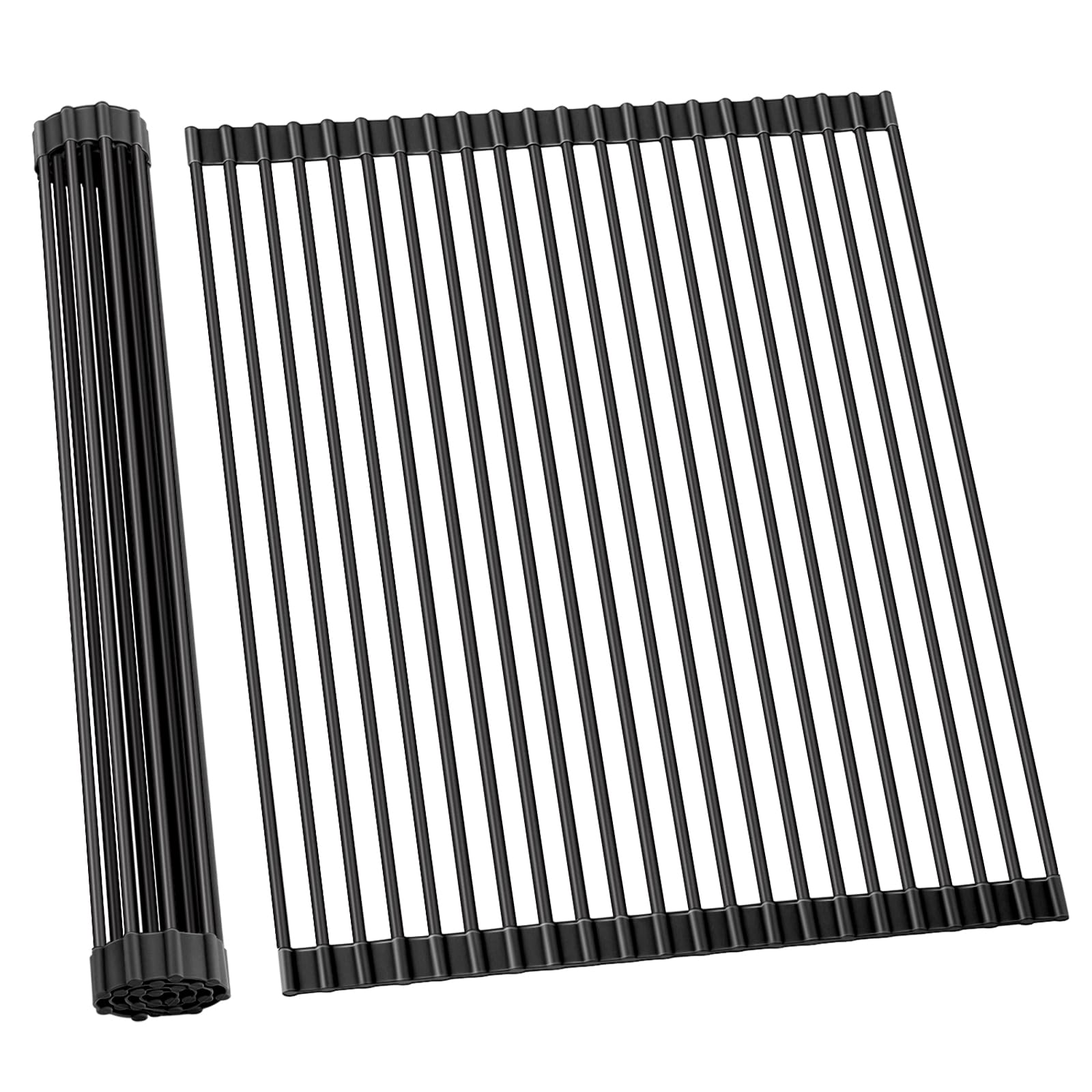
Roll up racks are silicone coated steel rods linked like a mat; they double as a trivet and store in seconds. Fixed frames hold a defined shape with slots for plates and cups and feel steadier for daily loads. Two tier bridges add a shelf above the sink for bowls and mugs, using vertical space instead of counter space. If you prefer dishes to dry inside the basin itself, our guide to the best in sink dish drying rack covers that smaller footprint option.
Materials and rust resistance
A rack lives wet, so material decides its lifespan. Stainless steel in a 304 grade resists rust well and handles hot pans without complaint. Silicone coated rods protect glassware edges and grip the rim so the rack does not skate around. Painted or chrome plated steel can chip and then rust at the chip, and plain plastic racks may warp under a hot skillet. For a full stainless countertop setup instead, see our guide to the best stainless steel dish drying rack designs.
Load capacity and layout of slots
Check the stated weight limit and the spacing of plate slots. Wide slots fit thick stoneware and cutting boards, while tight slots suit thin everyday plates. Cup hooks, utensil cups and a flat area for pots matter more than raw size, because a rack that only holds plates forces the rest onto a towel anyway. Tall items like bottles and vases need open sections without a shelf above them, so sketch your typical load before choosing a layout.
Drainage and counter protection
The whole point of the design is that water falls into the sink, so look for open rod or slat floors rather than solid trays. Solid trays over a sink trap puddles that grow slimy within days. Silicone feet or coated ends protect enamel and composite sinks from scratches where the rack rests. If your sink is fireclay or another soft finish, padding at every contact point is worth more than extra capacity.
How to Measure Your Sink for an Over the Sink Rack
Take four measurements with the sink empty. First, the inside width from rim edge to rim edge where the rack will rest. Second, the depth of the bowl from front to back, which decides whether a frame rack sits over the sink or crowds the faucet. Third, faucet height from the counter to the top of the arc, and fourth, the distance from the faucet base to the back wall, since tall two tier racks need that clearance behind the tap.
Also check what lives around your sink. A soap dispenser, a tall faucet handle sweep or a window sill behind the sink can all block a bridge style rack. If your numbers fall between sizes, choose the design with adjustment rather than the fixed frame, and re check the fit with your heaviest normal load, a stockpot and a stack of plates, before the return window closes.
Common Mistakes to Avoid
- Measuring only the sink bowl and forgetting the rim, so the rack arrives too short to rest on both sides.
- Buying a two tier bridge without checking faucet height, which leaves the tap trapped under the lower shelf.
- Overloading a roll up rack with a full set of stoneware, which bows the rods and can dump dishes into the sink.
- Leaving wet wooden boards sitting on the rack all day, which keeps the contact points damp and encourages mildew.
- Choosing chrome plated steel for a coastal or hard water home, where chips and mineral crust start rust within months.
- Using the rack as permanent storage, so air flow stops and the undersides of dishes stay damp and musty.
How to Make Your Over the Sink Dish Drying Rack Last Longer
Rinse the rack weekly and scrub the joints and rod ends with an old toothbrush, because soap film and food grit collect exactly where water sits longest. Once a month, soak removable parts in hot water with a splash of dish soap, then dry the rack fully before reloading it. Hard water homes should wipe the rods with a vinegar dampened cloth when white crust appears, and rinse well so the acid does not sit on the finish.
Roll up racks last longer when you roll them loosely rather than folding them sharply, which can crack the silicone coating. Frame racks benefit from a quick check of screws and joints every few months. If rust spots appear on a coated rack, dry the area, touch it up or retire the rack before flakes reach your dishes. Store the rack dry overnight when you can, since constant soaking shortens the life of every material.
FAQ
Will an over the sink dish drying rack fit a farmhouse sink?
Often yes, but measure carefully. Farmhouse sinks are wide and deep, so you need a long span roll up rack or an expandable frame rated for that width. The exposed front apron does not affect the fit, but the rim width does, since narrow rims give the rack less resting surface. If your farmhouse sink is wider than standard roll up sizes, a two tier bridge that rests on the counter behind and in front of the sink is the safer style.
Can an over the sink dish drying rack hold heavy cast iron pans?
A rigid stainless frame rack with a high load rating can, but most roll up racks are not the place for a heavy skillet. Check the stated weight limit and spread heavy items across the strongest section near the rim rather than the middle. Also dry cast iron promptly and move it off the rack once surface water is gone, since lingering moisture on the pan bottom invites rust on the cookware itself.
Do over the sink dish drying racks scratch the sink?
They can if bare metal rods rest directly on a soft finish like fireclay, enamel or composite. Choose racks with silicone coated rods or rubber feet at every contact point, and lift rather than drag the rack when you reposition it. Grit trapped under the feet causes most scratches, so rinse the rim and the rack ends before setting it back down after cleaning.
How do you clean an over the sink dish drying rack?
Scrub it in the sink it sits over, using hot soapy water and a brush for the joints, then rinse and let it air dry fully. For mineral buildup, a short soak with a vinegar solution loosens the crust before scrubbing. Many roll up silicone racks are dishwasher safe on the top rack, but check the maker guidance first, since steel cores and coatings vary.
Is an over the sink dish drying rack better than a countertop rack?
It is better when counter space is tight and your sink is wide enough, because drips go into the basin and the counter stays clear. A countertop rack wins when you need a big fixed capacity or your sink is small, since it does not compete with washing space. Some kitchens run both, and households with heavy daily loads often pair an over sink rack with a larger countertop model from our guide to the best large dish drying rack.
Final Thoughts
Fit decides everything in this category: measure the sink, check the faucet, then choose the design that matches your load. Roll up racks free the most space, frames feel the steadiest, and bridges add a true second shelf. The product table above shows the classes side by side, so you can match your measurements to the best over the sink dish drying rack for your kitchen and keep your counters clear for cooking.


